
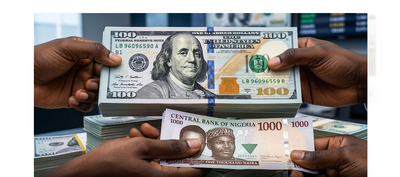
Currency fluctuations are no longer abstract economic headlines; they directly influence everyday survival.
In Nigeria, conversations about the dollar-naira exchange rate now shape decisions about food prices, school fees, transportation, and even career choices. When the naira weakens, imported goods become more expensive, businesses adjust prices, and families feel immediate pressure.
But beyond rising costs lies a deeper economic transformation.
Many Nigerians are shifting toward earning in foreign currencies through remote work, freelancing, and digital entrepreneurship. A graphic designer working with international clients or a writer publishing online can earn in dollars while living locally — effectively protecting income from local currency volatility.
Businesses are also adapting. Local production, digital services, and tech-enabled entrepreneurship are growing as alternatives to import dependence.
For individuals, the new financial reality demands awareness. Budgeting, investing in skills with global demand, and building multiple income streams have become survival strategies rather than luxury choices.
Currency instability, while challenging, is also reshaping ambition. More young Nigerians now think globally, positioning themselves for borderless economic opportunities.
Economic uncertainty often produces innovation — and Nigeria’s digital workforce is proof of that evolution.
