
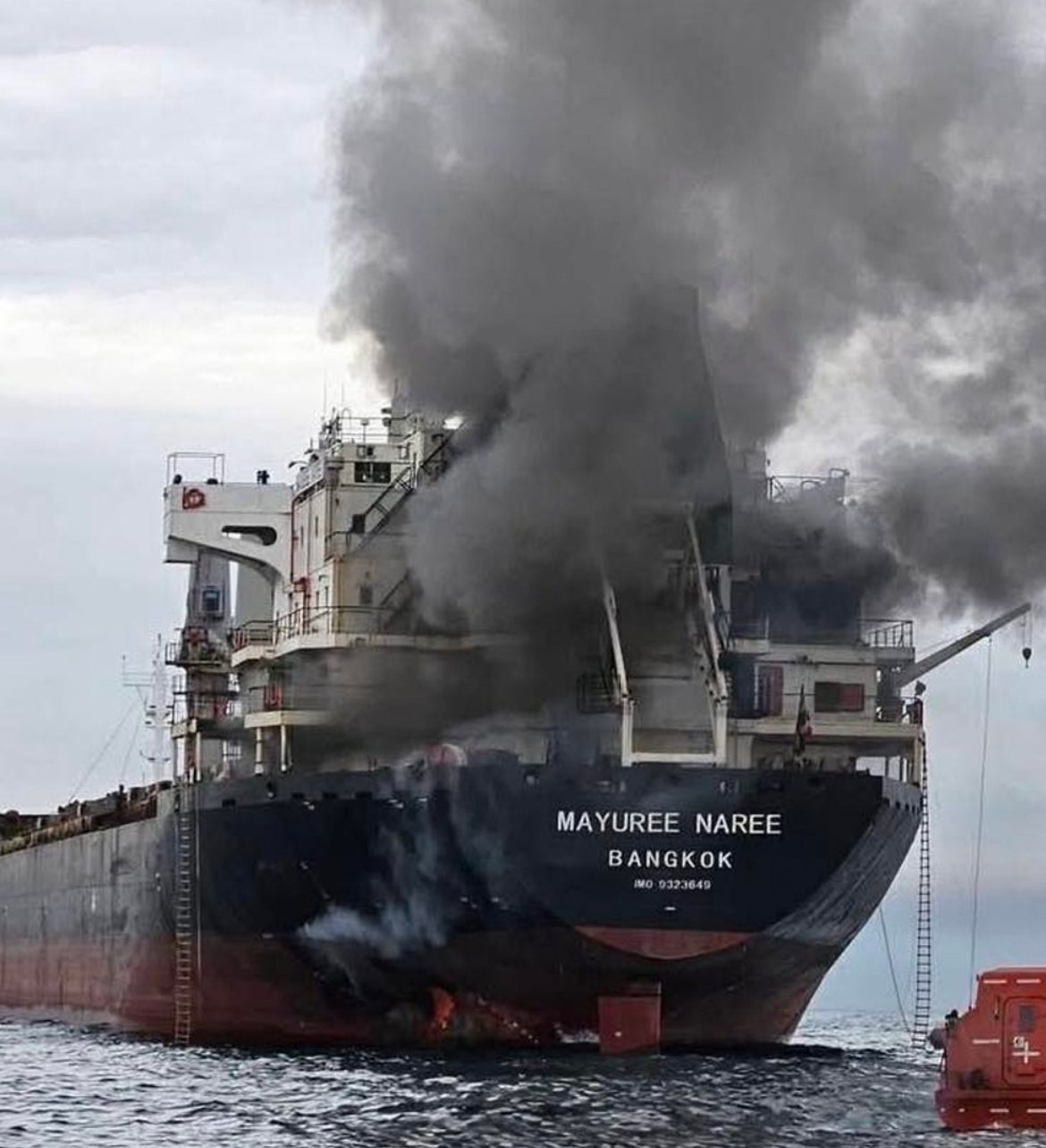
Tensions in the Persian Gulf escalated dramatically after Iranian forces reportedly struck a Thai-flagged cargo vessel attempting to pass through the Strait of Hormuz, one of the world’s most strategically important shipping routes.
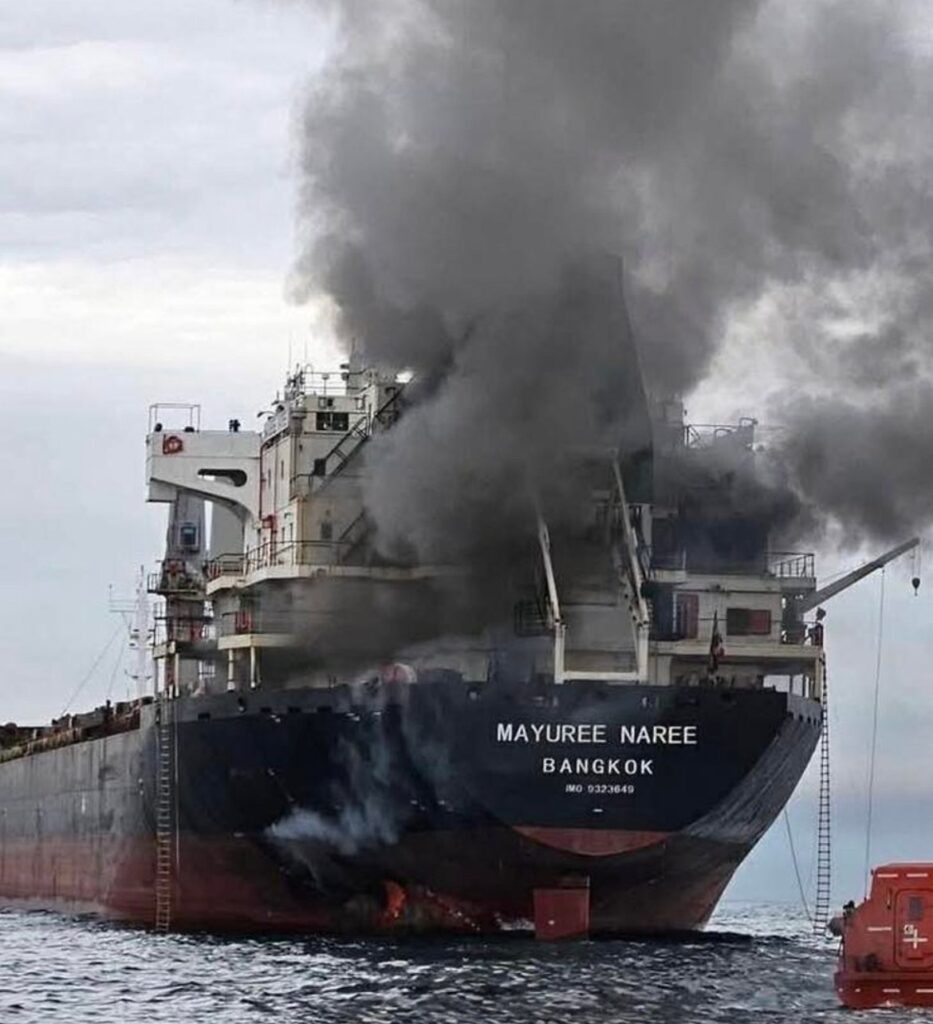
According to reports, the vessel, identified as the bulk carrier Mayuree Naree, was attacked while traveling through the narrow waterway that connects the Persian Gulf to the Gulf of Oman. The ship caught fire following the strike, and several crew members were forced to abandon parts of the vessel. Authorities say three crew members are currently missing, while others were rescued by nearby maritime forces.
Iran’s Islamic Revolutionary Guard Corps (IRGC) later claimed responsibility for the attack, stating the vessel had ignored warnings from Iranian naval forces while attempting to transit the strait.
A Critical Global Chokepoint
The Strait of Hormuz is considered one of the most vital maritime routes in the world, handling roughly 20% of global oil shipments. Any disruption to shipping in the narrow passage can quickly affect global energy markets and international trade.
The incident comes amid a broader escalation of conflict between Iran and Western-backed forces in the region. In recent days, several commercial vessels have reportedly been struck by projectiles in the same area, raising fears that merchant ships could increasingly become targets.
Security analysts warn that continued attacks in the Strait of Hormuz could severely disrupt global supply chains and push oil prices sharply higher.
As tensions continue to rise, international maritime authorities are urging ships to exercise extreme caution when passing through the strategic waterway.
