Table of Contents
Father Angelo Chidi Unegbu Criticizes Anambra State Government Over Shrine Destruction
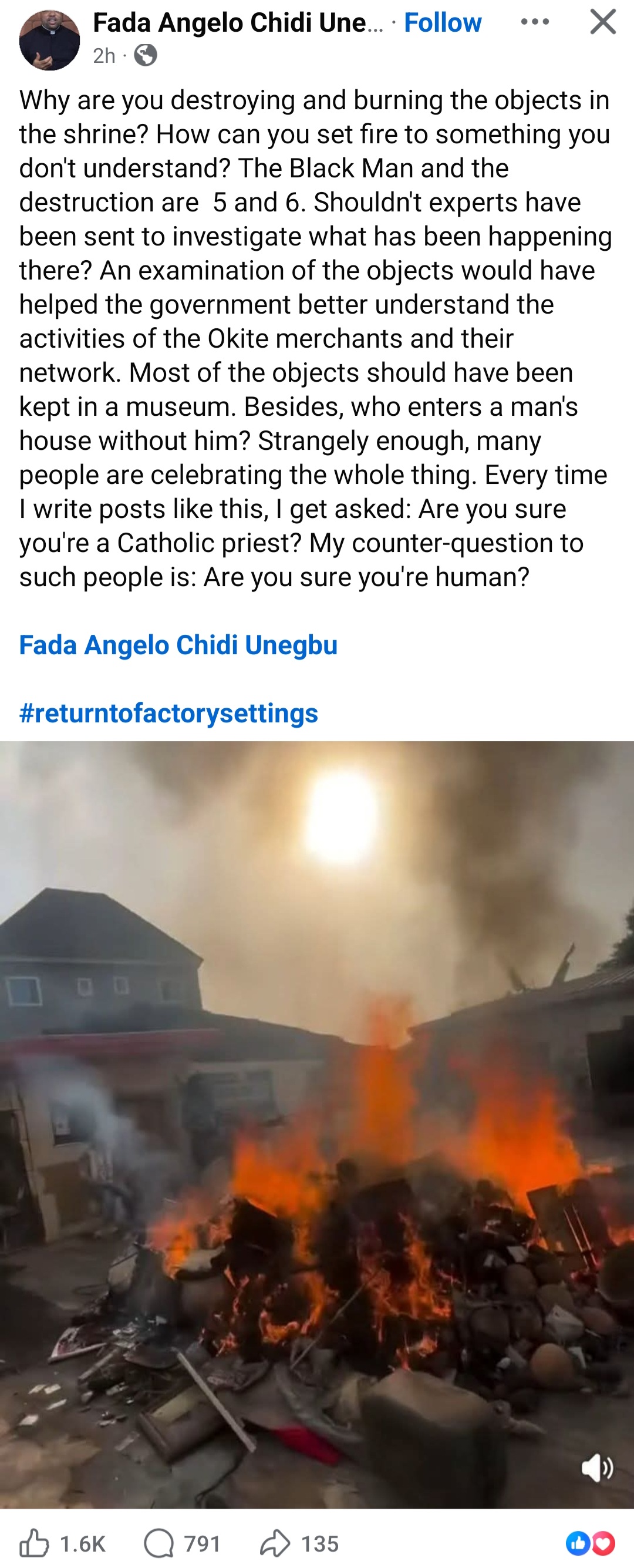
Father Angelo Chidi Unegbu, a Catholic priest, has publicly denounced the recent actions taken by the Anambra State Government concerning the demolition and burning of items from a herbalist’s shrine. This incident followed the conviction of Chidozie Nwangwu, also known as Akwa Okuko Tiwara Aki, a native doctor sentenced to 11 months imprisonment by a High Court in Awka for involvement in ritualistic practices referred to as “oke ite” and related offenses.
Background: Shrine Demolition and Legal Proceedings
The Anambra State authorities dismantled the shrine belonging to Nwangwu after his sentencing, seizing and incinerating various ritual objects found on the premises. This move was part of a broader crackdown on traditional practices deemed unlawful by the state judiciary. The government’s actions have sparked widespread debate about cultural heritage and legal enforcement.
Father Angelo’s Response: A Call for Understanding and Respect
In response to the destruction, Father Angelo expressed strong disapproval, describing the burning of the shrine’s contents as an act lacking compassion and insight. He questioned the rationale behind destroying items without fully comprehending their significance, emphasizing the need for expert evaluation before such drastic measures.
“Why destroy and burn objects you do not understand? The Black Man and destruction are intertwined, yet this situation calls for careful investigation by specialists,” Father Angelo stated. He suggested that a thorough examination of the artifacts could have provided valuable insights into the practices and networks associated with the shrine.
Preserving Cultural Artifacts: A Missed Opportunity
Father Angelo further argued that many of the items confiscated should have been preserved in a museum to safeguard cultural history rather than being destroyed. He also raised concerns about the legality and ethics of entering a person’s private property without their consent, highlighting the complexity of balancing law enforcement with respect for individual rights.
Public Reaction and Reflection
The priest noted the paradox of public celebrations following the shrine’s destruction, urging society to reflect on the humanity behind such actions. He shared that his critiques often lead to questions about his own faith, to which he responds by challenging others to consider their own humanity and empathy.
Contextual Insight
This incident underscores ongoing tensions in Nigeria between traditional spiritual practices and modern legal frameworks. According to recent studies, over 60% of Nigerians still engage in or respect indigenous religious customs, highlighting the cultural sensitivity required when addressing such matters.