
Table of Contents
U.S. Military Assistance to Nigeria: A Cost-Free Partnership in Counterterrorism
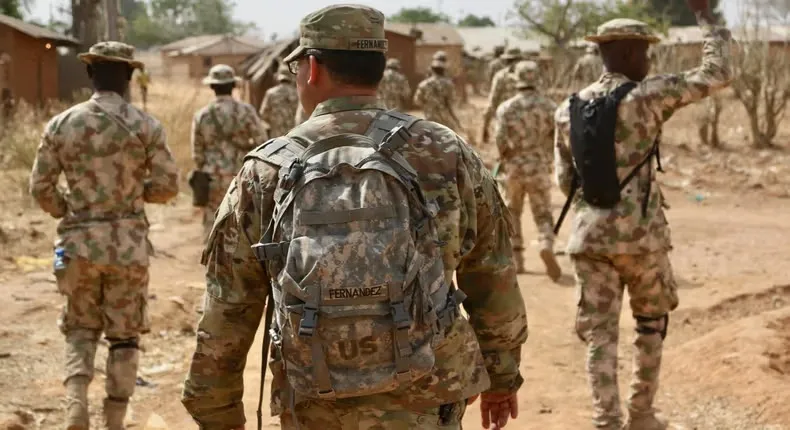
The Nigerian Defence Headquarters has clarified that the military training, intelligence exchange, and operational support provided by the United States to Nigeria incur no financial burden on the Nigerian government. This collaboration is part of the broader U.S. global counterterrorism strategy aimed at combating extremist threats worldwide.
Strategic Collaboration Through AFRICOM
Major General Michael Onoja, the Director of Defence Media Operations, revealed this information during a press briefing on February 27, 2026. He explained that the assistance is facilitated via the United States Africa Command (AFRICOM), which operates under a strategic alliance designed to bolster Nigeria’s efforts against terrorism and insurgency.
“The deployment of U.S. personnel in Nigeria is fundamentally a partnership,” Onoja stated. “Their role is to support the Nigerian military through training, intelligence sharing, and other critical assistance. This support is provided at no cost because the U.S. government is committed to fighting terrorism on a global scale.”
Addressing Security Challenges in Northern Nigeria
In response to recent spikes in attacks and kidnappings in Adamawa State and the North-West region, Major General Onoja dismissed claims of new terrorist infiltrations. Instead, he attributed these incidents to militants relocating due to intensified military pressure.
“These are not fresh incursions by terrorists,” he explained. “The increased military offensives, supported by U.S. intelligence and training, have forced insurgents to move to different areas in an attempt to maintain their influence.”
Onoja reassured the public that Nigerian forces are escalating operations to dismantle terrorist networks. “Our troops are actively engaging these groups, and we are confident that persistent pressure will exhaust their capabilities. We remain committed to rooting out terrorists wherever they attempt to hide.”
State-Level Peace Agreements and National Security Oversight
Regarding reports of some Nigerian states negotiating peace deals with armed factions, the Defence Headquarters emphasized the importance of involving federal security authorities. “While Nigeria’s federal structure allows states to enter into agreements, such arrangements must be coordinated with the National Security Adviser to ensure alignment with national security policies,” Onoja noted.
Reviewing the Operation Safe Corridor Program
The Defence Headquarters also addressed public concerns about the reintegration of former militants through the Operation Safe Corridor deradicalisation initiative. Authorities are currently reassessing the program in collaboration with key stakeholders to enhance its effectiveness and address citizens’ apprehensions.
“We acknowledge the worries surrounding some repentant militants who have undergone the program,” Onoja said. “Efforts are underway to strengthen the initiative and ensure it contributes positively to Nigeria’s security landscape.”
Looking Ahead: Strengthening Nigeria’s Security Framework
As Nigeria continues to confront evolving security threats, the partnership with the United States remains a vital component of its counterterrorism strategy. With ongoing support from AFRICOM and intensified military operations, Nigerian forces are better equipped to protect citizens and restore stability across affected regions.
