
Table of Contents
Inside a 36-Hour Deportation Flight: Nigerian Man Reveals Harsh Treatment During US Removal Process
A Nigerian man recently recounted his distressing experience after being deported from the United States, shedding light on the severe conditions endured throughout the deportation journey. His testimony exposes troubling practices faced by deportees, particularly Nigerians, during the lengthy flight back to their home country.
Extended Restraints and Confinement During Flight
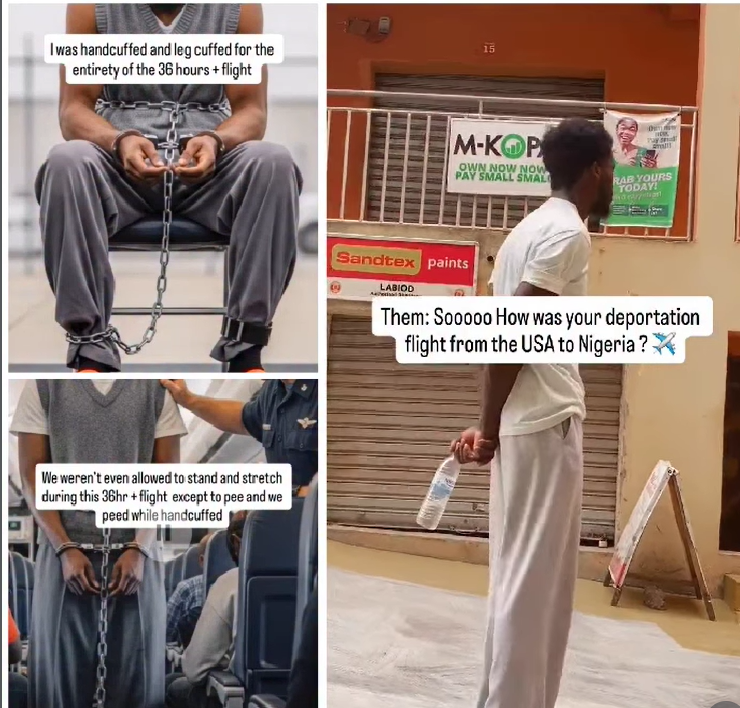
According to the deportee, individuals being returned to Nigeria were subjected to continuous physical restraints for at least 36 hours. These included handcuffs, leg shackles, and waist chains, which severely restricted their movement. He explained that detainees were unable to stand upright or stretch their limbs properly for the entire duration of the flight, causing significant discomfort and distress.
The flight itself was reportedly circuitous, making five separate stops before finally reaching Nigeria. The man described this route as unnecessarily prolonged, exacerbating the already grueling conditions onboard.
Basic Needs Met Under Restraint
He further revealed that meals were consumed while still shackled, and detainees had to relieve themselves without the ability to remove their restraints. This treatment, he emphasized, was dehumanizing and added to the physical and psychological strain endured during the journey.
Justification for Continued Restraints: Remaining on US Soil?
When questioned about the prolonged use of restraints, the deportee shared that air marshals and security officers justified their actions by stating that the detainees were still considered to be on US territory while aboard the aircraft, despite having left US airspace. This rationale was used to deny requests for removing the cuffs during the flight.
Impact on Vulnerable Deportees
Alarmingly, the man noted that elderly deportees, both men and women, were subjected to the same restrictive treatment without any accommodations for their age or health conditions. This raises serious concerns about the humane treatment of vulnerable individuals during deportation procedures.
Reflections on the Deportation Experience
Despite the hardships faced, the deportee expressed that his primary grievance lies not with the deportation itself but with the inhumane conditions experienced while in Immigration and Customs Enforcement (ICE) custody and during the flight. He conveyed relief and gratitude for safely returning home and highlighted the comfort his family feels now that he is no longer detained.
Context and Broader Implications
Deportation flights often involve complex logistics and security measures. However, human rights advocates have increasingly raised alarms about the treatment of deportees, especially regarding prolonged restraints and inadequate care. According to recent reports, the US deported over 200,000 individuals in 2023, with Nigerians constituting a significant portion of removals from the country.
This testimony adds to growing calls for reform in deportation protocols to ensure dignity, safety, and respect for all individuals undergoing removal proceedings.
