
Table of Contents
Venezuelan Opposition Leader Juan Pablo Guanipa Re-Arrested Shortly After Release
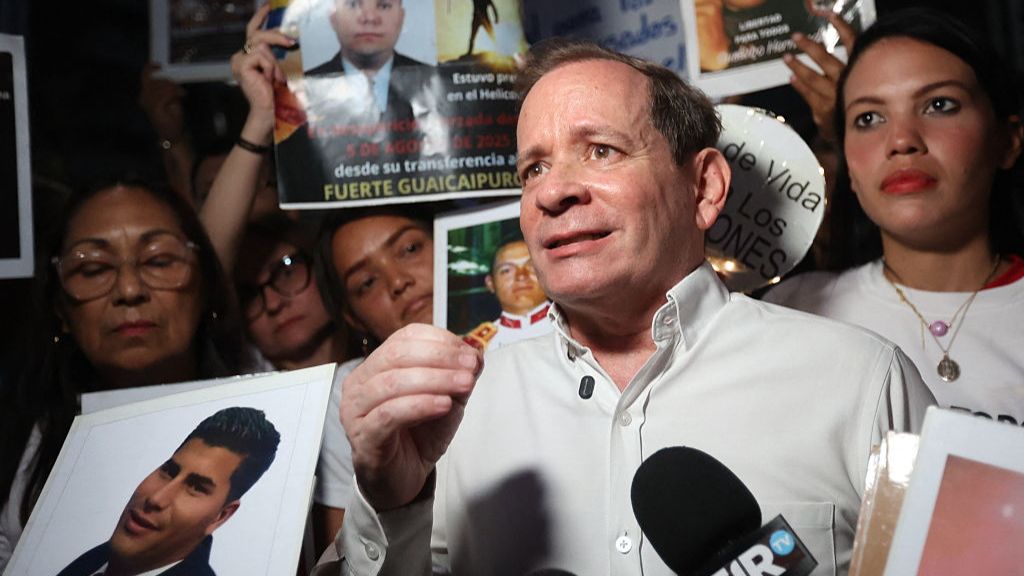
Juan Pablo Guanipa, a leading figure in Venezuela’s opposition and head of the conservative Primero Justicia party, was forcibly detained late Sunday night by armed men just hours after his release from prison. His family and political allies have condemned the incident, describing it as a “kidnapping” orchestrated by government forces in Caracas.
Details of the Re-Arrest and Government Response
According to reports, Guanipa was apprehended in the Los Chorros neighborhood of Caracas by a group of approximately ten heavily armed individuals dressed in civilian clothes. Opposition leader and Nobel laureate María Corina Machado confirmed the operation, stating that multiple vehicles were involved in the forceful removal of Guanipa. His son, Ramón Guanipa, revealed that the family is urgently demanding confirmation of his father’s wellbeing.
In response, Venezuela’s public prosecutor’s office claimed it had petitioned for Guanipa to be placed under house arrest, alleging that he breached the terms of his release. However, opposition parties have held senior government officials accountable for the incident, warning of consequences should any harm befall Guanipa.
Context: Political Detentions and Recent Releases
Guanipa had been imprisoned for over eight months following accusations—without publicly disclosed evidence—of involvement in a supposed conspiracy to disrupt regional and legislative elections in May 2025, charges he has consistently denied. His release on Sunday was part of a broader government initiative to free several high-profile political detainees, a move widely interpreted as an attempt by Caracas to comply with international pressure, particularly from the United States, after the ousting of former leader Nicolás Maduro.
Alongside Guanipa, other opposition figures such as lawyer Perkins Rocha were also released, albeit under stringent conditions. Human rights organization Foro Penal reported that at least 30 political prisoners, including opposition members Luis Somaza and activist Jesús Armas, were freed during this period.
Ongoing Concerns Over Political Imprisonment in Venezuela
Despite these releases, opposition groups and human rights advocates maintain that the Venezuelan government continues to use arbitrary detention as a tool to suppress dissent. Independent estimates suggest that hundreds of political prisoners remain behind bars, a claim the government denies, insisting that those detained have committed legitimate crimes.
National Assembly President Jorge Rodríguez has pledged to release all political detainees by mid-February, coinciding with efforts to pass an amnesty bill aimed at fostering national reconciliation. Nevertheless, rights organizations criticize the pace and transparency of the release process, highlighting discrepancies between official statements and independent monitoring.
Guanipa’s Message Following His Initial Release
Shortly after his initial release, Guanipa shared a video message emphasizing the importance of truth in Venezuela’s ongoing political discourse. He underscored the need for open dialogue about the country’s current challenges and future prospects, signaling his continued commitment to democratic principles despite the risks he faces.
International and Domestic Reactions
María Corina Machado hailed Guanipa as a hero, praising his steadfastness in the face of repression. The international community continues to monitor the situation closely, with human rights groups urging the Venezuelan government to respect due process and uphold the rights of political prisoners.
As of early 2026, Venezuela remains embroiled in political turmoil, with ongoing tensions between the government and opposition factions. The recent wave of detentions and releases highlights the fragile state of the country’s democratic institutions and the urgent need for transparent, inclusive political reforms.
