
Table of Contents
Former Senator Abubakar Gada Rejoins PDP, Exits ADC Ahead of 2027 Elections
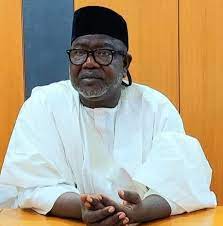
Abubakar Gada, who previously served as the senator for Sokoto East, has officially announced his departure from the African Democratic Congress (ADC) to return to the Peoples Democratic Party (PDP) as Nigeria gears up for the 2027 general elections.
Motivations Behind Gada’s Political Realignment
Speaking to his supporters in Sokoto on Saturday, Gada cited his commitment to revitalizing the PDP as the primary reason for his switch. He expressed concerns over the party’s stagnation and leadership challenges, particularly criticizing the administration of former Sokoto State governor Aminu Tambuwal, whom he accused of fostering internal discord that weakened the party’s structure.
Having served in the Nigerian Senate from 2007 to 2011 and joining the ADC in 2025, Gada underscored the necessity of proactive leadership and transparency. He recalled that both he and Tambuwal were once regarded as key figures expected to rejuvenate the PDP’s influence in Sokoto State.
Leadership Struggles and Political Inconsistencies
“Effective leadership means standing with the people, showing unwavering commitment, and taking responsibility,” Gada remarked. “Despite our efforts over six months to rebuild the party, Tambuwal refused to engage with us constructively.”
Gada further accused Tambuwal of political double-dealing, alleging that the former governor maintained secretive connections with the ruling All Progressives Congress (APC) while simultaneously positioning himself as a vice-presidential hopeful for Peter Obi within the ADC.
“It is contradictory to negotiate with the APC on one side, be promoted as a vice-presidential candidate for Peter Obi on the other, and yet hinder the registration of ADC supporters,” Gada stated. “Such duplicity erodes trust and hampers genuine political progress.”
Consequences for Sokoto’s Political Dynamics
Gada argued that these conflicting actions rendered the ADC’s foothold in Sokoto ineffective, prompting his decision to return to the PDP. This move exemplifies a wider pattern of political shifts as Nigeria approaches the 2027 elections, where party allegiance and leadership efficacy are pivotal.
Political commentators suggest that Gada’s reintegration into the PDP could reshape voter behavior in Sokoto East, potentially consolidating the party’s dominance in the area. This development also sheds light on the persistent challenges Nigerian political parties face regarding unity and stable leadership.
Recent electoral trends indicate that party defections like Gada’s often influence grassroots support, especially in regions with competitive political landscapes. As the 2027 elections draw nearer, such realignments may become increasingly common, reflecting the fluid nature of Nigerian politics.
