
Table of Contents
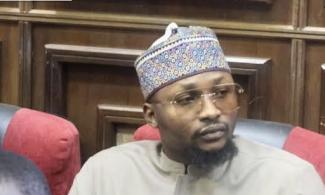
Abdulaziz Malami Rearrested at Kuje Prison Following Bail Release
Security operatives have taken Abdulaziz Malami, son of former Attorney-General and Minister of Justice Abubakar Malami, back into custody at the Kuje Correctional Centre in Abuja shortly after he was granted bail and prepared for release.
Unexpected Rearrest Despite Court Bail Procedures
Sources reveal that the rearrest came amid intensified security operations, even though Federal High Court bailiffs had arrived at the prison with all necessary bail documentation to facilitate Abdulaziz’s discharge. The intervention by security agents occurred immediately after the court officials handed him over for release.
According to insiders, “He was formally released to the court bailiffs with complete bail paperwork but was promptly detained again by security personnel.”
Background of the Ongoing Legal Proceedings
Abdulaziz, alongside his father Abubakar Malami and his mother Asabe Malami, is currently facing trial before Justice Nwite at the Federal High Court in Abuja. They are accused of involvement in a money laundering scheme amounting to approximately ₦8.7 billion. Earlier this month, the Economic and Financial Crimes Commission (EFCC) successfully obtained an interim forfeiture order on 57 properties linked to the Malami family.
Details on Forfeited Assets and Their Locations
The seized properties, collectively valued at around ₦213.23 billion, span across multiple states including Abuja, Kebbi, Kano, and Kaduna. Several of these assets are reportedly connected not only to Abubakar Malami but also to his sons Abdulaziz and Abiru-Rahman, as well as his wife Asabe.
Context and Implications
This development highlights the ongoing crackdown on alleged financial crimes involving high-profile individuals in Nigeria. The EFCC’s aggressive pursuit of asset forfeiture reflects a broader governmental effort to recover illicit wealth and reinforce accountability. Similar high-profile cases in recent years have seen significant recoveries, such as the ₦150 billion asset seizure linked to former government officials in 2023.
As the trial progresses, the legal community and public observers remain attentive to the outcomes, which could set important precedents for anti-corruption enforcement in the country.
