
Table of Contents
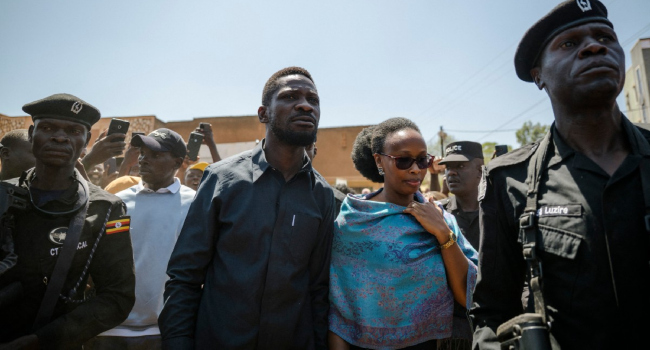
Following a police raid on his residence, Ugandan opposition figure Bobi Wine announced on Saturday that he had evaded capture and was currently in hiding, as the country awaited the outcome of a contentious election conducted amid an internet shutdown.
Initial accounts from Wine’s party indicated that he was forcibly removed from his home on Friday by military personnel via helicopter, a day after elections that were overshadowed by violent incidents.
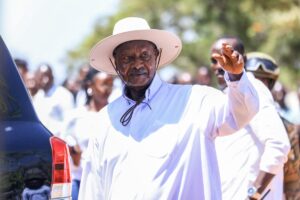
Incumbent President Yoweri Museveni, aged 81, appeared poised to secure another term, extending his four-decade-long leadership amid allegations of intimidation and at least ten fatalities linked to the electoral process.
As Uganda faced a tense interlude post-election on Thursday, Museveni maintained a significant lead over Wine, 43, a former musician turned politician who had been detained prior to the 2021 elections.

Uncertainty Surrounds Bobi Wine’s Whereabouts Amid Security Clampdown
With official results expected around 1200 GMT on Saturday, conflicting information emerged regarding Wine’s location after reports of a police and military raid on his home the previous night.
Wine took to X (formerly Twitter) to confirm his escape, stating, “I have managed to get away from them. I am currently in hiding, though my wife and other family members remain confined to our home.”
He further warned, “These perpetrators are searching for me relentlessly, and I am doing everything possible to stay safe.”
AFP journalists observed a strong security presence throughout Kampala, with authorities actively clearing streets to prevent protests similar to those recently witnessed in neighboring Kenya and Tanzania.
Heightened Security and Public Anxiety
Police spokesperson Kituuma Rusoke explained that access to certain “security-sensitive” zones was being regulated. “We are not outright denying access to Wine’s residence, but we cannot allow gatherings there that might incite unrest,” he said.
Local vendor Prince Jerard, 29, near Wine’s home, recounted hearing drone and helicopter activity the previous night, accompanied by a significant security deployment. “Many residents have fled the area due to widespread fear,” he shared.
According to the Electoral Commission, with over 90% of votes tallied by Saturday, Museveni led with 71.9% against Wine’s 24.5%.
Robert Kyagulanyi, known as Bobi Wine, has risen as Museveni’s principal rival, branding himself the “ghetto president” in homage to the impoverished Kampala neighborhoods where he was raised.
Wine has accused the ruling government of extensive ballot manipulation and targeting his party members during the internet blackout imposed before and maintained throughout election day.
Election Observers Highlight Intimidation Amid Peaceful Voting
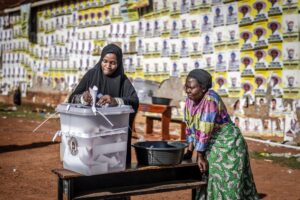
Observers from the African Union and regional organizations such as COMESA and IGAD reported no direct evidence of ballot stuffing but condemned widespread intimidation, arrests, and abductions targeting opposition figures and civil society activists.
Former Nigerian President Goodluck Jonathan, leading the observer mission, remarked, “The internet shutdown hindered effective monitoring and fueled suspicion, yet the voting process itself was largely peaceful.”
Persistent Violence and Political Repression
Many analysts have long regarded Uganda’s elections as a procedural formality rather than a genuine contest.
Museveni, a former guerrilla leader who assumed power in 1986, maintains tight control over the state and security forces, systematically suppressing opposition challenges.
Another prominent opposition figure, Kizza Besigye, who has contested Museveni four times, was forcibly taken from Kenya in 2024 and is currently facing treason charges in a military court in Uganda.
Reports emerged of election-related violence targeting opposition supporters. Muwanga Kivumbi, an MP representing Wine’s party in central Uganda’s Butambala district, told AFP that security forces killed ten of his campaign agents during a raid on his home.
Police, however, claimed that an unspecified number of individuals were neutralized after opposition members allegedly attempted to storm and set fire to a local tally center and police station.
