
Table of Contents
Central Bank of Nigeria Revamps Agricultural Credit Guarantee Scheme Board
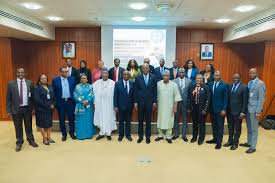
In a significant move to enhance agricultural financing and productivity, the Governor of the Central Bank of Nigeria (CBN), Mr. Olayemi Cardoso, has officially inaugurated a new Board for the Agricultural Credit Guarantee Scheme Fund (ACGSF). This initiative underscores the CBN’s dedication to expanding financial access and fostering growth within Nigeria’s agricultural sector.
Strengthening Partnerships to Boost Agricultural Finance
The CBN announced the Board’s reconstitution via a statement on X (formerly Twitter), emphasizing that the refreshed leadership aims to deepen cooperation among key stakeholders. The goal is to improve the delivery and management of agricultural credit, ensuring that farmers and agribusinesses receive timely and adequate financial support.
Cardoso Emphasizes the Scheme’s Vital Role in Agriculture
During the inauguration, Governor Cardoso highlighted the ACGSF’s pivotal role since its inception in 1977 in mitigating risks associated with agricultural lending. He stressed the need for adopting innovative, inclusive, and technology-driven strategies to empower farmers, particularly women and youth, as Nigeria modernizes its agricultural value chains.
With repayment rates consistently ranging between 90% and 98%, the Scheme has demonstrated remarkable resilience and effectiveness over the decades, contributing significantly to the sector’s stability and growth.
New Board Members to Drive Innovation and Oversight
Dr. Olusegun Oshin chairs the newly appointed Board, which includes distinguished members such as Prof. Murtala Sabo Sagagi, Dr. Nneka Onyeali-Ikpe, Engr. Frank Satumari Kudla, Ms. Olusola Sowemimo, Ms. Adetoun Abbi-Olaniyan, and Mr. Wondi Philip Ndanusa. This team is tasked with enhancing collaboration, strengthening monitoring frameworks, and implementing real-time tracking systems to boost agricultural productivity and improve rural livelihoods.
The inauguration was attended by CBN Deputy Governors, departmental directors, and other senior officials, reflecting the high priority placed on agricultural development by the apex bank.
Recent Government Efforts to Revitalize Agriculture
This development follows closely on the heels of President Bola Tinubu’s recent appointments to the Boards of the Bank of Agriculture (BOA) and the National Agricultural Development Fund (NADF). These appointments are part of a broader strategy to reposition Nigeria’s agricultural sector for increased output and sustainability.
President Tinubu named Muhammad Babangida as Chairman and Ayo Sotinrin as Managing Director of the BOA. The Board also includes Executive Directors Fatima Garba (Sokoto), Ka’amuna Ibrahim Khadi (Borno), and Hakeem Oluwatosin Salami (Kwara), alongside Non-Executive Directors representing various geopolitical zones.
For the NADF, Muhammad Abu Ibrahim was appointed Executive Secretary and CEO, with Mallam Bello Maccido serving as Chairman. Other Board members include Dr. Nelson Henry Essien (Akwa Ibom), Amina Ahmed Habib (Jigawa), Akinyinka Olufela Akinnola (Ondo), Hassan Tanimu Musa Usman (Borno), Lufer Samson Orkar (Benue), and Felix Achibiri (Imo).
Key Agricultural Growth Indicators in Nigeria
Nigeria’s economy continues to benefit from robust agricultural and industrial expansion. According to the National Bureau of Statistics (NBS), the country’s GDP grew by 3.98% in the third quarter of 2025.
- Agriculture recorded a growth rate of 3.79% in Q3 2025, up from 2.55% in the same period of 2024.
- Nominal growth in the sector was 3.18% during Q3 2025, although this was 14.87 percentage points lower than the previous year’s quarter. However, quarter-on-quarter growth improved by 1.34 percentage points.
- Crop production remains the dominant sub-sector, contributing 65.99% of the total nominal value within agriculture.
Looking Ahead: The Future of Agricultural Financing in Nigeria
The revitalized ACGSF Board, alongside the newly constituted BOA and NADF Boards, signals a renewed commitment to agricultural reforms. By leveraging technology, fostering inclusivity, and enhancing oversight, Nigeria aims to transform its agricultural landscape, improve food security, and elevate rural economies.
As the sector evolves, these institutional reforms are expected to catalyze increased private sector participation and innovation, positioning Nigeria as a leading agricultural economy in Africa.
