
Table of Contents
EFCC Explains Detention of Ex-Attorney General Abubakar Malami
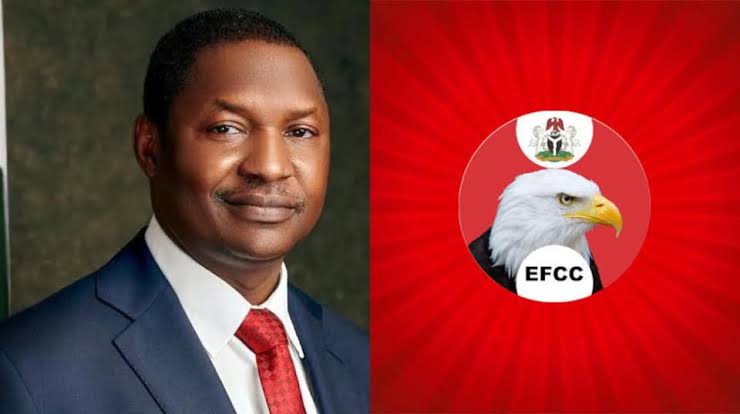
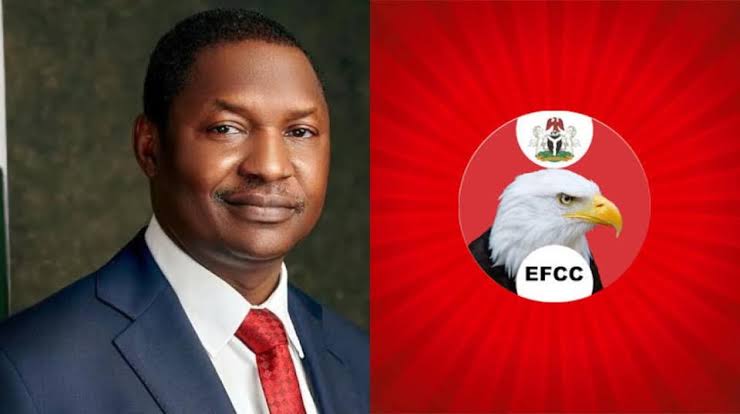
The Economic and Financial Crimes Commission (EFCC) has publicly addressed the reasons behind the ongoing detention of Abubakar Malami (SAN), the former Attorney-General of the Federation and Minister of Justice. Contrary to circulating rumors, the anti-corruption agency emphasized that Malami’s custody is unrelated to political motives or his attendance at a recent event in Kebbi State.
Non-Compliance with Bail Conditions at the Core
According to EFCC spokesperson Dele Oyewale, Malami was granted administrative bail on November 28, 2025, following a brief interrogation session. This bail was provisional and contingent upon fulfilling five specific conditions. However, Malami has neither satisfied any of these requirements nor demonstrated willingness to comply with them.
“Administrative bail is a discretionary, temporary release granted under defined terms while investigations continue and before court proceedings commence,” Oyewale explained. “After his initial questioning, Malami was offered this provisional bail, but he has failed to meet any of the stipulated conditions.”
Health-Related Postponement and Lack of Medical Evidence
Malami was scheduled to return for further questioning on December 1, 2025. Instead, he submitted a letter dated December 4 requesting a delay due to health concerns. The EFCC, showing leniency, approved this postponement despite his outstanding bail obligations.
However, the commission noted that Malami did not provide any medical documentation or credible proof to substantiate his health claims. Consequently, his reporting date was shifted from December 1 to December 4 to accommodate his request.
Subsequent Invitation and Detention Over Bail Violations
Following the adjusted date, Malami was summoned again on December 8 for continued interrogation. Due to his persistent failure to fulfill the bail conditions, the EFCC detained him pending compliance.
Oyewale stated, “While the Commission granted an adjournment on grounds of ill health, the absence of verifiable medical evidence means investigations must proceed unhindered. Therefore, Malami was invited back on December 8 and detained until he meets the bail terms.”
Refuting Claims of Bail Revocation and Political Interference
The EFCC spokesperson dismissed Malami’s assertions that his bail was revoked, labeling such claims as unfounded. Additionally, allegations that the commission restricted his media interactions or political engagements were rejected outright.
“It is baseless to suggest that the EFCC revoked his bail or barred him from speaking to the press or participating in political activities in Kebbi State,” Oyewale remarked. “The Commission remains impartial and does not consider the political affiliations of individuals under investigation.”
Call for Cooperation and Compliance
The EFCC urged Malami to adhere strictly to the bail conditions he agreed upon and to cooperate fully with investigators to facilitate the ongoing inquiry.
Malami has been in EFCC custody since Monday due to his non-compliance with bail terms. He is currently under investigation for several serious allegations, including abuse of office and financing terrorism.
Political Reactions and Allegations of Bias
Meanwhile, the African Democratic Congress has accused the EFCC of politicizing Malami’s detention, claiming that the move is driven by political motivations rather than legal grounds. This accusation adds another layer of controversy to the high-profile case.
As of 2025, Nigeria continues to grapple with corruption challenges, with the EFCC playing a pivotal role in prosecuting high-profile cases. Transparency and adherence to due process remain critical to maintaining public trust in such investigations.
