
Table of Contents
From Forged Certificates to Power Struggles: Nigerian Political Scandals That Defined 2025
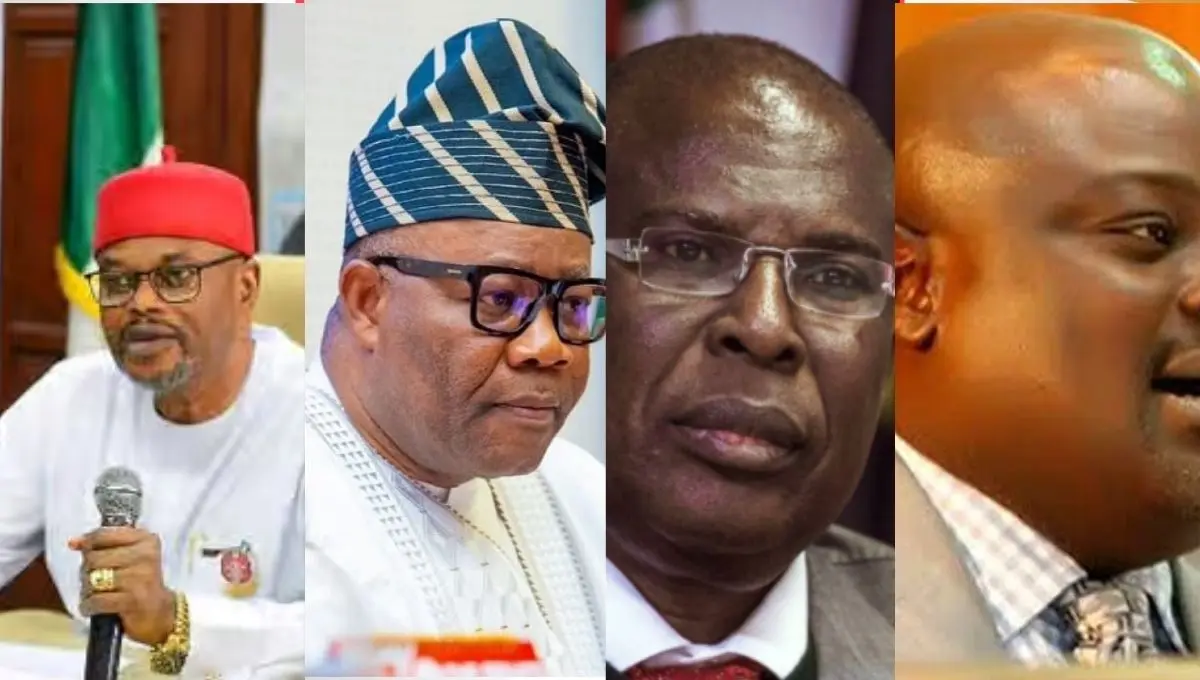
Nigerian politics in 2025 was anything but quiet. Rather than landmark legislation or sweeping reforms dominating the agenda, the year was marked by controversy, investigations and internal power tussles. Several high-profile politicians—many linked to the ruling All Progressives Congress (APC)—found themselves at the centre of scandals that kept the public glued to the headlines.
These episodes reshaped political conversations, raised fresh questions about accountability, and highlighted persistent weaknesses in institutional oversight. Below is a clear breakdown of four major political scandals that shaped Nigeria’s political climate in 2025.
The Uche Nnaji Certificate Controversy
The most explosive resignation of the year came in October when Uche Nnaji, then Minister of Innovation, Science and Technology, stepped down amid allegations that he submitted forged academic certificates during his 2023 screening.
An investigative report by a national newspaper claimed discrepancies in the documents Nnaji presented for his ministerial appointment. The story spread rapidly, forcing a swift response from the Presidency. Presidential spokesman Bayo Onanuga confirmed the resignation and relayed Nnaji’s assertion that he was being targeted through political sabotage.
Nnaji denied all allegations, maintaining that his degree in Microbiology/Biochemistry from the University of Nigeria, Nsukka (UNN) was authentic. Nevertheless, the incident reignited debates around background checks for public office holders and exposed gaps in Nigeria’s vetting processes.
Sexual Harassment Claim Rocks the Senate
Nigeria’s Senate became a focal point of national attention after Senator Natasha Akpoti-Uduaghan submitted a petition accusing Senate President Godswill Akpabio of sexual harassment.
The allegation sparked widespread debate and drew reactions from civil society groups, gender advocates and political stakeholders. However, instead of disciplinary action against Akpabio, the Senate voted to suspend Natasha for six months—a decision many viewed as controversial and punitive.
Akpabio firmly rejected the allegation, stating publicly that he had never harassed any woman. Although Natasha later returned to the Senate after serving her suspension, the episode left lingering questions about power imbalance, due process and how sensitive allegations are handled within Nigeria’s legislature.
EFCC Declares Timipre Sylva Wanted
Anti-corruption headlines followed former Minister of State for Petroleum Timipre Sylva after the Economic and Financial Crimes Commission (EFCC) issued a public notice declaring him wanted.
The commission alleged that Sylva was linked to the diversion of roughly $15 million earmarked for the construction of an oil refinery. The EFCC called on the public to provide information on his whereabouts, intensifying scrutiny on the former minister.
Sylva responded forcefully, accusing the agency of unlawfully raiding his Abuja residence. He described the EFCC’s actions as politically motivated and shared his objections publicly, further fuelling the controversy. The standoff kept Nigerians watching closely as legal and political tensions mounted.
Lagos Assembly Crisis: Obasa’s Exit and Comeback
Lagos State politics delivered one of the year’s most dramatic storylines. In January, Mudashiru Obasa, Speaker of the Lagos State House of Assembly, was impeached while he was out of the state. More than 90% of lawmakers voted him out, citing allegations of misconduct and abuse of office.
His deputy, Mojisola Meranda, was immediately installed as Speaker. However, the move reportedly unsettled key APC figures, with sources suggesting that President Bola Tinubu was displeased that the impeachment occurred without wider party consultation.
Political negotiations intensified behind closed doors, and by March, Meranda stepped aside. Lawmakers reinstated her as Deputy Speaker and restored Obasa to his former position in what was framed as a political compromise.
Upon returning, Obasa called for reconciliation within the Assembly and pledged renewed focus on governance, bringing an uneasy end to a saga that exposed deep internal rifts within Lagos politics.
A Year Defined by Controversy
Together, these scandals underscored how much of Nigeria’s political energy in 2025 was consumed by crises rather than reform. They also reinforced public calls for stronger institutions, greater transparency and clearer accountability standards across all levels of government.
As the country moves forward, the events of 2025 remain a reminder that political credibility is increasingly shaped not just by promises, but by integrity under scrutiny.
