
Table of Contents
Gen. Lucky Irabor Highlights Politicians’ Role in Nigeria’s Security Crisis
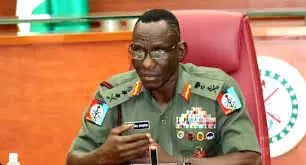
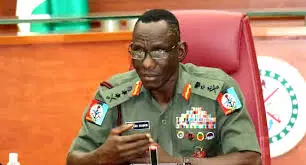
Retired Chief of Defence Staff, General Lucky Irabor, has recently shed light on the intricate relationship between political interests and the escalating insecurity across Nigeria. Speaking in a televised interview, he emphasized that the nation’s security challenges stem from a complex web of factors rather than a single source.
Unpacking the Complex Security Landscape
General Irabor elaborated on the multifaceted nature of violence affecting various Nigerian communities. He cautioned against oversimplifying the situation by attributing all violent acts to one cause, explaining that Nigeria is simultaneously grappling with diverse forms of insecurity, each driven by distinct motives.
He identified several categories of threats: ideological terrorism, sectarian violence targeting religious groups, criminal gangs displacing residents to seize control of territories, and economically motivated offenders. “Our security problems are layered and cannot be generalized,” Irabor remarked, underscoring the importance of nuanced analysis.
Political Exploitation of Insecurity
Addressing the widespread belief that insecurity is purely a political issue, Irabor acknowledged that while some politicians exploit the turmoil for personal or political advantage, it is inaccurate to label every violent incident as politically motivated. He warned that such blanket assumptions distort public understanding and hinder effective responses.
He further revealed that certain political figures deliberately manipulate insecurity narratives to bolster their image or undermine the government’s credibility. “Some use these crises to convince the populace they have superior solutions, while others may incite unrest to depict the administration as incapable,” he explained.
Implications for National Stability and Security Efforts
General Irabor stressed that the politicization of insecurity exacerbates divisions within society and complicates the work of security agencies striving to restore peace. He highlighted recent statements from presidential aide Daniel Bwala, who announced plans to publicly identify individuals allegedly funding terrorism, signaling a government commitment to tackling the financial networks behind violence.
With Nigeria facing a surge in violent incidents-ranging from insurgent attacks in the Northeast to communal clashes in the Middle Belt-Irabor’s insights call for a comprehensive and differentiated approach to security policy. According to the latest data from the Nigeria Security Tracker, violent deaths increased by over 15% in the past year, underscoring the urgency of addressing these layered threats.
Moving Forward: A Call for Strategic Clarity
In conclusion, General Irabor urged stakeholders to avoid conflating the various dimensions of insecurity and to recognize the distinct drivers behind each. He advocated for targeted interventions that address ideological extremism, criminality, and political manipulation separately to enhance the effectiveness of Nigeria’s security architecture.
“Understanding the diverse nature of these challenges is crucial for crafting solutions that restore peace and stability,” he affirmed, emphasizing that only through clear-eyed analysis and coordinated action can Nigeria hope to overcome its security dilemmas.
