
Table of Contents
As geopolitical tensions simmer, Venezuela is quietly gearing up for a potential clash with the United States. Unlike nations that invest heavily in cutting-edge military technology, Caracas is banking on irregular warfare tactics, urban unrest, and legacy weaponry to counterbalance its military shortcomings.
Guerrilla Warfare and Urban Disruption: Venezuela’s Dual Defense Plans
Leaked internal documents obtained by Reuters reveal that Venezuelan authorities recognize their inability to confront the U.S. military in a traditional battlefield scenario. In response, President Nicolás Maduro’s administration has crafted two primary defensive approaches: a “prolonged resistance” guerrilla campaign and a city-level destabilization operation dubbed “anarchisation.”
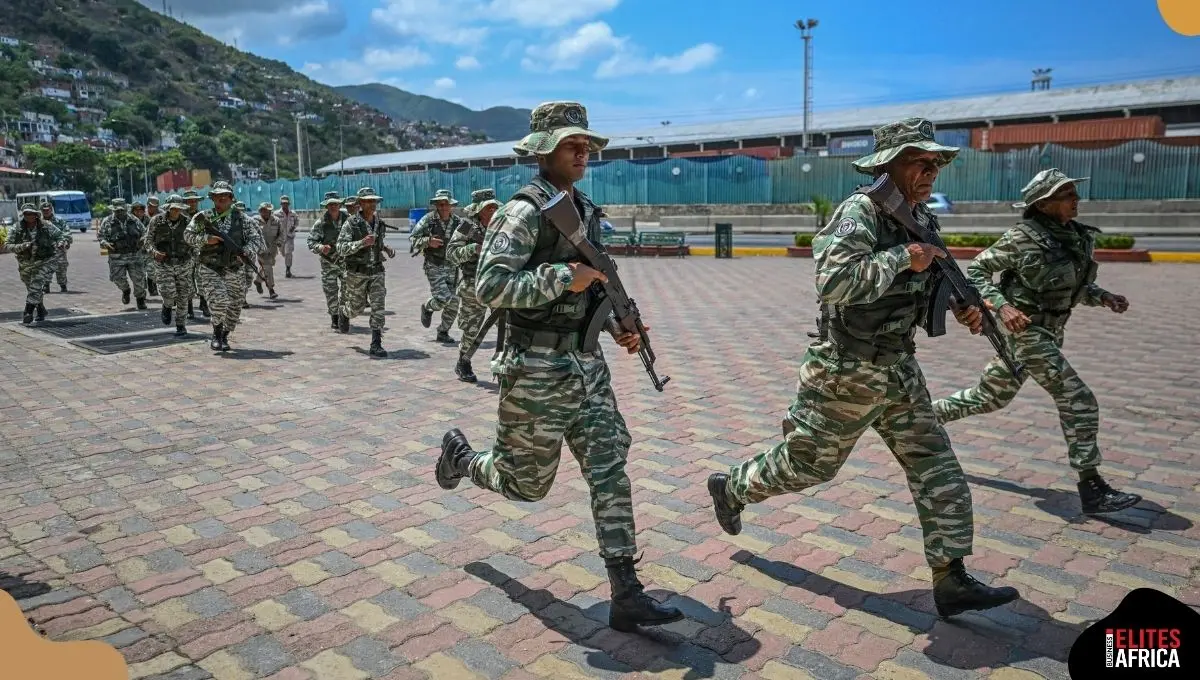
The prolonged resistance strategy involves deploying small, mobile military detachments across more than 280 strategic points nationwide. These units are trained to execute sabotage missions, ambushes, and hit-and-run attacks designed to wear down invading forces over time.
Simultaneously, the anarchisation plan envisions intelligence operatives and armed loyalists fomenting chaos within urban centers, particularly Caracas, to disrupt governance and complicate any occupation efforts.
Challenges Facing Venezuela’s Armed Forces
Despite these plans, Venezuela’s military capabilities remain severely compromised. Analysts highlight chronic issues such as inadequate training, insufficient funding, and obsolete equipment. Many service members subsist on meager salaries averaging around $100 monthly, far below the estimated $500 needed for basic living expenses. Training programs prioritize crowd control over modern combat readiness.
The country’s arsenal includes approximately 20 Sukhoi fighter jets, various helicopters, tanks, and anti-aircraft missile systems. However, much of this hardware is outdated and unlikely to withstand a confrontation with U.S. forces. For instance, the roughly 5,000 Igla-S man-portable air-defense systems in service date back several decades.
While Russia has extended assistance in refurbishing some military assets, it has simultaneously urged restraint to avoid escalating the conflict further.
Political Rhetoric and Military Mobilization
Despite these limitations, Maduro remains defiant, asserting that Venezuela will resist any foreign intervention. He accuses the U.S. administration, particularly under former President Donald Trump, of plotting to oust him and seize control of the nation’s vast oil reserves.
Government officials publicly dismiss invasion fears, portraying the armed forces as the proud successors of independence hero Simón Bolívar and affirming their preparedness. Interior Minister Diosdado Cabello has even ridiculed the notion that external bombings could topple the government.
Nevertheless, insiders concede the harsh reality: Venezuela’s military is ill-equipped for conventional warfare against a superpower. One source candidly remarked, “We wouldn’t last two hours,” while another emphasized the lack of professional readiness to face U.S. forces.
Militia Mobilization and Civilian Involvement
In line with its guerrilla doctrine, the Venezuelan government has mobilized approximately 60,000 soldiers and National Guard personnel to implement the prolonged resistance plan. Additionally, a core group of 5,000 to 7,000 civilians is being prepared to engage in urban resistance and street-level confrontations.
Current U.S. Actions and Venezuela’s Response
The United States has already taken steps to disrupt Venezuelan operations by targeting vessels suspected of drug trafficking. However, oil tankers transporting Venezuelan crude under sanctions continue to traverse Caribbean waters with minimal interference. Maduro insists that the U.S. military presence is less about narcotics control and more about orchestrating a regime change to control Venezuela’s oil wealth.
The High-Stakes Gamble of Asymmetric Warfare
Venezuela’s reliance on guerrilla tactics, citizen militias, and urban chaos underscores a sobering truth: the country cannot match the U.S. in conventional military strength but is prepared to engage in protracted asymmetric conflict to defend its sovereignty.
This strategy represents a significant risk in an already volatile standoff with one of the world’s most formidable armed forces. Observers worldwide remain attentive to how far Caracas is willing to push this unconventional defense approach.
