
Table of Contents
Addressing Child Malnutrition Crisis in South Sudan
South Sudan faces a severe malnutrition crisis, with an estimated 2.1 million children under the age of five at risk of acute malnutrition. Among these vulnerable children, approximately 670,000 suffer from severe wasting, while 1.44 million experience moderate wasting, posing a significant threat to their survival and development.
Government and WHO Collaboration to Expand Nutritional Care
In response to this urgent public health challenge, the Ministry of Health, in partnership with the World Health Organization (WHO) and other stakeholders, has launched comprehensive programs aimed at increasing access to treatment for malnourished children across all 10 states and three administrative regions of South Sudan. These initiatives focus on strengthening healthcare infrastructure and improving the quality of care in stabilization centers and hospitals nationwide.
Empowering Health Workers and Enhancing Treatment Protocols
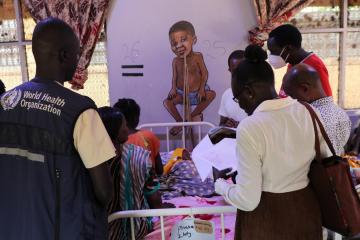
At the heart of these efforts are dedicated healthcare professionals and partner organizations committed to saving lives and improving child health outcomes. Khamisa Ayoub, Director of Nutrition at the Ministry of Health, highlights the critical role of WHO’s support in enhancing inpatient care for children with severe acute malnutrition (SAM) complicated by medical conditions. This support includes the development of updated clinical guidelines, training modules, revised job aids, provision of SAM treatment kits, and capacity-building programs for healthcare workers operating in stabilization centers.
Implementation of the Quality-of-Care Improvement Tool
WHO has introduced a structured Quality-of-Care Improvement Tool tailored for stabilization centers, designed to align with international standards and facilitate systematic improvements in patient care. To date, 47 healthcare workers from 15 centers located in Central (Juba), Eastern (Torit), and Western (Yambio) Equatoria States have been trained to utilize this tool effectively. The pilot phase at Al Sabah Children’s Hospital identified critical gaps in service delivery, leading to the formulation of targeted action plans. Complementary measures such as enhanced coordination, reliable supply of essential medicines, and robust monitoring systems have further bolstered the quality and consistency of care.
Dr. Gawar, a pediatrician at Al Sabah Children’s Hospital, attests to the transformative impact of these interventions: “The training and resources provided by WHO have revolutionized our approach to managing children with SAM. The Quality-of-Care Tool has been adapted to our local context, enabling healthcare workers to deliver standardized, high-quality treatment.”
Ongoing Challenges and the Need for Sustained Investment
Despite these promising advancements, the battle against child malnutrition in South Sudan remains daunting. Stabilization centers continue to report high mortality rates, with over half of pediatric deaths occurring within these facilities, according to monthly audits at Al Sabah Children’s Hospital. Leading causes of death include severe malaria, pneumonia, sepsis, and acute watery diarrhea (AWD) complicated by dehydration or shock-conditions that disproportionately affect young children due to their fragile immune systems and developing physiology.
These alarming statistics underscore that malnutrition extends beyond a medical condition; it is a multifaceted crisis with profound social and economic repercussions for families and communities. South Sudan’s childhood mortality rates are among the highest globally, with an Infant Mortality Rate (IMR) of 63.3 per 1,000 live births and an under-five mortality rate of 97.9 per 1,000 live births, highlighting the critical need for enhanced health and nutrition services.
Holistic Approach to Combatting Malnutrition
Dr. Humphrey Karamagi, WHO Representative to South Sudan, emphasizes the broader implications of malnutrition: “Malnutrition in children under five is not merely a health issue; it affects every dimension of a child’s life, hindering physical growth, cognitive development, and educational potential. Witnessing preventable child deaths is unacceptable. That is why WHO is committed to supporting the Ministry of Health and partners in scaling up nutrition services, strengthening the health system, and ensuring equitable access to care for all children.”
The newly implemented Quality-of-Care Improvement Tool is designed to assist clinicians, pediatricians, nutritionists, and nurses in delivering enhanced, evidence-based care within stabilization centers, ultimately improving survival rates and long-term outcomes for malnourished children.
