
Table of Contents
National Community Health Policy Review: Charting the Future of Health Services in Benin
Comprehensive Assessment and Collaborative Dialogue
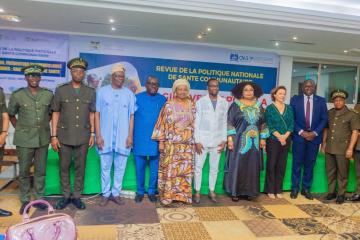
Between July 15 and 18, 2025, Benin hosted a pivotal national workshop to evaluate the progress of the National Community Health Policy (PNSC) and to establish strategic priorities for the upcoming years. This event, spearheaded by the Ministry of Health with the collaboration of UNICEF, WHO, the U.S. Government, the West African Health Organization (WAHO), and other key stakeholders, convened a diverse group of participants. These included government officials, local leaders, community-based organizations, and a broad network of technical partners actively engaged in the policy’s implementation.
Origins and Impact of the PNSC
Launched in 2020, the PNSC was designed to enhance access to healthcare by empowering Community Health Workers (CHWs) and Qualified Community Health Workers (ASCQ) to deliver essential services directly within communities. After two years of deployment, the policy has demonstrated significant improvements in critical health indicators such as immunization rates, sanitation habits, healthcare-seeking behaviors, availability of essential services, and timely patient referrals. These outcomes underscore the effectiveness of a community-centered approach that fosters local participation and proximity-based care.
Implementation Progress and Resource Allocation
The operationalization of the PNSC is backed by a budget of 86 billion CFA francs, with 66.6 billion CFA francs already secured. The policy’s rollout has progressed through three distinct phases: initial pilot projects, regional expansion, and full national coverage. Currently, Benin boasts a network of 15,547 Community Health Workers, 566 ASCQ personnel, and 19 designated focal points. However, some vacancies remain unfilled, and additional training sessions are underway to ensure comprehensive capacity building.
Challenges and Areas for Enhancement
Despite notable successes, the review identified several areas requiring attention. Key challenges include improving service quality, enhancing supervisory mechanisms, advancing digital health solutions, ensuring transparency in remuneration, and optimizing data collection and utilization. Participants also emphasized the necessity of integrating One Health principles to foster a holistic and resilient health system that addresses human, animal, and environmental health collectively. Securing sustainable financing models remains a critical priority to guarantee the long-term viability of the policy.
Endorsements from Global Health Leaders
Dr. Kouamé Jean Konan, WHO Representative and Lead Coordinator of Health Technical and Financial Partners (PTFs), commended Benin’s leadership in community health. He highlighted the Local Component of the Health System (CoLoSS) as a regional innovation and stressed the importance of a robust policy framework, skilled workforce, dependable information systems, and active community engagement. Dr. Konan remarked, “Strengthening community health is essential for crisis preparedness and achieving equitable health access, especially for remote populations.”
Representing UNICEF, Dr. Mariam Sylla reiterated the critical role of community health in ensuring equitable access to essential services for children, adolescents, and families across all regions. She acknowledged the joint funding efforts from UNICEF, the U.S. Government, and other international partners, alongside the Government of Benin, which have been instrumental in supporting the PNSC.
National Restitution and Strategic Commitment
The workshop culminated on July 18 with a national restitution day attended by over 300 stakeholders, including government officials, local authorities, One Health specialists, and development partners. This high-level forum ratified the technical recommendations and reaffirmed a unified commitment to scaling up the PNSC in a coordinated and sustainable manner. Ministers from the Health, Agriculture, and Decentralization portfolios underscored community health as a cornerstone of the Government Action Programme (PAG 2021-2026), pivotal to advancing universal health coverage in Benin.
Operational Guide and Future Roadmap
A significant outcome of the review was the endorsement of a comprehensive operational guide delineating the responsibilities of all stakeholders-from grassroots community actors to national policymakers. This guide establishes a standardized framework to harmonize practices and ensure consistent implementation nationwide.
Additionally, the workshop produced a detailed roadmap for the next phase of the PNSC, which includes monitoring the execution of key recommendations, disseminating the operational guide, developing the 2025-2030 strategic plan, mobilizing resources systematically, enhancing implementation oversight, and promoting the documentation and exchange of best practices.
