
Table of Contents
Understanding the Impact of Ebola Virus Disease
Bulape – Ebola virus disease remains a formidable health threat, especially when diagnosis and treatment are delayed. Despite significant progress in vaccine development and therapeutic interventions, the disease continues to cause substantial mortality and disrupt lives, particularly in vulnerable communities.
Current Ebola Outbreak in the Democratic Republic of the Congo
The Democratic Republic of the Congo (DRC) is currently grappling with its sixteenth Ebola outbreak, centered in the Bulape Health Zone of Kasai Province. Following the discharge of the last patient on 19 October 2025, health authorities are closely monitoring the situation to officially declare the outbreak over. To date, there have been 64 reported cases-53 confirmed and 11 probable-with 45 fatalities, reflecting a high case fatality rate of approximately 70%. The remote and hard-to-reach nature of Bulape has posed significant obstacles to scaling up and maintaining effective response efforts.
Stories of Resilience Amidst the Crisis
Amid the challenges, moments of hope have emerged. One particularly inspiring story involves an eleven-month-old infant who survived Ebola despite losing his mother to the disease. This recovery, occurring just a month after the outbreak was declared, provided a powerful morale boost to healthcare workers and the community alike.
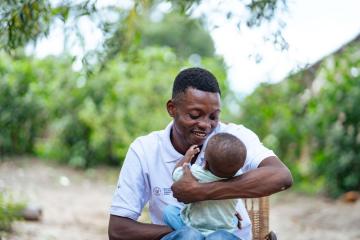
Alidor Mashala Katshiabala, the infant’s father, expressed profound gratitude: “I am incredibly thankful to everyone at the Ebola treatment center who cared for my son, especially Jean and the dedicated staff who fought tirelessly for his survival.” Jean Mikobi Tshilomba, a fellow patient who was also battling Ebola, played a crucial role in nurturing the baby during his treatment.
Compassionate Care Beyond Medical Treatment
The baby was admitted to the Bulape Ebola treatment center on 19 September alongside his stepmother and three siblings. While his family members tested negative and returned home, the infant tested positive, likely infected through breastfeeding and close contact with his mother. He required ongoing medical attention at the facility.
Recognizing that infants need more than just clinical care, Jean Mikobi Tshilomba provided essential emotional support. Despite his own illness, Jean comforted the baby by holding him during moments of distress, changing his diapers, and feeding him under medical supervision. Even after Jean was declared Ebola-free, he remained at the center to continue caring for the infant until full recovery.
Jean shared his motivation: “Thinking about my own child at home, I realized that if I were to pass away, someone would need to care for them. Providing this care to the baby here is an act of love and hope, driven by my deep affection for children.”
Progress and Community Involvement in Outbreak Response
So far, 19 patients have successfully recovered from Ebola in this outbreak, with no new cases reported since 25 September 2025. Dr. Mory Keita, WHO Incident Manager for the Ebola response in Bulape, reflected on the significance of the infant’s recovery: “Witnessing this child’s survival was one of the most touching moments of the outbreak. It reinforces why we dedicate ourselves to this work-every effort, every long hour, every sleepless night is aimed at saving lives and restoring hope to families.”
Ebola outbreaks are deeply rooted in community dynamics. Recent experiences have highlighted the critical role of community engagement and ownership in managing and ultimately ending outbreaks. Advances in vaccines and treatments have been instrumental, but empowering local populations remains key to sustainable success.
Ongoing Support and Future Outlook
Under the guidance of the DRC Ministry of Health, the World Health Organization continues to offer both technical expertise and operational assistance to bring this outbreak to a close. Efforts also focus on supporting survivors as they navigate recovery and reintegration into their communities.
As global health systems strengthen their response capabilities, the lessons learned from Bulape and similar outbreaks contribute to a more resilient and prepared future, aiming to reduce the devastating impact of Ebola virus disease worldwide.
