
Table of Contents
Eswatini‘s Strategic Drive to Combat Cervical Cancer
Eswatini continues to grapple with one of the world’s most severe cervical cancer burdens. In response, the World Health Organization (WHO) Country Office has partnered closely with the Ministry of Health (MOH) to design and implement the Cervical Cancer Elimination Acceleration Plan (2024-2028). This initiative is aligned with the WHO Global Strategy to Accelerate the Elimination of Cervical Cancer as a Public Health Problem, targeting the ambitious 90-70-90 goals by 2030: 90% HPV vaccination coverage, 70% screening coverage, and 90% access to treatment.
Empowering Nurses Through Task-Sharing and Decentralization
To expand treatment capacity, the MOH has launched a task-sharing program that trains nurses to perform Loop Electrosurgical Excision Procedures (LEEP), with physicians providing continuous mentorship at hospitals and health centers. Additionally, HPV testing and Visual Inspection with Acetic Acid (VIA) services have been decentralized, making these critical screening tools more accessible at primary healthcare facilities and laboratories across the country.
Intensive LEEP Training to Enhance Clinical Expertise
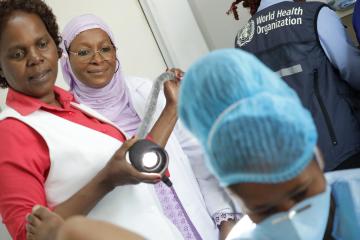
From October 6 to 17, 2025, the WHO Country Office in Eswatini, in collaboration with the MOH and technical support from the WHO Regional Office for Africa (AFRO), conducted a comprehensive 10-day LEEP training program for healthcare workers. This training was designed to bolster national capacity for managing cervical precancerous lesions, a key component of the third pillar of the WHO’s cervical cancer elimination strategy.
The curriculum combined theoretical instruction with hands-on clinical practice across multiple sites, including Phocweni Clinic, AHF Clinic, and Chakaza Clinic. A total of 31 healthcare professionals-comprising 8 doctors and 23 nurses-participated, covering essential topics such as cervical anatomy, screening techniques (VIA/VILI), precancer treatment modalities (thermal ablation and LEEP), infection prevention, pathology, and data management.
Clinical Outcomes and Quality Assurance
During the training, over 80 procedures were performed, including 33 LEEPs, one thermal ablation, and three biopsies, effectively addressing a backlog of cases. Only one minor complication-a bleeding incident-occurred and was successfully managed following WHO clinical guidelines. This hands-on experience significantly improved participants’ clinical decision-making skills, particularly in lesion assessment, treatment eligibility, and referral pathways.
Strengthening Integration and Coordination of Services
The program also fostered enhanced coordination between screening, treatment, and pathology services, ensuring a more streamlined patient care continuum. Discussions highlighted the urgent need to establish a National Cervical Cancer Task Force and update national screening and treatment protocols to align with WHO standards. These steps are critical to sustaining momentum toward cervical cancer elimination in Eswatini.
Looking Ahead: Certification, Data Integration, and Mentorship
Following the training, participants are expected to complete 30 supervised LEEP procedures by March 2026 to achieve certification. Plans are underway to integrate cervical cancer data into the national DHIS2 system, alongside the development of mentorship and quality assurance frameworks to maintain high standards of care.
A Model for Regional Success
Dr. Susan Tembo, WHO Eswatini Representative, emphasized that this LEEP training exemplifies how collaborative efforts between national and regional bodies, combined with evidence-based education and government leadership, can translate global strategies into tangible progress. “Eswatini’s experience serves as a beacon for the WHO African Region, demonstrating that even countries with the highest cervical cancer burdens can make significant strides toward elimination through partnership, dedication, and technical excellence,” she stated.
