
Table of Contents
Table of Contents
- Launch of Tanzania’s Pandemic Fund Project: A Strategic Move to Enhance Health Security
- Empowering Tanzania’s Pandemic Preparedness with Strategic Funding
- One Health Approach: Integrating Human, Animal, and Environmental Health
- Collaborative Launch Event Highlights Commitment to Health Security
- Government Leadership and Cross-Sector Partnerships: A Foundation for Success
- Addressing Tanzania’s Unique Health Security Challenges
- Focused Technical Workstreams Driving Project Implementation
- WHO Emphasizes Multisectoral Collaboration for Health System Strengthening
- UNICEF Highlights the Vital Role of Community Engagement
- FAO’s Commitment to Animal Health and Zoonotic Disease Prevention
- Pandemic Fund’s Support: Catalyzing Tanzania’s Health Security Ambitions
- Looking Ahead: Building a Resilient Health System by 2027
- About the Pandemic Fund
Launch of Tanzania’s Pandemic Fund Project: A Strategic Move to Enhance Health Security
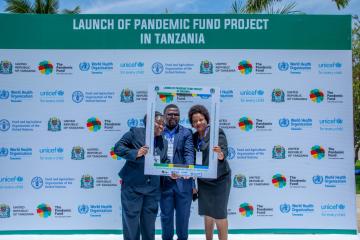
Mwanza, Tanzania – In a significant stride towards bolstering national health resilience, Tanzania’s President’s Office – Regional Administration and Local Government, alongside the Prime Minister’s Office and Ministry of Health, in partnership with the World Health Organization (WHO), UNICEF, and the Food and Agriculture Organization (FAO), officially inaugurated the Pandemic Fund Project in Mwanza.
Empowering Tanzania’s Pandemic Preparedness with Strategic Funding
This pioneering initiative is fueled by a US$25 million grant from the Pandemic Fund, complemented by an additional US$7 million in co-investments and US$6.7 million in co-financing. These combined resources establish a robust financial and technical framework designed to enhance Tanzania’s ability to anticipate, prevent, and respond effectively to future pandemics and public health crises.
One Health Approach: Integrating Human, Animal, and Environmental Health
Under the leadership of the Ministry of Health, the project adopts a comprehensive One Health strategy, coordinating efforts across multiple government sectors including the President’s Office – Regional Administration and Local Government, the Prime Minister’s Office, and the Ministry of Livestock and Fisheries. Implementation roles are clearly delineated: FAO spearheads animal health initiatives, UNICEF drives risk communication and community engagement, while WHO focuses on strengthening human health systems and emergency preparedness.
Collaborative Launch Event Highlights Commitment to Health Security
The launch event, themed “Enhancing Tanzania’s Capacity for Prevention, Preparedness, Detection, and Response to Pandemics and Public Health Emergencies,” convened senior government officials, development partners, and technical experts. The gathering underscored the critical importance of multisectoral collaboration in fortifying the country’s health infrastructure.
Government Leadership and Cross-Sector Partnerships: A Foundation for Success
Deputy Prime Minister and Minister of Energy, Hon. Dr. Doto Biteko, serving as Guest of Honour, highlighted the indispensable role of government stewardship and intersectoral cooperation. “Over the past two decades, global health emergencies have become increasingly frequent, and Tanzania has faced its share, including COVID-19 and Marburg virus outbreaks. Strengthening our pandemic preparedness is essential, not optional,” he stated. Dr. Biteko reaffirmed the government’s dedication to ensuring the project’s effective implementation and impactful outcomes.
Addressing Tanzania’s Unique Health Security Challenges
Despite steady economic growth in both Mainland Tanzania and Zanzibar, the nation confronts rising threats from zoonotic diseases and cross-border infections. While Tanzania complies with International Health Regulations (IHR), gaps remain in disease surveillance, laboratory capacity, and early warning systems. This project aligns with the National Action Plan for Health Security, aiming to mitigate epidemic impacts and prioritize vulnerable communities.
Focused Technical Workstreams Driving Project Implementation
The initiative is structured around specialized technical streams that enhance surveillance and early detection, expand laboratory networks and diagnostic capabilities, and develop a proficient health workforce ready to tackle public health emergencies. Each stream is led by designated implementing partners and supported by national stakeholders to ensure cohesive progress.
WHO Emphasizes Multisectoral Collaboration for Health System Strengthening
Representing WHO, Dr. Galbert Fedjo, Health Systems Coordinator, stressed the transformative potential of this project. “This initiative represents a decisive leap forward in Tanzania’s health security. By integrating human, animal, and environmental health under the One Health framework, and leveraging government leadership, we are advancing towards Universal Health Coverage and the Health for All agenda,” he remarked.
UNICEF Highlights the Vital Role of Community Engagement
Patricia Safi Lombo, UNICEF Deputy Representative to Tanzania, underscored the importance of grassroots involvement. “Community health workers are the frontline defenders of public health, often the first to reach families with critical information and services. Through this project, UNICEF will collaborate with local authorities, schools, and community leaders to enhance awareness and promote health-protective behaviors, ensuring timely and accurate information reaches every child,” she explained.
FAO’s Commitment to Animal Health and Zoonotic Disease Prevention
Ms. Stella Kiambi, FAO Emergency Centre for Transboundary Animal Diseases (ECTAD) Country Team Lead, highlighted the project’s role in safeguarding animal health. “Strengthening veterinary services and fostering coordination between animal and human health sectors are key to preventing zoonotic diseases from crossing into human populations. FAO remains dedicated to building resilient animal health systems that protect livelihoods and public health alike,” she affirmed.
Pandemic Fund’s Support: Catalyzing Tanzania’s Health Security Ambitions
Ms. Priya Basu, Executive Head of the Pandemic Fund, praised Tanzania’s proactive leadership. “This project is a vital investment in Tanzania’s capacity to detect, prevent, and respond to health threats. By channeling catalytic financing and fostering cross-sector partnerships, the Pandemic Fund is proud to back this country-driven effort. Our US$25 million grant has mobilized nearly US$14 million in additional resources, underscoring the power of collaborative financing,” she noted.
Looking Ahead: Building a Resilient Health System by 2027
Through this initiative, Tanzania aims to establish an integrated, functional disease surveillance and response system by 2027. This system will be capable of timely monitoring, confirming, and managing epidemic and pandemic threats, thereby safeguarding the health and livelihoods of its population.
About the Pandemic Fund
The Pandemic Fund is a groundbreaking multilateral financing platform dedicated exclusively to enhancing pandemic prevention, preparedness, and response (PPR) capacities in low- and middle-income countries. Since its inception in 2022, the Fund has mobilized nearly US$7 billion across 75 countries in six regions, including US$885 million in grants awarded through its initial two funding rounds. These investments have catalyzed over US$6 billion in additional domestic and international resources, supporting 47 projects focused on infectious disease surveillance, laboratory strengthening, diagnostics, and workforce development. The Fund’s long-term commitment aims to build sustainable health security infrastructures worldwide.
