
Table of Contents
Table of Contents
Assessing President Trump’s Inflation Promises One Year After Election Victory
President Donald Trump secured his second term largely by pledging to combat inflation, a pressing concern for many Americans facing rising living costs. Throughout his campaign, Trump attributed soaring prices to the policies of President Joe Biden and vowed to reduce expenses for everyday goods and services “starting on day one.” Now, a year after his inauguration, it is crucial to evaluate the accuracy of these claims and the real impact of his administration’s policies on inflation.
Food Prices: Reality vs. Promises
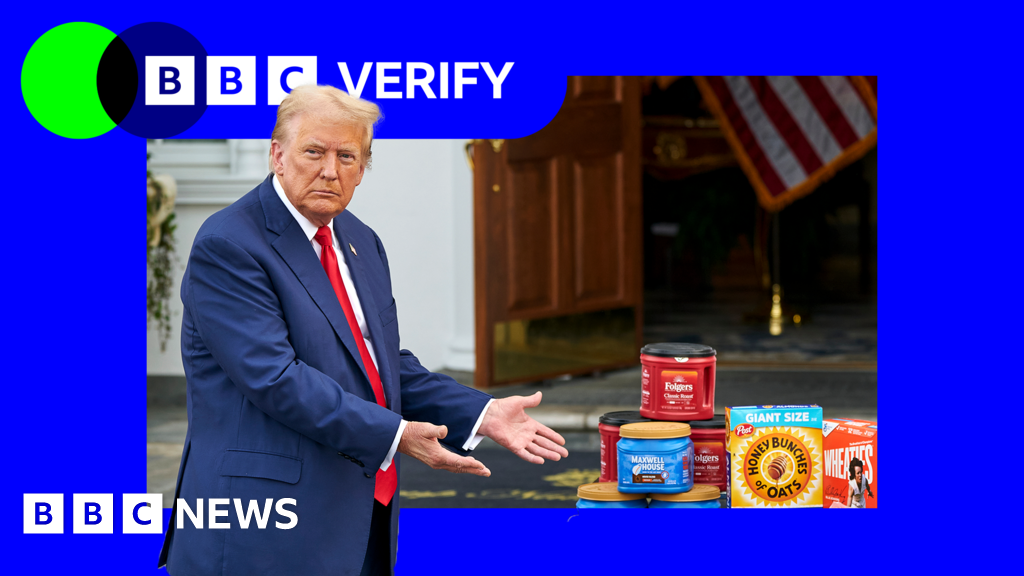
At an August 2024 press event, Trump confidently stated, “When I win, I will immediately bring prices down, starting on Day One,” while standing amid grocery staples like milk, meat, and eggs. However, official statistics from the U.S. Bureau of Labor Statistics reveal that grocery prices increased by 2.7% in the 12 months leading up to September 2025-a period that includes both Biden’s and Trump’s presidencies.
- Coffee prices surged by 18.9%
- Ground beef costs rose 12.9%
- Bananas became 6.9% more expensive
Monthly data since Trump’s inauguration in January 2025 shows grocery prices climbing almost every month, with only a single dip in April. Experts emphasize that the president’s direct influence over food prices is limited, especially in the short term. Professor David Ortega, a specialist in food economics, points out that Trump’s tariffs have increased costs for certain imports-such as coffee, where a 50% tariff applies to Brazilian beans, which constitute about one-third of U.S. consumption.
Additionally, Trump’s stringent immigration policies may have indirectly contributed to rising food prices. With an estimated 40% of farm laborers undocumented-nearly one million workers-restrictions on immigration have pressured farmers to raise wages to attract workers, further driving up production costs.
Diane Swonk, KPMG’s chief economist, concurs that tariff and immigration policy shifts have intensified inflationary pressures. She also highlights adverse weather conditions affecting coffee harvests in Brazil and Colombia, compounding price increases.
While some grocery items have become more expensive, others have seen price reductions. For example, egg prices, which peaked at $6.23 per dozen in March 2025 due to avian flu outbreaks, have since dropped to $3.49. Butter, margarine, ice cream, and frozen vegetables have also experienced slight price declines over the past year.
A White House spokesperson credited Trump’s supply-side policies with mitigating inflation, noting efforts such as temporarily increasing beef imports to address rising meat prices. However, they acknowledged that global factors like weather patterns are beyond presidential control.
Electricity Costs: Rising Despite Promises
During his campaign, Trump pledged to slash electricity bills by up to 50% within 12 to 18 months. Contrary to this promise, residential electricity rates climbed from 15.94 cents per kilowatt-hour (kWh) in January 2025 to 17.62 cents per kWh by August 2025, according to the U.S. Energy Information Administration.
Professor James Sweeney of Stanford University explains that electricity prices encompass not only generation costs but also transmission and distribution expenses. He attributes the price hike to increased demand-particularly from data centers powering artificial intelligence applications-and supply constraints.
Moreover, reductions in renewable energy subsidies and tariffs on imported steel, which raise the cost of constructing new power plants, have contributed to higher electricity prices. Economist Diane Swonk adds that the AI-driven surge in electricity consumption disproportionately affects lower-income households, exacerbating energy inequality since wealthier consumers are more likely to have access to solar panels and other renewable energy sources.
The White House maintains that expanding coal, natural gas, and nuclear power capacity is essential to meet growing energy demands and reduce costs, framing these efforts as pragmatic solutions to the energy crisis.
Automobile Prices: Continuing Upward Trend
At a September 2024 rally, Trump extended his pledge to reduce prices to automobiles, promising lower costs for “groceries, cars, everything.” Yet, data from Kelley Blue Book shows the average price of a new car surpassed $50,000 for the first time in September 2025, up from $48,283 in January.
Erin Keating of Cox Automotive explains that new car prices typically increase by 2-3% annually, but tariffs have added at least one percentage point to this rise over the past year. She anticipates further price hikes in 2026 as manufacturers eventually pass on tariff-related costs to consumers.
Keating also notes that tax incentives included in Trump’s spending bill may encourage new car purchases, potentially offsetting some inflationary effects. Meanwhile, a White House official highlighted regulatory actions aimed at reversing what they describe as “the left’s radical energy scam,” claiming these measures will save consumers billions annually.
Gasoline Prices: An Ongoing Challenge
Gasoline prices remain a critical concern for many Americans, though detailed analysis of recent trends and policy impacts is necessary to fully understand the current landscape. Factors such as global oil markets, geopolitical tensions, and domestic production levels continue to influence pump prices, complicating efforts to deliver consistent relief to consumers.
Conclusion: Mixed Outcomes Amid Complex Influences
One year into President Trump’s second term, the promise to rapidly reduce inflation-related costs has met with mixed results. While some progress is evident in select grocery items, overall food prices, electricity rates, and vehicle costs have generally increased. Experts attribute these trends to a combination of tariffs, immigration policies, supply chain challenges, and external factors like climate events and technological demand surges.
As the administration continues to implement its economic strategies, ongoing monitoring and nuanced analysis will be essential to assess their effectiveness in addressing inflation and improving affordability for American households.
