
Table of Contents
Table of Contents
Trump Issues Stark Warning Over Violence Against Christians in Nigeria
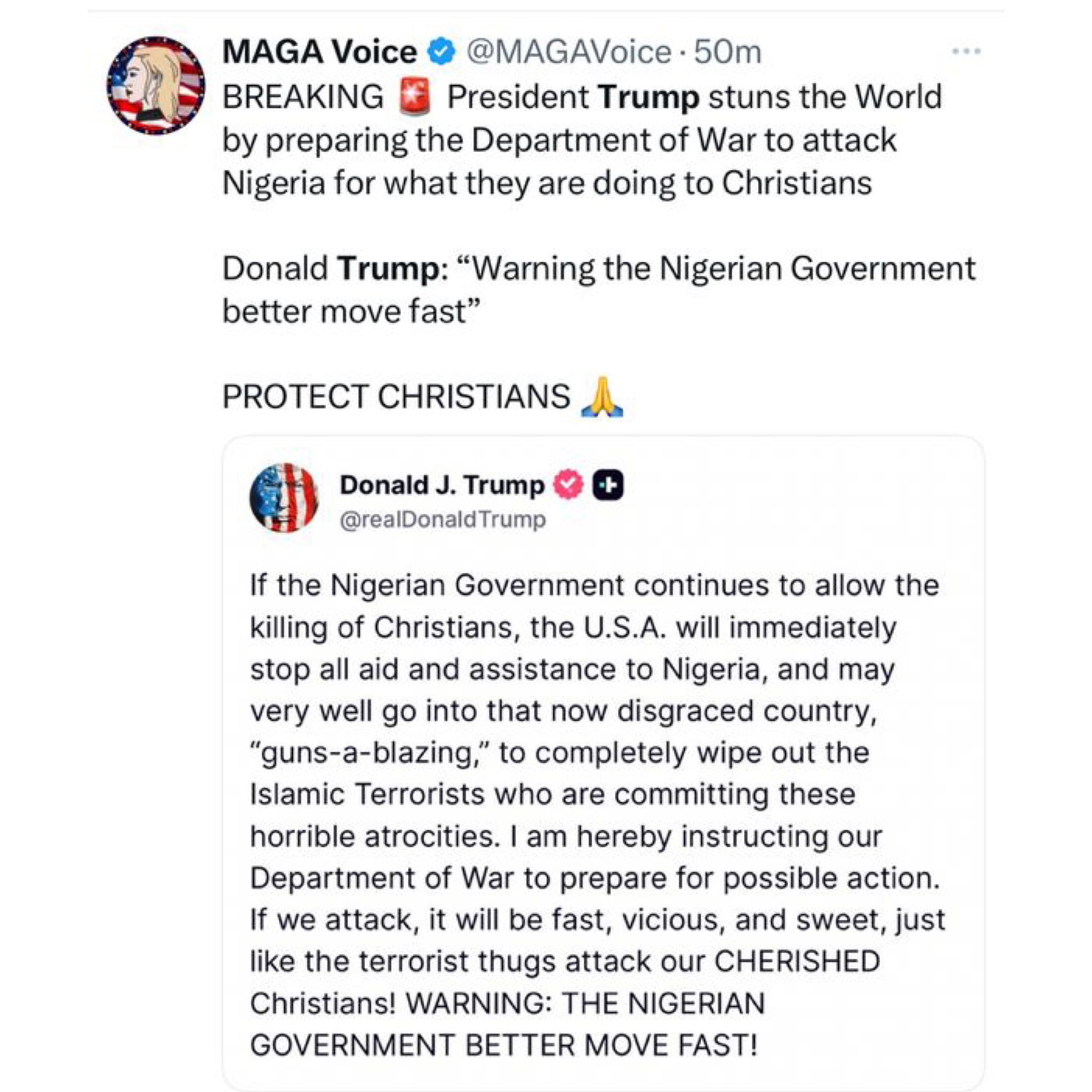
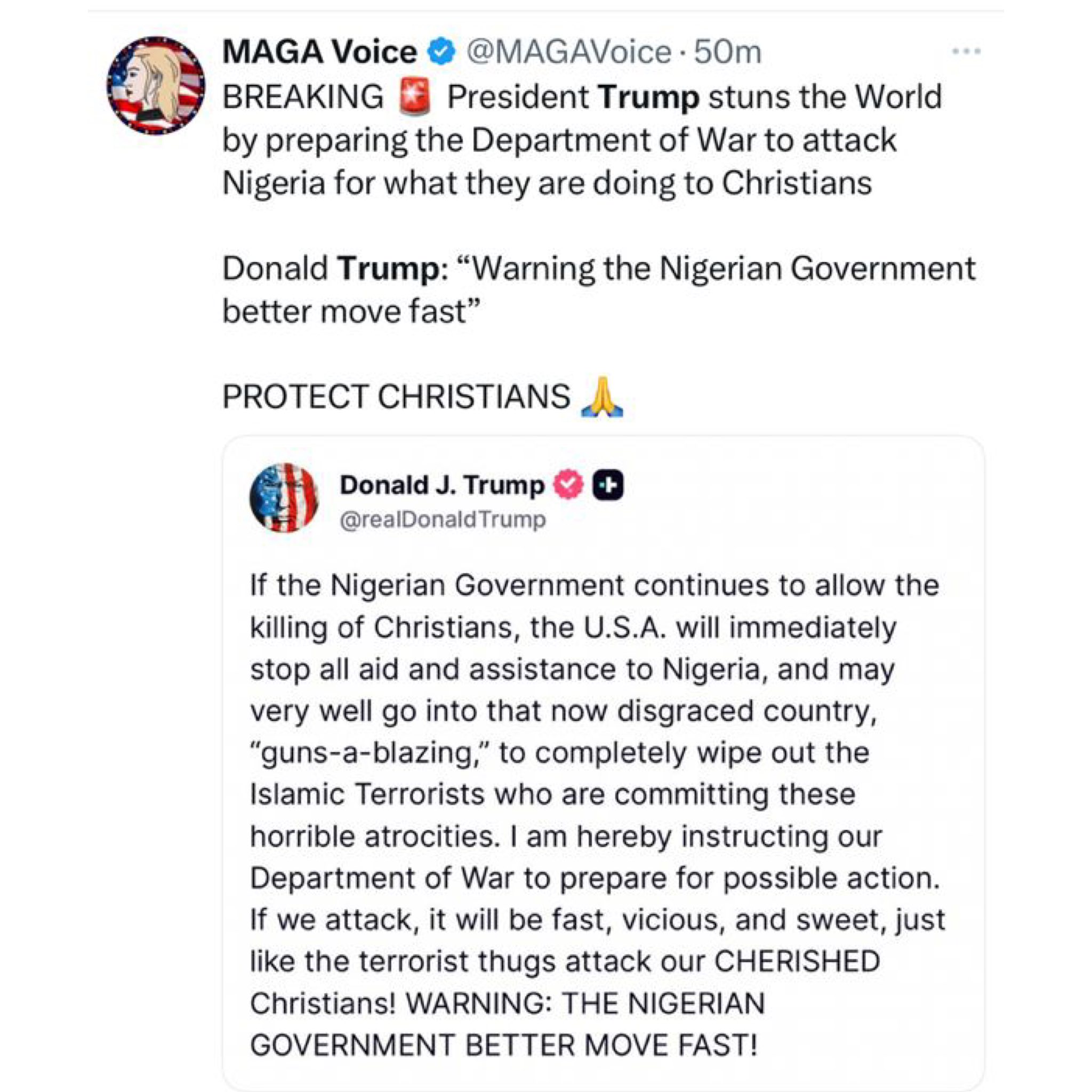
Former US President Donald Trump has issued a forceful warning to Nigeria, threatening military intervention if the Nigerian government does not halt the ongoing violence targeting Christian communities.
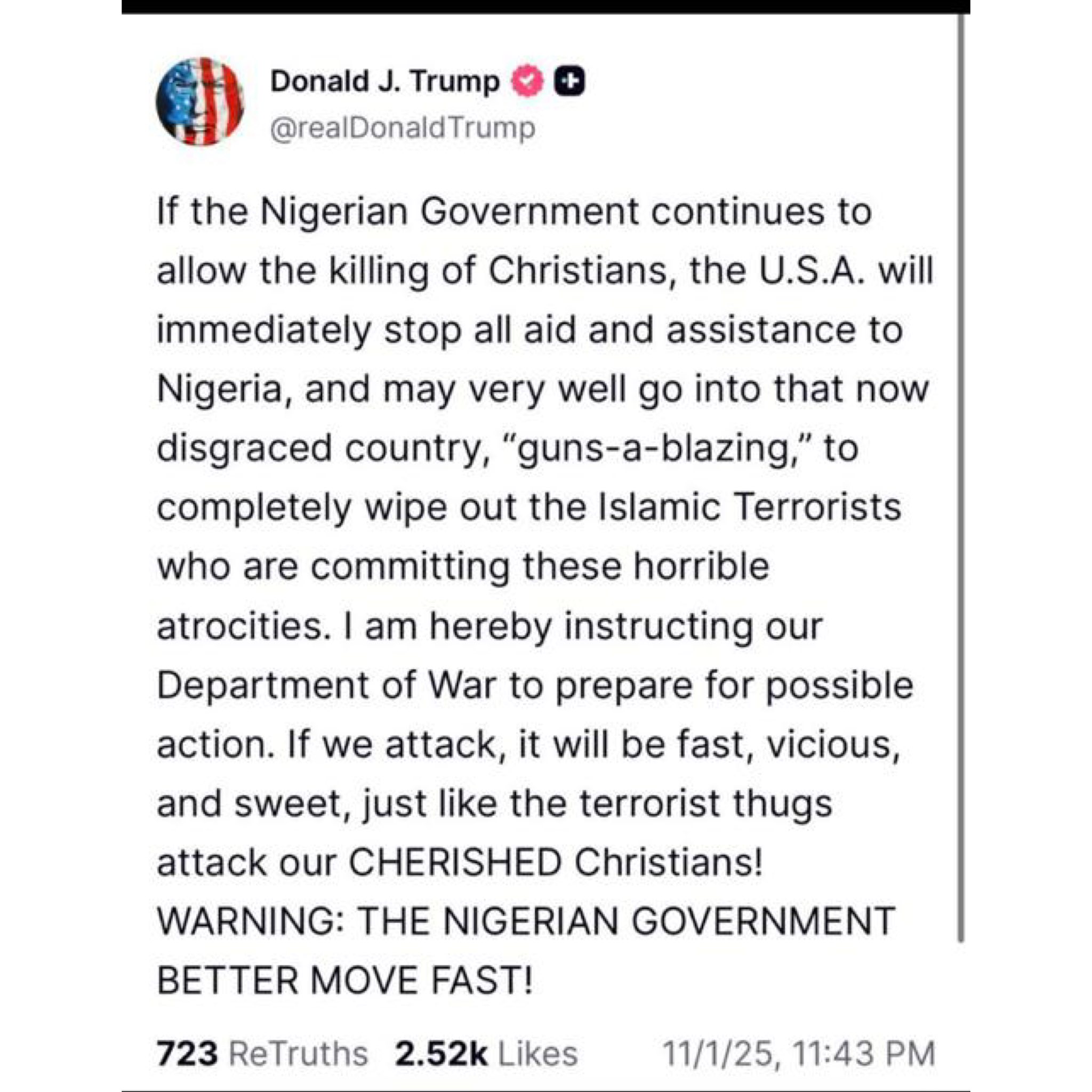
In a strongly worded message shared on social media, Trump declared that the United States would immediately suspend all forms of aid to Nigeria and might resort to direct military action to eliminate the Islamist militants responsible for the attacks.
“Should the Nigerian authorities continue to permit the slaughter of Christians, the U.S. will cease all assistance and may deploy forces to decisively eradicate the Islamic terrorists perpetrating these brutal acts,” Trump stated. “I have directed the Department of Defense to prepare for potential operations. Any intervention will be swift, forceful, and precise, mirroring the ruthless tactics used by these terrorists against our beloved Christian brothers and sisters. The Nigerian government must act without delay.”
Designation of Nigeria as a Country of Particular Concern
This announcement follows Trump’s recent classification of Nigeria as a “country of particular concern” under the International Religious Freedom Act, citing egregious violations of religious liberties.
Nigeria has been grappling with escalating violence, including insurgencies led by Boko Haram and other extremist factions in the northeast, alongside violent conflicts between Fulani herders and predominantly Christian farming communities in central regions.
Global Reactions: Support and Criticism
Trump’s remarks have sparked a spectrum of responses worldwide. Some supporters, such as US Senator Ted Cruz and entertainer Nicki Minaj, applauded his firm stance in defense of persecuted Christians.
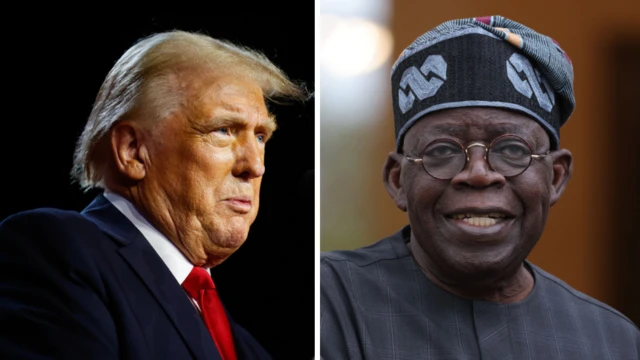
Conversely, Nigerian government officials have vehemently disputed Trump’s portrayal of the situation. Yusuf Maitama Tuggar, Nigeria’s Foreign Affairs Minister, told Newsweek that allegations of genocide are unfounded and politically charged.
“There has never been a genocide in Nigeria. These assertions are exaggerated and serve political agendas,” Tuggar emphasized.
President Bola Ahmed Tinubu also addressed the issue, reaffirming Nigeria’s commitment to religious freedom and coexistence.
“Religious tolerance is fundamental to Nigeria’s national identity. Our population is nearly evenly divided between Christians and Muslims, and our constitution guarantees freedom of religion,” Tinubu affirmed.
Implications for US-Nigeria Relations
The Trump administration’s hardline rhetoric represents a significant intensification in the discourse surrounding one of Africa’s most populous countries and a strategic US partner in counterterrorism.
Experts caution that such statements risk exacerbating diplomatic strains between Washington and Abuja, complicating ongoing efforts to address religious freedom, security challenges, and human rights concerns.
Contextualizing the Crisis
Recent data from the Council on Foreign Relations indicates that over 3,000 people have been killed in communal violence in Nigeria in the past two years, with Christian communities disproportionately affected. Similar to conflicts in other regions, such as the sectarian violence in Myanmar, the Nigerian crisis underscores the complex interplay of ethnic, religious, and political factors fueling instability.
