
Table of Contents
Ex-Attorney General Abubakar Malami Responds to EFCC’s Controversial Seizure of Abuja Home
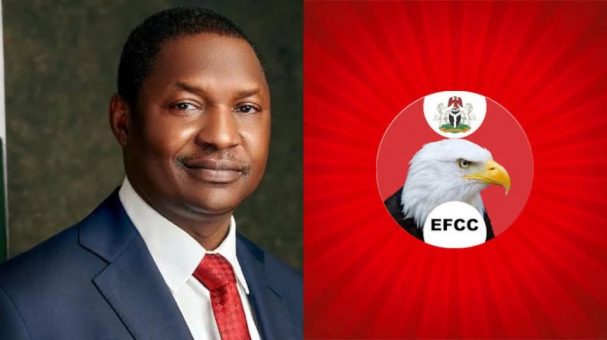
Abubakar Malami, the former Attorney-General of the Federation, has publicly denounced the Economic and Financial Crimes Commission’s (EFCC) recent action to confiscate his residence in Abuja. He characterized the move as “extrajudicial, unlawful, and lacking legitimacy,” emphasizing that the property seizure occurred despite ongoing legal proceedings contesting the order.
Background of the EFCC’s Enforcement Action
On Monday, the EFCC initiated the enforcement of an interim forfeiture directive targeting Malami’s Abuja property. This step followed a court-issued order, which the former AGF is currently challenging through the judicial system. The EFCC’s aggressive approach has sparked widespread debate about due process and the limits of anti-corruption agencies’ powers in Nigeria.
Malami’s Legal Standpoint and Public Statement
In his response on Tuesday, Malami insisted that the EFCC’s attempt to take control of his home was premature and violated his rights. He argued that the ongoing court case should have halted any enforcement actions until a final verdict is reached. Malami’s statement underscores concerns about the balance between law enforcement and individual legal protections.
Contextualizing the EFCC’s Role and Recent Trends
The EFCC has intensified efforts to recover assets linked to corruption, with over ₦50 billion reclaimed in the past year alone. However, critics argue that some enforcement measures have occasionally bypassed established legal protocols, raising questions about accountability and transparency. This incident involving Malami adds to a growing list of high-profile cases where asset forfeiture has been contested.
Implications for Nigeria’s Anti-Corruption Landscape
The confrontation between Malami and the EFCC highlights the ongoing tension between anti-corruption initiatives and the protection of legal rights. As Nigeria continues to strengthen its fight against financial crimes, ensuring that enforcement actions respect judicial processes remains crucial. This case may set important precedents for how similar disputes are handled in the future.
Source: Politics Nigeria
