
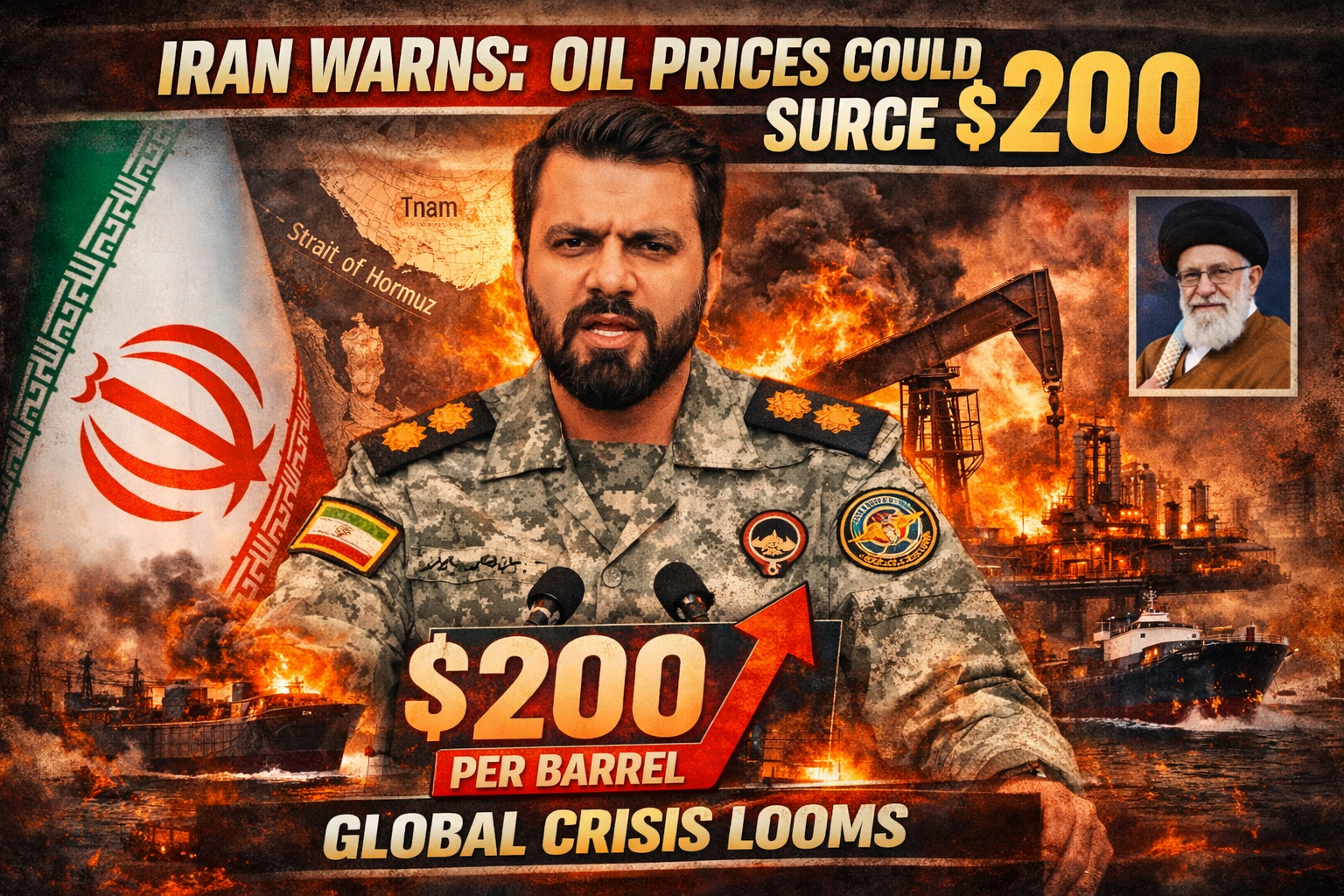
Iran has warned that global oil prices could surge beyond $200 per barrel amid escalating tensions in the Middle East.
The warning comes as geopolitical risks surrounding the region’s energy infrastructure continue to intensify following recent military confrontations involving Iran, the United States, and Israel.
At the beginning of 2026, global oil prices were trading around $60 per barrel. Since then, the market has seen sharp increases driven by fears of supply disruptions across the Persian Gulf — one of the most important oil-producing regions in the world.
Energy analysts note that a significant escalation affecting shipping routes such as the Strait of Hormuz could severely disrupt global oil supply. Nearly 20% of the world’s oil shipments pass through the strait, making it one of the most critical energy chokepoints on the planet.
If oil prices were to climb above $200 per barrel, the effects could ripple across the global economy.
Oil is a foundational input in transportation, manufacturing, food production, and logistics. A dramatic surge in crude prices would likely push up fuel prices, shipping costs, electricity generation costs, and the price of everyday goods worldwide.
Economists warn that such a spike could trigger global inflation shocks and economic instability, particularly for countries heavily dependent on imported energy.
As tensions in the Middle East continue to unfold, energy markets remain on edge while governments and investors closely monitor developments in the region.
