

Global energy markets were shaken after crude oil prices surged above $100 per barrel for the first time since 2022, driven by escalating tensions between the United States, Israel, and Iran.
West Texas Intermediate (WTI) crude climbed above the $100 mark, with prices hovering around $106 per barrel, as traders reacted to fears of supply disruptions in the Middle East. Brent crude also surged to more than $107 per barrel, marking a sharp jump in global energy costs.
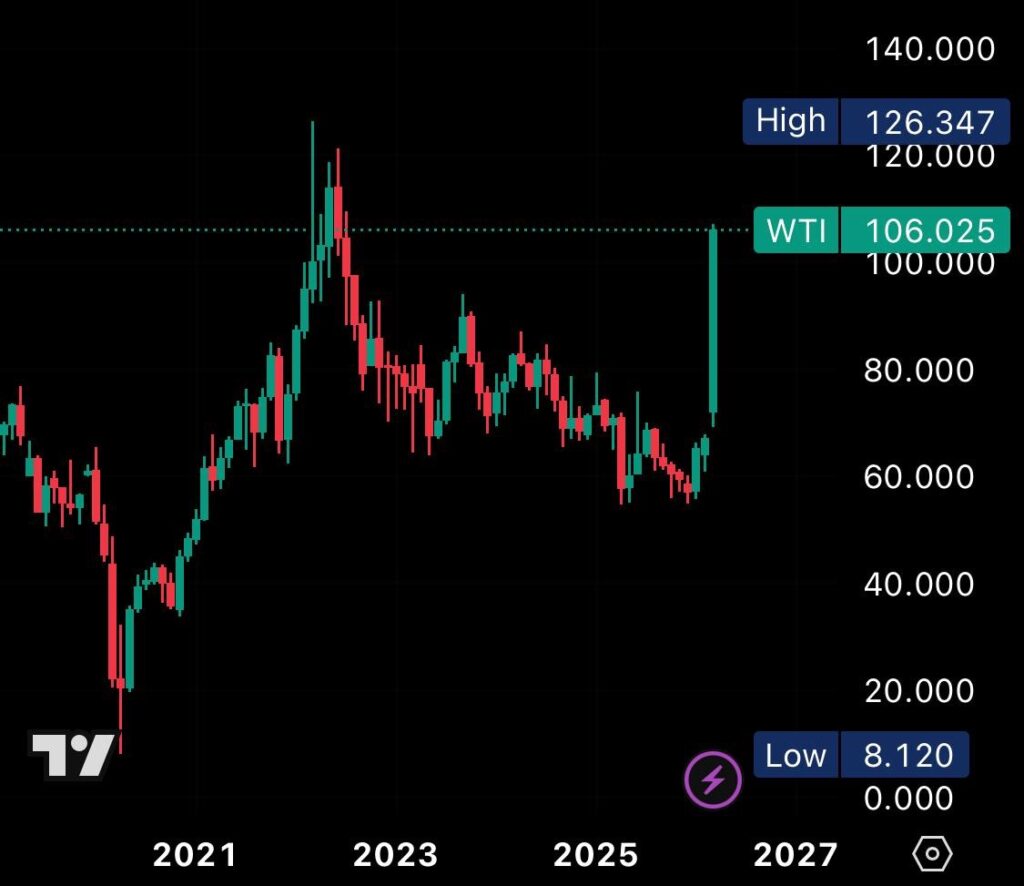
The spike follows intensified military exchanges in the region, including strikes on Iranian infrastructure and threats to shipping routes in the Strait of Hormuz, one of the most critical oil transit corridors in the world. Roughly 20% of global oil supply passes through the strait, meaning any disruption can send shockwaves through international markets.
Analysts say the market is pricing in the risk of prolonged conflict and potential disruptions to oil production and transport across the Middle East. Some estimates suggest prices could climb even higher if tanker traffic or energy infrastructure remains under threat.
The surge in oil prices has already begun to impact global financial markets, pushing energy stocks higher while raising concerns about inflation, fuel costs, and economic slowdown worldwide.
Economists warn that if crude remains above $100 for a prolonged period, it could drive up transportation costs, increase consumer fuel prices, and put additional pressure on economies already dealing with inflation.
For now, global markets remain on edge as the geopolitical situation continues to evolve.
