Several Gulf nations, including Saudi Arabia, the United Arab Emirates, Kuwait, and Qatar, are reportedly reviewing their economic ties with the United States as the ongoing Iran conflict places increasing strain on regional economies.
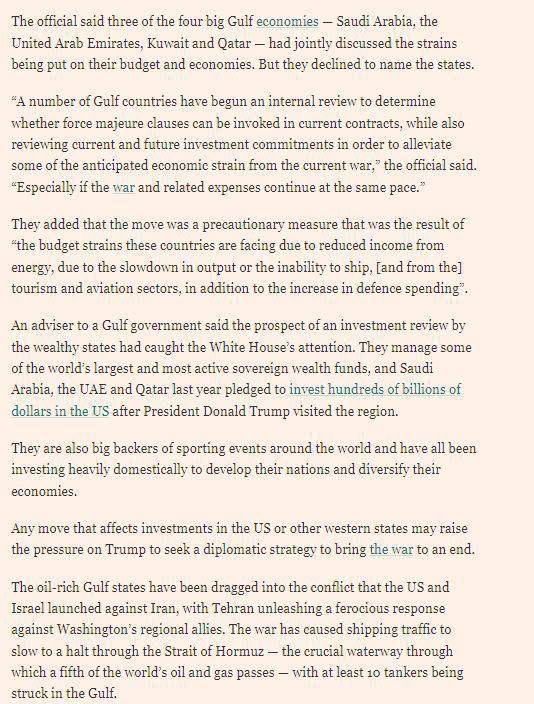
According to officials familiar with the discussions, the governments of these four major Gulf economies have begun evaluating whether to withdraw from certain U.S.-related contracts and reconsider future investment commitments as part of broader efforts to manage the financial pressures resulting from the conflict.
Economic Pressure Mounts
Officials say the review is being driven by growing budgetary pressures caused by the regional conflict, including increased defense spending and disruptions affecting key sectors such as energy production, aviation, tourism, and shipping.
Some Gulf states are reportedly assessing whether force majeure clauses could be invoked in existing agreements to legally pause or cancel certain obligations.
A government adviser quoted in the report said the move is largely precautionary, aimed at protecting national budgets if the conflict continues to escalate.
Potential Impact on U.S. Investments
The review could carry significant implications for U.S. markets and industries, as Gulf nations collectively control some of the world’s largest sovereign wealth funds and have historically been major investors in American infrastructure, technology, and financial assets.
In recent years, Saudi Arabia, the UAE, and Qatar pledged to invest hundreds of billions of dollars in the United States, particularly following diplomatic and economic engagements between U.S. leadership and Gulf governments.
Strategic Financial Reassessment
Analysts say the current evaluation does not necessarily mean an immediate withdrawal from U.S. partnerships, but rather reflects a broader strategic reassessment of global investments during a period of geopolitical instability.
Gulf states have increasingly diversified their economic strategies, investing heavily in domestic development, global sporting events, and new industries as they seek to reduce reliance on traditional energy revenues.
Uncertain Outcome
While no final decisions have been announced, the internal review signals growing economic caution among Gulf governments as the Iran-related conflict continues to reshape global political and financial dynamics.
Observers say any large-scale reduction in Gulf investment commitments could have significant ripple effects across global markets.