
Table of Contents
Debate Ignites on Social Media Over the Impact of Budgeting Amid Rising Living Costs
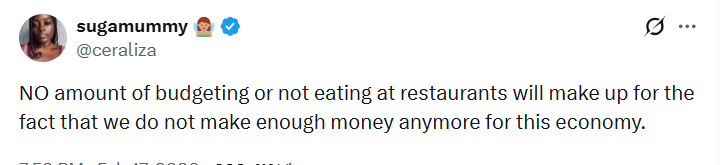
Recently, a social media user on X (formerly Twitter) sparked widespread discussion by expressing frustration over the current economic climate. The user asserted that no matter how much one budgets or cuts back on dining out, it simply isn’t enough to keep up with today’s financial demands.
“No amount of budgeting or skipping restaurant meals can compensate for the fact that wages no longer match the cost of living,” the post stated.
Wages Lagging Behind Inflation: A Growing Concern
This sentiment resonated with many, who pointed out that inflation and rising expenses have far outpaced income growth. According to the U.S. Bureau of Labor Statistics, consumer prices increased by 4.7% over the past year, while median wages have only seen a modest rise of 2.3%, intensifying the squeeze on household budgets.
One commenter highlighted the misconception that small daily expenses are the root cause of financial struggles:
“People often blame their morning coffee when the real culprits are skyrocketing rent, grocery bills, and insurance premiums. Budgeting can help manage spending, but it can’t solve the fundamental issue of stagnant wages.”
They added, “Eventually, it’s not about spending smarter; it’s about earning more or reducing fixed costs — and that’s the uncomfortable truth many avoid discussing.”
Income vs. Expenses: The Real Financial Challenge
Another voice in the conversation emphasized that cutting back on luxuries like coffee or trendy brunch items won’t bridge the gap between income and expenses:
“Telling people to stop buying a $7 latte won’t make a $2,000 one-bedroom apartment any more affordable. Even eliminating all discretionary spending leaves many barely scraping by because wages haven’t kept pace with inflation for over two decades. The problem has always been income, not spending habits.”
Consumer Culture and Changing Lifestyle Expectations
However, some participants argued that evolving consumer preferences also contribute to financial pressures. One user noted:
“Our economy is increasingly driven by consumerism. People desire convenience, which comes at a cost. What were once considered luxuries—like living alone, owning a new car, or having high-speed internet and smartphones—are now seen as necessities. So yes, prices have risen, but so have our expectations.”
This perspective suggests that lifestyle changes and societal norms around consumption play a significant role in the rising cost of living.
Looking Ahead: Balancing Income Growth and Cost Management
As the debate continues, experts emphasize the need for a multifaceted approach to economic challenges. While personal budgeting remains a valuable tool for managing finances, addressing wage stagnation and the affordability of essential services is crucial for long-term stability.
For instance, recent policy proposals in several countries aim to increase minimum wages and expand affordable housing initiatives, recognizing that systemic changes are necessary to complement individual financial strategies.
Ultimately, the conversation underscores a complex reality: managing rising living costs requires both personal discipline and broader economic reforms to ensure that income growth keeps pace with inflation and evolving consumer needs.
