
Table of Contents
Kano EFCC Secures Conviction in N22 Million Investment Scam
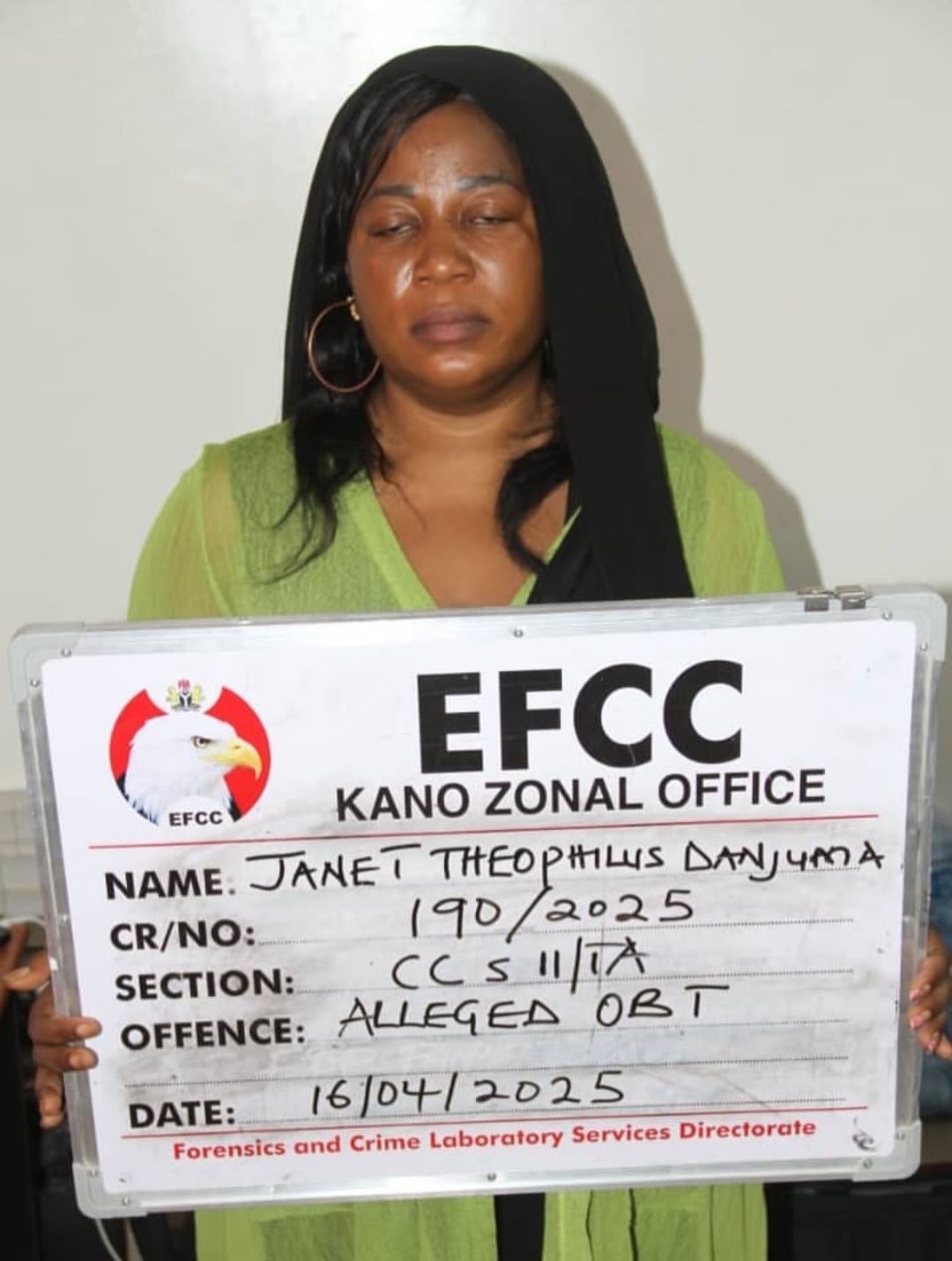
The Economic and Financial Crimes Commission (EFCC) Kano Zonal Directorate has successfully prosecuted Janet Theophilus Danjuma for orchestrating an investment fraud amounting to ₦22,350,000 (Twenty-Two Million, Three Hundred and Fifty Thousand Naira). The case was adjudicated by Justice S. M. Shuaibu at the Federal High Court in Kano.
Details of the Case and Charges
Janet Danjuma, formerly employed at Taj Bank Limited’s Nai’bawa Branch in Kano, was formally charged on Monday, February 16, 2026, with a single count of obtaining money by false pretenses. The charge stated that in October 2024, within the court’s jurisdiction, she deceitfully acquired ₦22,350,000 from a victim named Wade Bamaiyi. She misrepresented that the funds would be invested in the bank’s CASA (Current Account Savings Account) program, a claim she knew to be fraudulent. This act contravened Section 1(1)(b) and Section 1(3) of the Advance Fee Fraud and Other Fraud Related Offenses Act 2006.
Admission of Guilt and Court Proceedings
Upon arraignment, Danjuma pleaded guilty to the charge. Prosecutor Sadiq Huseini presented the case facts, emphasizing how the defendant exploited the credibility of a genuine banking product to deceive investors. He urged the court to impose the statutory penalty to serve as a deterrent.
Judgment and Sentencing
Justice Shuaibu found Danjuma guilty and sentenced her to five years imprisonment without the option of a fine. The court’s decision underscores the judiciary’s commitment to combating financial crimes and protecting public trust in financial institutions.
EFCC Investigation and Impact
EFCC’s investigation revealed that the entire ₦22,350,000 was diverted into Danjuma’s personal bank account rather than the purported CASA investment scheme. This case highlights the increasing sophistication of financial fraud schemes in Nigeria, where perpetrators misuse legitimate banking products to defraud unsuspecting investors. According to recent EFCC reports, investment fraud cases have surged by 15% in the past year, reflecting the urgent need for vigilance and regulatory enforcement.
Similar to this case, in 2025, another individual was convicted for a ₦30 million Ponzi scheme falsely linked to a well-known microfinance institution, demonstrating a troubling trend of financial scams camouflaged under reputable financial services.
