
Table of Contents
UN Secretary-General Urges Complete Decolonisation of Western Sahara and Other Territories
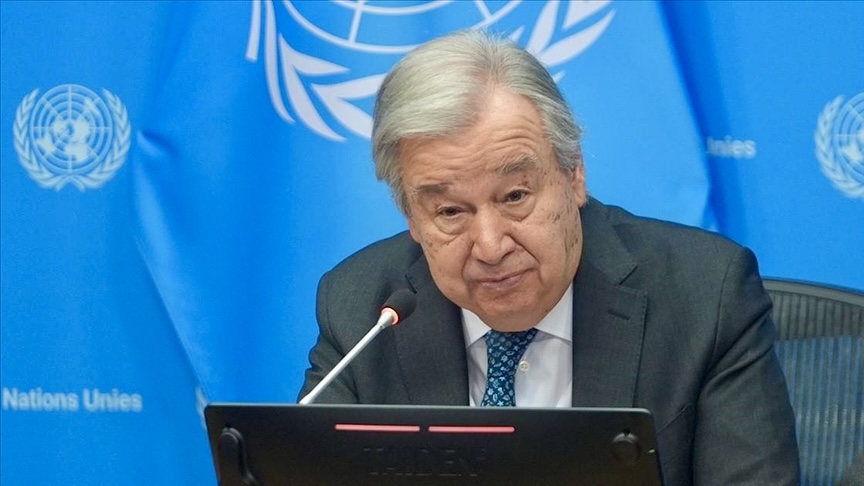
United Nations Secretary-General António Guterres has once again emphasized the urgent need to finalize the decolonisation process for Western Sahara along with sixteen other territories still under colonial administration. Speaking at the 2026 session of the UN Special Committee on Decolonisation (C-24), Guterres called on the international community to renew its commitment to ending colonial rule, a mission that has spanned over six decades since the UN first embarked on this agenda.
Reaffirming the UN’s Founding Principles
Guterres reminded delegates that the United Nations was established as a platform where all nations convene as equals, not as colonizers and the colonized. He highlighted that decolonisation remains a cornerstone of the UN’s purpose, underscoring the organization’s responsibility to eradicate the remnants of colonialism worldwide.
Enduring Impact of Colonialism on Modern Societies
The Secretary-General warned that the consequences of colonial domination continue to permeate contemporary societies, manifesting in systemic economic exploitation, persistent social inequalities, racial discrimination, and the exclusion of affected communities from meaningful participation in governance and decision-making processes.
The Role and Mandate of the Special Committee on Decolonisation
Established by the UN General Assembly in 1961, the Special Committee on Decolonisation (C-24) is tasked with monitoring and facilitating progress toward self-governance for territories that have yet to achieve full independence. This mandate is rooted in the historic 1960 Declaration on the Granting of Independence to Colonial Countries and Peoples, which set the framework for the global decolonisation movement.
Strategic Priorities for Advancing Decolonisation
Guterres outlined several critical steps to accelerate the decolonisation process. He advocated for inclusive and transparent dialogue involving the territories themselves, the administering powers, UN member states, and other relevant actors. He stressed that each territory’s unique circumstances must be addressed individually, guided by the principles enshrined in the UN Charter, the 1960 Declaration, and pertinent General Assembly resolutions.
Progress and Remaining Challenges
Since the founding of the United Nations in 1945, over 80 former colonies, representing an estimated 750 million people, have attained independence. Despite this progress, Western Sahara and sixteen other Non-Self-Governing Territories—primarily small island territories in the Caribbean and Pacific—remain on the UN’s list, collectively home to nearly two million inhabitants.
Western Sahara: Africa’s Last Remaining Colony
Often described as the final colonial holdout in Africa, Western Sahara was administered by Spain until 1976. Following Spain’s withdrawal, a complex territorial dispute ensued involving Algeria, Morocco, and Mauritania. Currently, the Sahrawi Arab Democratic Republic (SADR), operating from exile in Tindouf, Algeria, controls approximately 30% of the territory, while Morocco administers the remaining 70%. Recent diplomatic efforts, including negotiations facilitated by former U.S. President Donald Trump, have signaled potential pathways toward resolving this protracted conflict.
Looking Ahead: The Path to Self-Determination
The Secretary-General’s call to action serves as a reminder that the unfinished business of decolonisation demands renewed international focus and cooperation. As global dynamics evolve, the UN’s commitment to supporting the right to self-determination for all peoples remains as vital as ever.
