
Table of Contents
Remembering Rev. Jesse Jackson: A Trailblazer for Civil Rights and Political Change
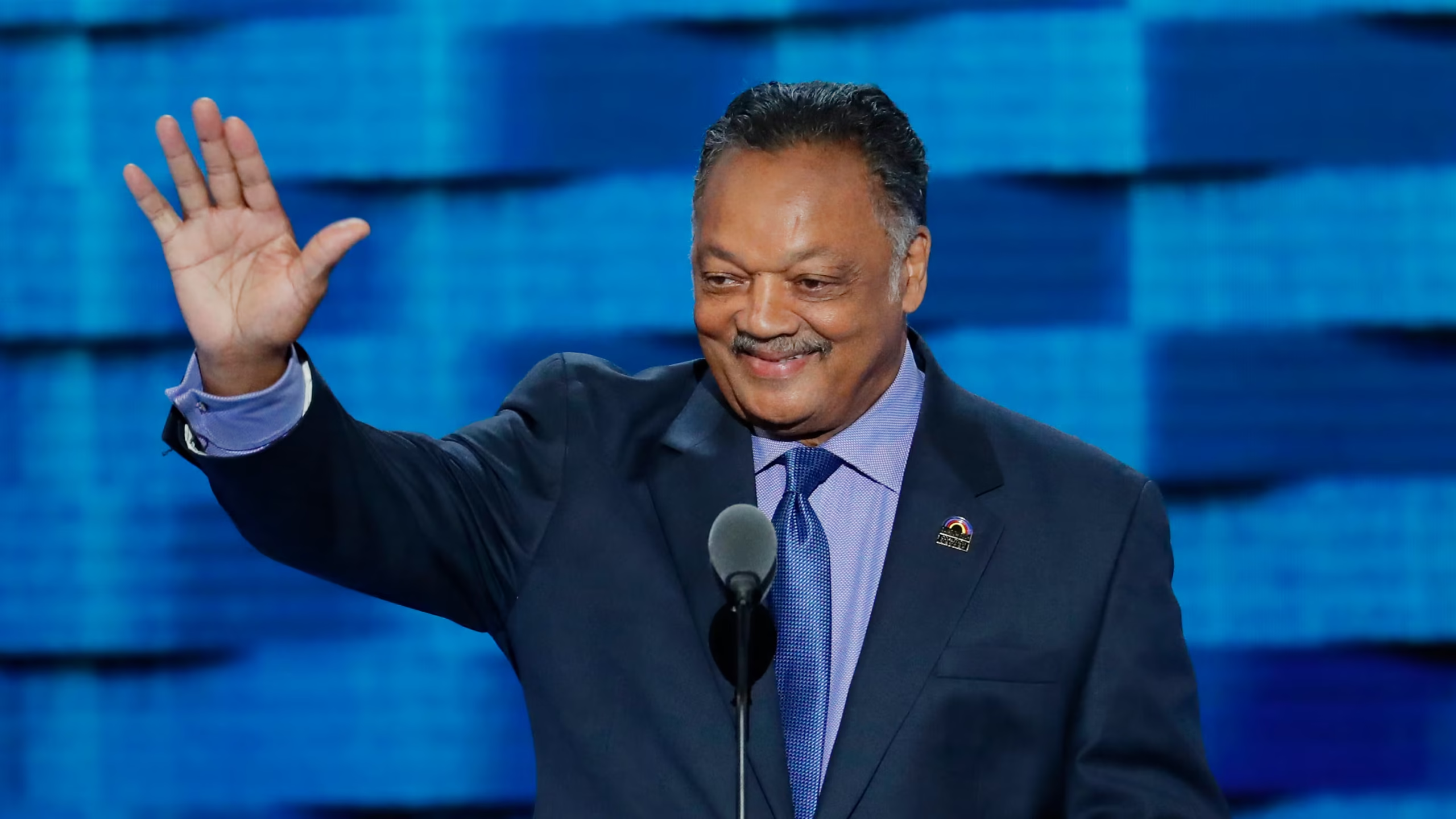
Rev. Jesse Jackson, a towering figure in the fight for civil rights, a Baptist minister, and a pioneering two-time Democratic presidential hopeful, passed away at 84 years old. His family announced his death on the morning of February 17, 2026.
A Lifelong Crusader for Justice and Equality
Jackson’s legacy is defined by his relentless pursuit of justice, equality, and human dignity. His efforts helped ignite a worldwide movement advocating for freedom and respect for all people. From his groundbreaking presidential campaigns in the 1980s to his leadership in voter registration drives that mobilized millions, Jackson’s impact on history is profound and enduring.
Health Challenges and Final Days
In recent months, Jackson had been hospitalized and was under medical supervision for progressive supranuclear palsy (PSP), a rare neurodegenerative disorder, according to the Rainbow PUSH Coalition, the organization he founded to promote social justice.
From Humble Beginnings to Civil Rights Vanguard
Born Jesse Louis Burns on October 8, 1941, in Greenville, South Carolina, Jackson’s early life was marked by hardship. His mother, Helen Burns, was just 16, and his biological father, Noah Louis Robinson, was a married neighbor. Jackson only discovered his biological father’s identity at age seven. Later, he adopted the surname of his stepfather, Charles Jackson, whom his mother married during his infancy. Both men played significant roles in his life.
Growing up amid the harsh realities of Jim Crow segregation and poverty, Jackson faced social stigma for his birth circumstances. Yet, he transformed these challenges into motivation, excelling academically and athletically. “I was afraid to fail,” Jackson once reflected. “Excelling in sports and academics was a shield against rejection.”
Early Activism and Education
Jackson’s charisma and intellect shone early; he was elected class president at Sterling High School and graduated with honors. Turning down a minor league baseball opportunity, he accepted a football scholarship at the University of Illinois before transferring to North Carolina A&T State University.
At A&T, Jackson immersed himself in civil rights activism, joining the Congress of Racial Equality (CORE) and spearheading sit-ins challenging segregation. Notably, on July 16, 1960, he led a sit-in at the whites-only Greenville County Public Library. When Jackson and seven other Black students, later dubbed the “Greenville Eight,” were denied access and arrested for peacefully reading inside, their protest led to the closure of segregated library branches and the establishment of an integrated facility.
Mentorship Under Dr. Martin Luther King Jr. and Rise to Prominence
Jackson’s activism caught the attention of Dr. Martin Luther King Jr., who recruited him to the Southern Christian Leadership Conference (SCLC). Jackson deferred his theological studies at Chicago Theological Seminary to work full-time with King. Ordained in 1968, he later earned a Master of Divinity in 2000.
As director of the SCLC’s Operation Breadbasket, Jackson focused on improving economic opportunities for Black communities, blending activism with pragmatic economic strategies.
Historic Presidential Campaigns and Political Influence
Leveraging his leadership with the Rainbow PUSH Coalition, Jackson launched a groundbreaking bid for the Democratic presidential nomination in 1984. Though initially dismissed as a fringe candidate, he secured 18% of the primary vote and won two states, signaling a shift in American politics.
His 1988 campaign was even more impactful, capturing 29% of the primary vote and winning 13 states. Jackson became the first Black candidate to win the nationwide Democratic youth vote, inspiring a new generation of minority leaders. Tina Flournoy, former chief of staff to Vice President Kamala Harris, remarked in 2007, “So many African-American leaders emerged from that campaign. He was the catalyst.”
Continued Advocacy and Legacy
Throughout the 1990s and 2000s, Jackson remained a formidable political voice. From 1991 to 1997, he served as Washington D.C.’s “shadow senator,” an unofficial role advocating for D.C. statehood without voting privileges in Congress.
His influence extended beyond electoral politics, shaping the Democratic Party’s embrace of social and economic progressivism as the nation entered the 21st century.
Enduring Impact on Civil Rights and American Society
Rev. Jesse Jackson’s six-decade commitment to racial justice transformed the landscape of American civil rights. His efforts not only challenged systemic racism but also expanded political participation and representation for marginalized communities. As the nation reflects on his passing, his legacy continues to inspire activists and leaders worldwide.
