
Table of Contents
Federal Government Initiates Legal Action Against Nasir El-Rufai Over Phone Tapping Allegations
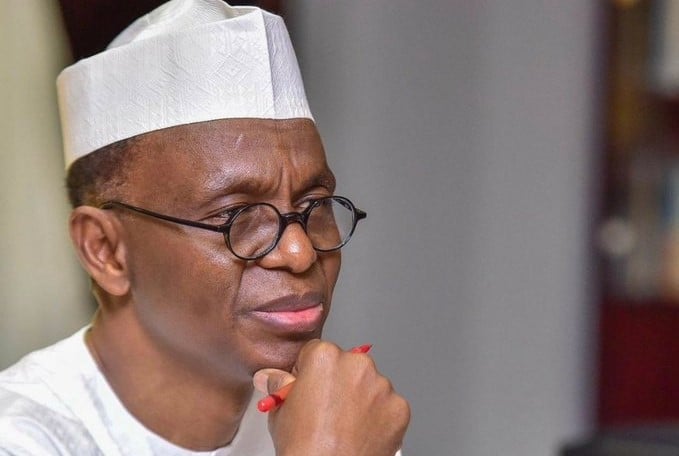
The Federal Government has taken legal steps against former Kaduna State Governor, Nasir El-Rufai, following his public admission on live television that phone lines belonging to the National Security Adviser (NSA), Nuhu Ribadu, were intercepted.
El-Rufai’s Controversial Admission on National Television
During an interview on the Prime Time program aired by Arise Television on Friday, February 13, El-Rufai revealed that someone within his circle had tapped the NSA’s phone. He claimed this surveillance enabled them to overhear Ribadu allegedly directing security agents to arrest him. While acknowledging the illegality of the act, El-Rufai justified it by asserting that such practices are common, even by the government itself.
“He made the call because we listened to their calls. The government thinks they are the only ones that listen to calls but we also have our ways. He made the call and gave the order. Someone tapped his phone. The government listens to our calls all the time without a court order. Someone tapped his phone and told us that he gave the order.”
Legal Proceedings and Charges Against El-Rufai
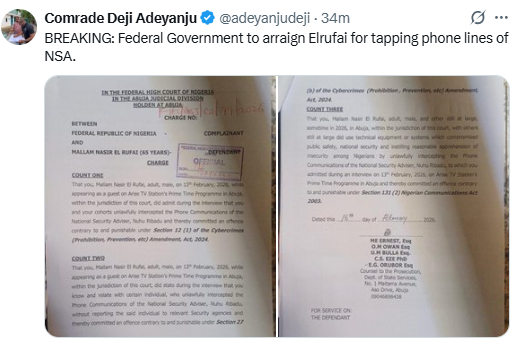
In response to these statements, the Federal Government has filed a lawsuit against El-Rufai at the Federal High Court in Abuja. The legal documents allege that by admitting to the phone tapping on national television, El-Rufai violated Section 12(1) of the Cybercrimes (Prohibition, Prevention, etc.) (Amendment) Act 2024. This section criminalizes unauthorized interception of communications, highlighting the seriousness of the offense.
Context and Implications of Phone Surveillance in Nigeria
Phone tapping and electronic surveillance have been contentious issues in Nigeria’s political landscape. While the government often justifies such actions as necessary for national security, critics argue that these practices infringe on privacy rights and the rule of law. According to recent reports, cybercrime cases involving illegal interception of communications have surged by over 30% in the past year, underscoring the urgency of addressing these violations.
Looking Ahead: The Impact of This Case
This lawsuit against a prominent political figure like El-Rufai could set a significant precedent regarding accountability and the limits of surveillance in Nigeria. It also raises questions about the balance between security measures and respecting citizens’ privacy rights. As the case unfolds, it will be closely watched by legal experts, human rights advocates, and the general public alike.


Watch the full video of Nasir El-Rufai’s interview below to hear his statements firsthand.
