

A resurfaced 1971 feature story by TRUST magazine has reignited conversations about innovation, recognition, and the challenges faced by young inventors in Nigeria’s early post-independence era.
According to the report, Mudashiru Ayeni, a 20-year-old Nigerian student in the early 1970s, believed he had successfully developed a battery-powered robotic office assistant. Confident in his invention, Ayeni reportedly sought an opportunity to personally demonstrate the device to then Head of State, General Yakubu Gowon.
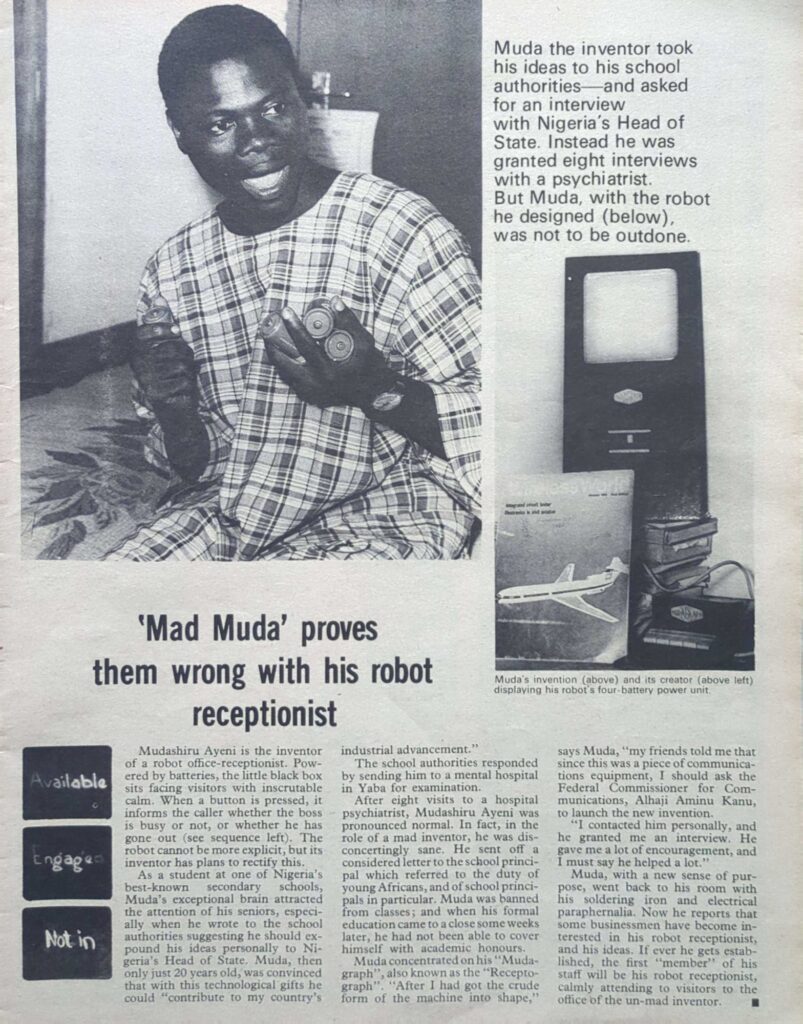
Instead of receiving a demonstration platform, Ayeni was reportedly referred for psychiatric evaluation. The magazine stated that he made eight visits to a hospital before a psychiatrist eventually certified him to be of sound mind.
Following this, Ayeni wrote to his school principal outlining his views on the role young Africans were expected to play in shaping the continent’s development. The response, according to the publication, was disciplinary action — he was banned from attending classes and ultimately forced to leave school.
The report further stated that Ayeni later reached out to Nigeria’s Federal Commissioner of Communications at the time, Aminu Kano, who reportedly encouraged him and restored his confidence.
Ayeni’s invention, as described in the 1971 story, functioned as an automated office assistant. At the press of a button, it would inform callers whether the boss was busy, available, or away — a concept that mirrors modern automated answering systems.
The magazine noted that several businessmen had expressed interest in the device at the time.
The story has sparked renewed debate about how Nigeria historically treated innovation, particularly when ideas appeared ahead of their time.
