
Table of Contents
Bashir El-Rufai Denies His Father’s Involvement in Phone Tapping Allegations
Clarification from Bashir El-Rufai on Nasir El-Rufai’s Statement
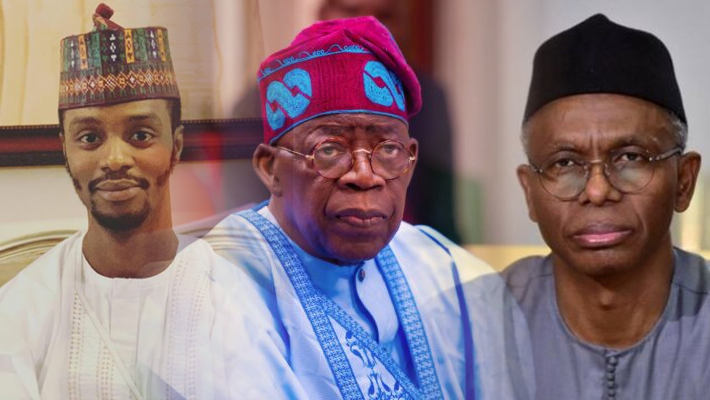
Bashir El-Rufai, son of former Kaduna State governor Nasir El-Rufai, has publicly refuted claims that his father admitted to intercepting anyone’s phone calls. In a statement posted on his verified X account, Bashir emphasized that Nasir El-Rufai never confessed to wiretapping but rather alleged that a third party was responsible and voluntarily shared the intercepted information with him.
He wrote, “My father did not say he tapped anybody’s phone. He alleged someone else did and unsolicitedly shared the information with him. Please, don’t try to frame my father and put him behind bars.”
Government Response to Nasir El-Rufai’s Alleged Wiretapping Confession
Following Nasir El-Rufai’s controversial remarks during an interview on Arise TV, where he claimed to have access to the phone conversations of the National Security Adviser (NSA), Nuhu Ribadu, the administration of President Bola Tinubu announced plans to investigate the matter thoroughly.
Presidential spokesperson Bayo Onanuga condemned the alleged admission, questioning whether El-Rufai and his associates possess illegal wiretapping capabilities. Onanuga stated on X, “El-Rufai confesses to wiretapping Nigeria’s NSA on TV. Does it mean that he and his collaborators have wiretapping facilities? This must be fully investigated, and appropriate sanctions applied. No one is above the law.”
Details of Nasir El-Rufai’s Allegations and Context
In his interview, Nasir El-Rufai recounted an incident involving operatives of the State Security Service (SSS) at Nnamdi Azikiwe Airport, Abuja. He claimed that the NSA, Nuhu Ribadu, ordered his detention after Ribadu’s phone calls were allegedly intercepted by unknown parties.
El-Rufai asserted, “Nuhu made the call and gave the order that I must be detained yesterday. I know this because we listen to their calls; the government thinks they are the only ones who monitor calls, but we have our ways too. Someone tapped his phone and informed me.”
When confronted about the legality of tapping the NSA’s phone, El-Rufai acknowledged the illegality but justified it by alleging that government agencies routinely monitor calls without court authorization. He said, “I know it’s illegal, but the government does it all the time—they listen to our calls without court orders. Someone tapped his phone and informed us that he gave the order.”
Implications and the Need for Transparency
This revelation has sparked widespread debate about privacy, legality, and the extent of surveillance within Nigeria’s political landscape. According to recent data from the Nigerian Communications Commission (NCC), concerns over unauthorized phone interceptions have increased by 15% in the past year, highlighting the urgency for clear regulations and oversight.
Experts argue that such allegations, whether true or not, underscore the necessity for transparent communication and adherence to legal frameworks governing surveillance activities. Comparable cases in other democracies, such as the 2023 UK parliamentary inquiry into unauthorized phone monitoring, demonstrate the potential political fallout when surveillance is conducted without proper authorization.
