
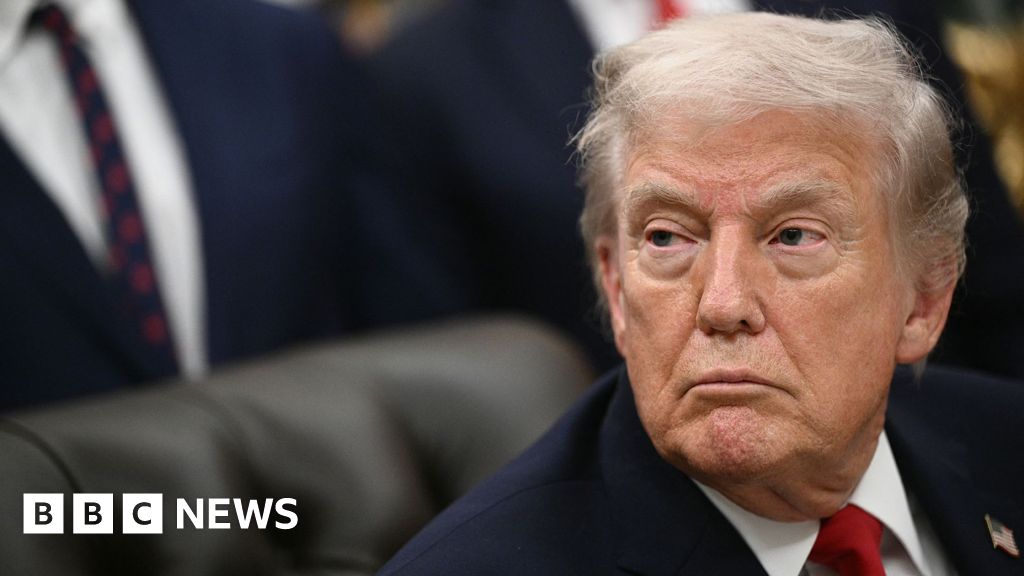
Former US President Donald Trump cautioned that the United Kingdom faces significant risks by deepening commercial relations with China, coinciding with Prime Minister Sir Keir Starmer‘s third day in Shanghai during his diplomatic visit.
Trump’s remarks came shortly after Sir Keir concluded discussions with Chinese President Xi Jinping, which resulted in new agreements designed to boost trade and investment between the UK and China.
At the premiere of a documentary about Melania Trump on Thursday, Trump described Xi as a “friend” and emphasized his close familiarity with the Chinese leader, underscoring the complexity of US-China relations.
Contrasting Trump’s viewpoint, UK Business Minister Sir Chris Bryant dismissed the former president’s warnings as misguided, asserting that it would be unwise for the UK to disregard China’s pivotal role in the global economy.
“We approach our engagement with China fully aware of the challenges and opportunities,” Bryant explained, highlighting the UK’s pragmatic stance.
He also noted that Trump himself is scheduled to visit China in April, suggesting a nuanced US approach to the bilateral relationship.
Downing Street confirmed that the US government was informed in advance about Sir Keir’s visit and its objectives, aiming to maintain transparency between the allied nations.
When questioned at the Melania film premiere about the UK’s expanding ties with China, Trump offered only a brief caution before shifting focus to Canada, issuing a similar warning about its economic dealings with Beijing.
“Canada’s situation is even more precarious,” Trump remarked. “They’re struggling economically, and relying on China isn’t the solution.”
Earlier this week, Trump threatened tariffs on Canada if it proceeded with trade agreements forged during Prime Minister Mark Carney’s recent visit to Beijing.
Meanwhile, Sir Keir expressed optimism about the UK-China relationship, describing it as “robust and constructive” following his meeting with Xi at the Great Hall of the People.
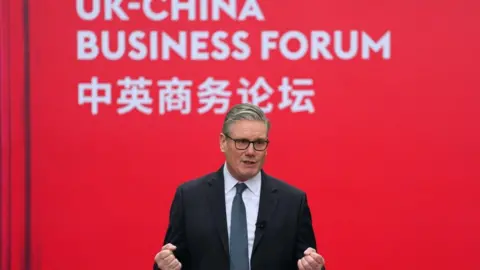
On Friday, Sir Keir reflected on the “productive and meaningful” discussions, emphasizing the UK’s significant potential contributions to the partnership during a speech at the UK-China Business Forum held at the Bank of China in Beijing.
Among the agreements reached was a collaborative effort to combat organized crime and curb illegal immigration by sharing intelligence to trace human trafficking networks. The UK government highlighted that many inflatable boats used in unauthorized Channel crossings contain components manufactured in China.
Additional accords include initiatives to streamline export procedures for UK businesses and joint projects addressing global health issues such as antimicrobial resistance, reflecting a broadening scope of cooperation.
 Reuters
According to the UK Department for Business and Trade, the United States remained the UK’s top trading partner in 2025, with China ranking fourth, underscoring the importance of maintaining diverse international economic relationships.
Chris Torrens, Chair of the British Chamber of Commerce in China, lauded Sir Keir’s visit as “highly effective,” noting that China remains one of the UK’s largest trading partners and a critical market to engage with.
Torrens also observed that many Western leaders have recently visited Beijing or plan to do so soon, highlighting a global trend toward re-engagement with China despite geopolitical tensions.
“While the US continues to impose sanctions and tariffs on countries trading with China, it is anticipated that the US itself will pursue a trade agreement with China later this year,” Torrens remarked.
Sir Keir’s itinerary included arriving in Shanghai on Friday morning, marking the final leg of his China visit before traveling to Tokyo for a working dinner with Japanese Prime Minister Sanae Takaichi.
However, the prime minister’s trip has drawn criticism from opposition MPs concerned about national security risks and China’s human rights record, given this is the first visit by a UK leader to China since 2018.
Shadow Home Secretary Chris Philp accused Sir Keir of “submitting to President Xi” and warned that the government risks compromising national security in exchange for limited economic benefits.
In response, Security Minister Dan Jarvis emphasized that intelligence agencies played a central role in evaluating the trip’s risks and affirmed confidence that all potential threats are being carefully managed.
