
Table of Contents
World Bank Allocates $12 Million to Support Nigerian States Hosting Internally Displaced Persons
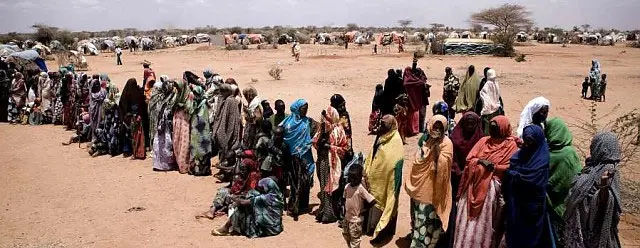
The World Bank has earmarked up to $12 million in performance-based funding for Nigerian states accommodating internally displaced persons (IDPs). This initiative is part of a broader federal project designed to address persistent data deficiencies on displacement and enhance the integration of IDPs into local development frameworks. The funding is embedded within a $300 million concessional loan package approved on August 7, 2025, under the “Solutions for Internally Displaced and Host Communities Project.” Disbursement of these funds is contingent upon the achievement of independently verified milestones.
Performance-Linked Financing: A Shift Toward Measurable Outcomes
The project introduces a novel approach by linking financial support to concrete results. Under “Performance-Based Condition Two,” states that effectively register and profile IDPs residing in host communities will qualify for incremental payments over three years. This model enforces rigorous standards for data accuracy, governance, and verification, marking a departure from traditional development financing toward outcome-driven investments.
Yearly Milestones and Incentives for IDP Data Collection
In the initial year, Tier 1 and Tier 2 states are required to initiate registration and profiling of IDPs in selected host communities, completing demographic and vulnerability assessments in at least two wards. States meeting these criteria will receive $250,000 each. By the second year, Tier 1 states must conduct intention surveys, stability index evaluations, and comprehensive analyses of displacement drivers, socioeconomic impacts, migration pressures, and risks related to trafficking and smuggling to unlock an additional $500,000.
The most substantial payment occurs in the third year, when states must have registered and profiled at least 80% of IDPs in host communities. Achieving this target will release $500,000 per state, culminating in a total allocation of $12 million under this condition. By the fourth year, the project aims to have fully addressed displacement-related data gaps, although no further payments are tied to this phase.
Additional Performance Conditions: Asset Management and Legal Integration
Beyond IDP data management, the financing agreement includes two other performance-based conditions. The first condition mandates participating local governments to enhance asset management practices. Tier 1 states must develop asset inventory guidelines and establish operations and maintenance standards aligned with international best practices, followed by audits and approvals. This condition carries up to $9 million in funding, with $500,000 disbursed at each verified stage.
The third condition focuses on the sustainable integration of IDPs. States are tasked with facilitating access to essential legal documents such as birth, marriage, education, residence certificates, travel documents, and driving licenses. Successful completion of this stage qualifies states for $1 million each. Subsequent milestones include formalizing transparent land and property transfers to IDPs, implementing monitoring systems to mitigate conflicts with host communities, and launching development programs in skills training, livelihoods, or infrastructure for displaced populations. This condition also has a $12 million funding allocation.
Eligibility Criteria and Oversight Mechanisms
Participation is limited to states meeting stringent eligibility requirements. Tier 1 states must host over 150,000 IDPs, representing more than 2% of their population, while Tier 2 states qualify with at least 100,000 IDPs or over 1% of their population. Additionally, states must enter into subsidiary agreements with the federal government and implement approved security management plans. All performance achievements are subject to verification by independent agents approved by the World Bank, which retains the authority to withhold or reallocate funds if targets are unmet.
Broader Impact and Financial Context
The comprehensive $300 million financing package supports infrastructure development, livelihood enhancement, institutional capacity building, and project management across northern Nigeria. Repayment of the concessional credit is scheduled to commence on January 15, 2031, with semi-annual installments continuing until July 15, 2050. As of mid-2024, the World Bank Group remains Nigeria’s largest external creditor, holding $19.39 billion in debt-accounting for 41.3% of the country’s total external obligations-highlighting its pivotal role in Nigeria’s development financing landscape.
