
Table of Contents
Israel Initiates Demolition of UNRWA Headquarters in East Jerusalem Amid Legal Ban
Background and Recent Developments
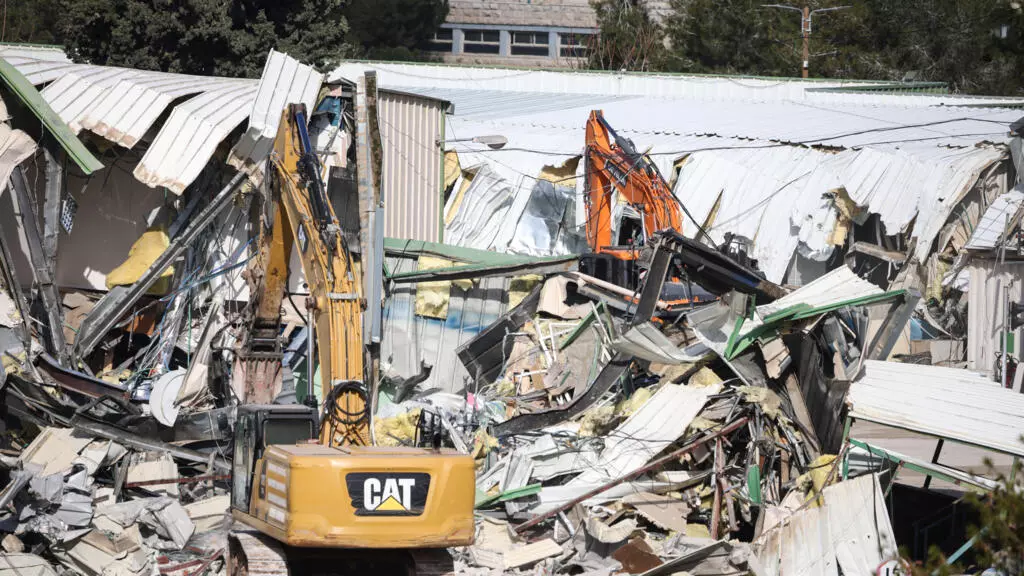
Israel has begun dismantling the main office of the United Nations Relief and Works Agency for Palestine Refugees (UNRWA) located in East Jerusalem. This action follows the enactment of laws prohibiting the agency’s operations within Israeli-controlled territories.
Video footage captured the arrival of Israeli police and officials from the Israel Land Authority at the site, equipped with bulldozers and heavy machinery to commence the demolition. The Israel Land Authority confirmed that authorities had taken full control of the property and started clearing the area.
UNRWA’s Response and Legal Implications
UNRWA vehemently condemned the demolition, labeling it as an unprecedented assault on a United Nations entity and its facilities. In a statement shared on X (formerly Twitter), the agency described the destruction as a blatant and deliberate violation of international law, including breaches of the privileges and immunities accorded to UN organizations.
According to the 1949 UN Convention on Privileges and Immunities, which Israel ratified, UN properties are protected from search, confiscation, or any form of interference. This legal framework underscores the inviolability of UN premises worldwide.
Historical and Political Context of East Jerusalem
East Jerusalem was seized by Israel from Jordan during the 1967 Six-Day War and was formally annexed in 1980. While Israel asserts sovereignty over the entire city, declaring it its “eternal capital,” the international community largely regards East Jerusalem as occupied territory. Palestinians claim this area as the capital of a prospective independent state.
Israeli Government’s Position and Allegations
Israel’s Ministry of Foreign Affairs maintains that the land on which the UNRWA headquarters stands is state property. The ministry argues that UNRWA had already ceased its activities at the location, with no personnel or operations ongoing, thereby nullifying the site’s immunity status.
The Israeli government has accused UNRWA of serving as a “breeding ground for terrorism,” a charge the agency has consistently denied. These allegations intensified following the Hamas-led attack on October 7, 2023, after which Israel ramped up its scrutiny and actions against UNRWA.
Legislative Measures and Future Actions
In late 2024, Israel enacted laws banning UNRWA’s activities within its borders and severed official relations with the agency. Further legislation passed in December 2025 cut off water and electricity supplies to UNRWA properties and authorized the government to reclaim land from UNRWA compounds in East Jerusalem. Another UNRWA facility in the Kfar ‘Aqab neighborhood is anticipated to face similar demolition efforts.
Political Reactions and International Condemnation
Far-right National Security Minister Itamar Ben Gvir visited the demolition site, hailing the event as a “historic day” and framing it as a reassertion of Israeli governance over Jerusalem.
The United Nations Secretary-General, António Guterres, condemned the demolition, calling on Israel to immediately cease the destruction and restore the UNRWA compound and other agency properties to UN control.
The Palestinian Authority also criticized the demolition, describing it as a grave violation of international law and urging the UN and its member states to intervene to halt further demolitions.
Broader Implications and Context
This demolition marks a significant escalation in the ongoing tensions between Israel and UNRWA, an agency that supports over 5 million registered Palestinian refugees across the Middle East. The agency’s role has been contentious, with Israel accusing it of complicity in militant activities, while UNRWA emphasizes its humanitarian mission.
As of mid-2024, UNRWA continues to provide essential services including education, healthcare, and social support to Palestinian refugees, despite facing increasing operational challenges due to political pressures and funding shortfalls.
