
Table of Contents
Global Leaders Unite to Spearhead Gaza Reconstruction and Stabilization
Introduction of the International Oversight Board
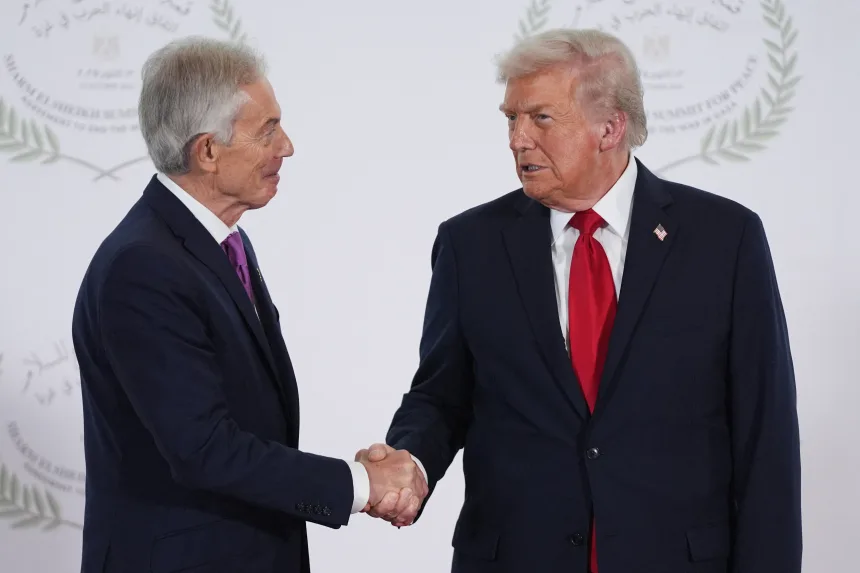
A newly established international council, dubbed the “Board of Peace,” has been formed to oversee the extensive rebuilding of Gaza after years of conflict. This high-profile panel includes former British Prime Minister Tony Blair, Canadian Prime Minister Mark Carney, and U.S. Secretary of State Marco Rubio among its distinguished members. The initiative is spearheaded by U.S. President Donald Trump and is supported by the United Nations as part of a broader American-led effort to demilitarize and rehabilitate the Gaza Strip.
Mandate and Composition of the Board
The Board of Peace is tasked with steering long-term recovery and coordinating global investments and development projects throughout Gaza. Key founding members include Trump’s special envoy Steve Witkoff, Deputy National Security Adviser Robert Gabriel, Jared Kushner, investor Marc Rowan, and World Bank President Ajay Banga. This diverse group is expected to leverage their expertise to ensure sustainable progress in the region.
Global Invitations and Participation
Several world leaders have confirmed their invitations to join the board. Canadian Prime Minister Mark Carney has accepted, while Turkey’s President Recep Tayyip Erdogan and Argentina’s President Javier Milei have been invited, with Milei publicly acknowledging the offer. Egypt’s President Abdel Fattah el-Sisi is also reviewing his invitation. President Trump hailed the board as an unprecedented assembly of global influence, emphasizing its role as the most prestigious international panel ever convened. Each member will be assigned specific responsibilities critical to Gaza’s recovery and governance.
Controversies and Criticism Surrounding the Board
Notably, the Palestinian Authority, which governs parts of the West Bank and is expected to eventually administer Gaza under the plan, has no representation on the board. This exclusion has drawn sharp criticism from Palestinian factions such as Islamic Jihad, which accuse the board of advancing Israeli interests and aligning with Israeli demands. Tony Blair’s involvement has also sparked debate, given his contentious legacy in the Middle East, particularly regarding his role in the Iraq War and perceived partiality toward Israel during his tenure as a regional envoy.
Technocratic Committee to Manage Gaza’s Daily Affairs
Under the U.S.-led framework, a separate 15-member Palestinian technocratic committee will oversee Gaza’s day-to-day administration. Chaired by Dr. Ali Sha’ath, a Gaza-born official with prior experience in the Palestinian Authority, this committee is charged with restoring essential services and rebuilding key institutions to stabilize civilian life. This approach aims to create a functional governance structure while paving the way for future political reforms.
Role of the High Representative and Regional Coordination
Nickolay Mladenov, former United Nations Middle East peace coordinator, has been appointed as the high representative for Gaza. He will serve as a liaison between the technocratic committee, the Board of Peace, and regional stakeholders, facilitating communication and cooperation. Additionally, a Gaza executive board comprising officials from Turkey, Qatar, Egypt, and the United Arab Emirates has been formed to support governance efforts alongside the Board of Peace and the technocratic committee.
Israeli Position and Security Oversight
Israeli authorities have exerted considerable influence over the selection of the technocratic committee members, ensuring that no individuals affiliated with Hamas or the Palestinian Authority are included. Israel’s internal security agency reportedly vetted and approved all 15 nominees. Prime Minister Benjamin Netanyahu has expressed strong opposition to any Palestinian Authority role in Gaza and rejects the prospect of Palestinian statehood. Furthermore, Israel has criticized the Gaza executive board’s formation, claiming it was established without coordination with Israeli officials and contradicts official policy. Netanyahu has directed Foreign Minister Gideon Saar to formally communicate Israel’s objections to Secretary Rubio.
Looking Ahead: Challenges and Prospects for Gaza’s Future
The international community’s involvement in Gaza’s reconstruction represents a significant diplomatic and humanitarian effort amid ongoing regional tensions. While the Board of Peace and associated bodies aim to foster stability and development, the exclusion of key Palestinian stakeholders and Israeli resistance highlight the complex political landscape. The success of this initiative will depend on balancing international cooperation with local realities, ensuring inclusive governance, and addressing security concerns to create a viable path toward peace and self-determination for Gaza’s residents.
