
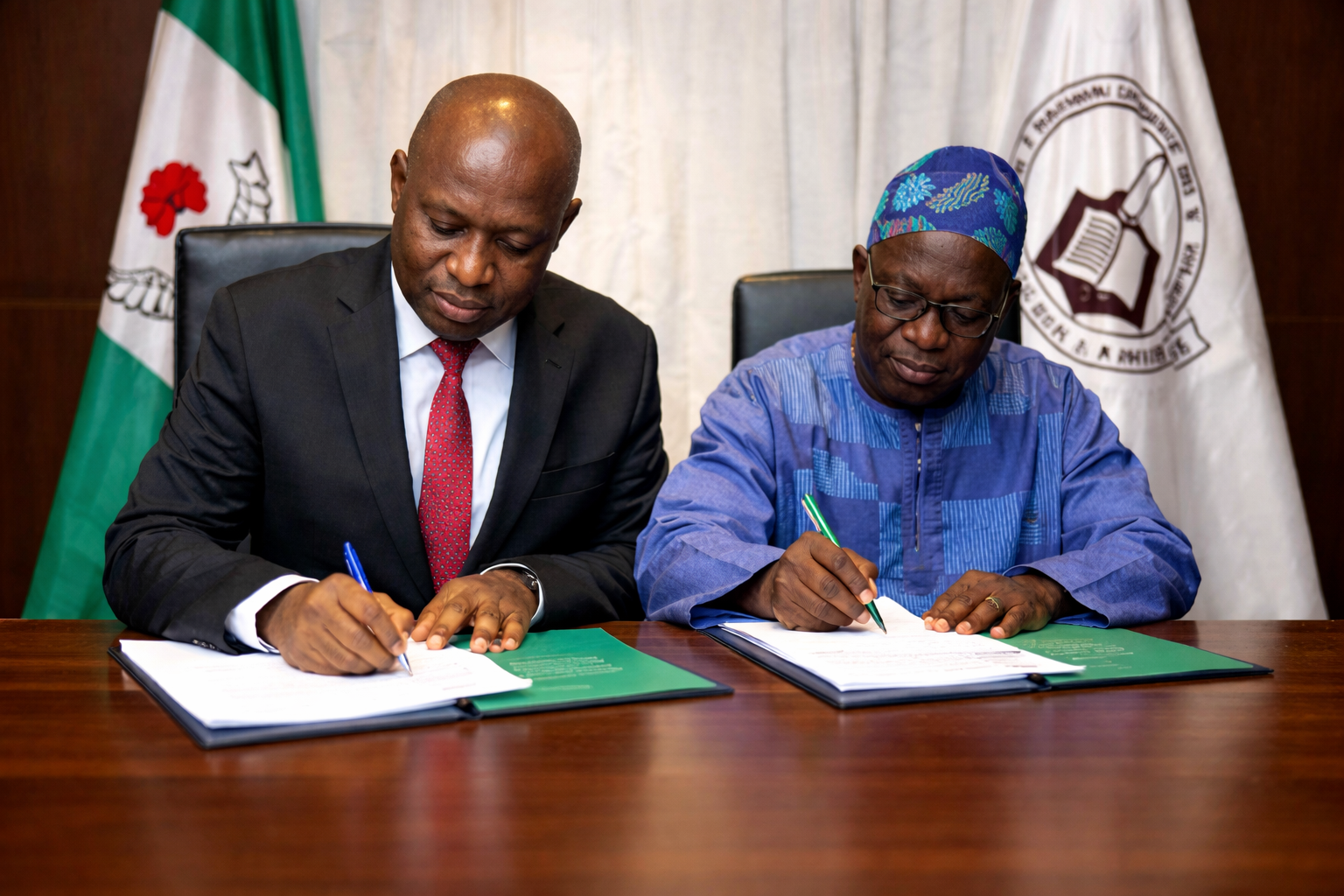
FG, ASUU Sign New Agreement as Education Minister Tunji Alausa Unveils Renegotiated Deal
The Minister of Education, Tunji Alausa, has unveiled a newly signed agreement between the Federal Government of Nigeria and the Academic Staff Union of Universities (ASUU), formally concluding the long-running renegotiation of the 2009 FGN–ASUU Agreement.
The development marks a major milestone in government–university relations and is expected to significantly reshape Nigeria’s public university system. According to the Minister, the agreement is designed to improve staff welfare, strengthen university funding, and enhance academic autonomy across the country.
Key Provisions of the New Agreement
One of the major highlights of the deal is a 40 per cent salary increase for academic staff, addressing one of ASUU’s most persistent demands over the years.
The agreement also introduces improved pension benefits, with professors set to earn pensions equivalent to their annual salary upon retirement at the age of 70, a move aimed at recognising long service and retaining experienced academics within the system.
In terms of funding, the agreement outlines a new university funding model, with dedicated allocations for research, libraries, laboratories, equipment, and staff development. This is expected to reduce infrastructure decay and improve teaching and learning conditions.
A proposed National Research Council (NRC) will also be established to fund research nationwide, with a commitment of at least one per cent of Nigeria’s Gross Domestic Product (GDP), signalling a renewed focus on innovation and knowledge production.
University Autonomy and Governance Reforms
The agreement strengthens university autonomy and academic freedom, while introducing reforms to academic leadership. Under the new framework, positions such as Deans and Provosts will be filled through elections, and only professors will be eligible for these roles.
Another notable provision guarantees no victimisation of individuals involved in the struggle and negotiations leading to the agreement, addressing long-standing concerns among academic staff.
Implementation Timeline
The agreement is scheduled to take effect from January 1, 2026, and will be subject to a formal review after three years to assess its impact and address emerging challenges.
Education sector stakeholders have welcomed the development as a potential turning point for Nigeria’s universities, while expressing hope that faithful implementation will help end recurring disputes and industrial actions in the sector.
OYOGist notes that the success of the agreement will largely depend on sustained political will, adequate funding, and continuous engagement between the government and academic unions.
