
Table of Contents
Amid Rising Tensions, Cuba Rejects U.S. Pressure for Negotiations
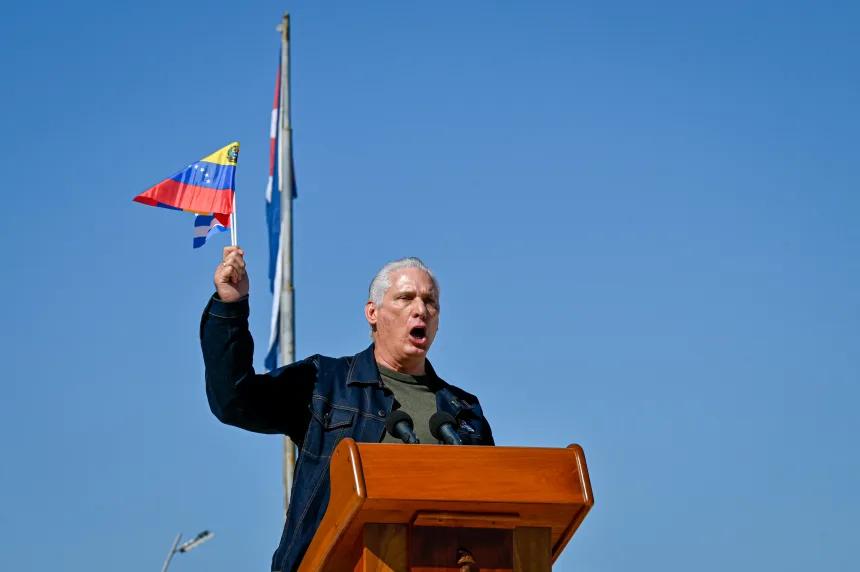
In a firm response to U.S. President Donald Trump’s call for Cuba to “make a deal” with Washington, Cuban President Miguel Díaz-Canel asserted the nation’s sovereignty and independence. Speaking on the social media platform X, Díaz-Canel emphasized that Cuba will not be dictated to by external powers, directly countering Trump’s warnings about cutting off Venezuelan oil supplies that have long supported the island’s economy.
Economic Uncertainty Looms as Venezuela’s Support Wanes
For decades, Cuba has depended heavily on Venezuela’s oil and financial aid, a relationship that has sustained the island’s economy through challenging times. However, following a U.S. operation that resulted in the capture of Venezuelan leader Nicolás Maduro, and Trump’s announcement that Venezuela will redirect 30 to 50 million barrels of oil to the United States, Havana now faces significant economic instability.
Trump declared on Truth Social that “Cuba lived, for many years, on large amounts of OIL and MONEY from Venezuela,” adding that Cuba provided “Security Services” to the Venezuelan regime but that this arrangement has ended. He warned that “THERE WILL BE NO MORE OIL OR MONEY GOING TO CUBA – ZERO!” though he did not specify the terms of any potential agreement with Cuba.
Casualties and Cuban Government’s Stance on U.S. Actions
The Cuban government reported that 32 of its nationals lost their lives “in combat actions” during the U.S. operation targeting Maduro. In response, Díaz-Canel reiterated Cuba’s commitment to defending its homeland, stating, “Cuba does not initiate aggression; it has been the target of U.S. hostility for 66 years.” He underscored the nation’s readiness to protect its sovereignty “to the last drop of blood” and criticized those who commodify human lives for profit, asserting they lack the moral standing to judge Cuba.
Foreign Minister Denounces U.S. Hegemony and Defends Cuba’s Rights
Cuban Foreign Minister Bruno Rodriguez also condemned the United States’ actions, describing them as those of an “uncontrolled hegemon” threatening not only Cuba but the entire hemisphere’s peace and security. Rodriguez firmly rejected Trump’s assertion that Cuba traded security services for Venezuelan oil, affirming Cuba’s “absolute right” to import fuel from its economic partners.
U.S. Signals Engagement Amid Ongoing Political Strains
While Trump mentioned to reporters aboard Air Force One that the U.S. is “talking to Cuba,” the specifics of these discussions remain unclear. He expressed a desire for the talks to focus on Cuban exiles who left the island under coercion or duress. The United States has historically pursued regime change in Cuba, a socialist state governed by a single-party system since 1961.
Within the Trump administration, Secretary of State Marco Rubio, a Miami-based politician and son of Cuban immigrants, has been a vocal proponent of policies aimed at altering Cuba’s political landscape.
Looking Ahead: The Future of U.S.-Cuba Relations
As geopolitical dynamics shift in the Caribbean, Cuba’s refusal to yield to U.S. demands highlights the enduring complexity of their relationship. With Venezuela’s support diminishing and economic pressures mounting, Havana faces critical decisions about its future alliances and strategies. Meanwhile, Washington’s approach remains a blend of diplomatic overtures and firm warnings, underscoring the delicate balance of power in the region.
