
Table of Contents
U.S. Senate Halts Further Military Actions in Venezuela
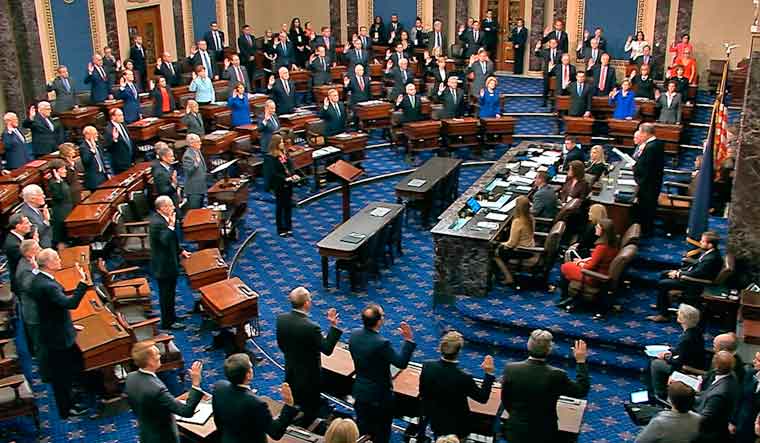
On Thursday, the U.S. Senate narrowly voted 52-47 to block President Donald Trump from authorizing any additional military operations in Venezuela. This decision followed closely after the President ordered a targeted military attempt to detain Venezuelan President Nicolás Maduro.
Reinforcing Congressional Oversight Through the War Powers Resolution
Invoking the War Powers Resolution, this measure mandates that the President must secure Congressional approval before deploying U.S. troops in Venezuela again. Despite the Senate being controlled by Republicans, the resolution garnered bipartisan backing, passing with the simple majority required.
Prominent Lawmakers Unite Across Party Lines
The initiative was led by Senator Tim Kaine (D-Va.), with key support from Senator Rand Paul (R-Ky.), Senator Adam Schiff (D-Calif.), and Senate Minority Leader Chuck Schumer (D-N.Y.). Remarkably, five Republican senators joined all Democrats in endorsing the resolution, reflecting increasing bipartisan unease over unilateral military decisions.
Opposition to the President’s Military Tactics
Senator Kaine condemned the President’s strategy, stating, “Instead of focusing on the urgent economic issues confronting Americans, President Trump launched a military operation against Venezuela that undermines our troops, lacks transparency, and raises serious legal and ethical concerns. This contradicts his ‘America First’ pledge.” He stressed that the military action was executed without the constitutionally required Congressional authorization, rendering it illegal.
Upcoming Full Senate Vote Expected to Cement Decision
The procedural vote on Thursday sets the stage for a full Senate vote next week. This decisive vote, also requiring a simple majority, is anticipated to pass, thereby strengthening Congressional control over future military engagements.
Emphasizing Congressional Accountability
“I urge my Senate colleagues to take a firm stand,” Kaine declared. “Our responsibility is to represent the American people by ensuring that no military conflict proceeds without comprehensive debate and Congressional consent.” This highlights the ongoing struggle over the separation of powers between the executive and legislative branches in war-making decisions.
Broader Significance and Public Sentiment
This Senate action is part of a larger pattern of Congressional resistance to executive overreach in foreign military interventions. Recent surveys indicate that over 60% of Americans support requiring Congressional approval before initiating new military operations, underscoring widespread demand for governmental accountability. Meanwhile, Venezuela continues to face severe political turmoil and humanitarian crises, making U.S. involvement a highly sensitive and divisive topic both at home and abroad.
