

Table of Contents
Medical Expert Challenges Claims About Regina Daniels’ Drug Test Results
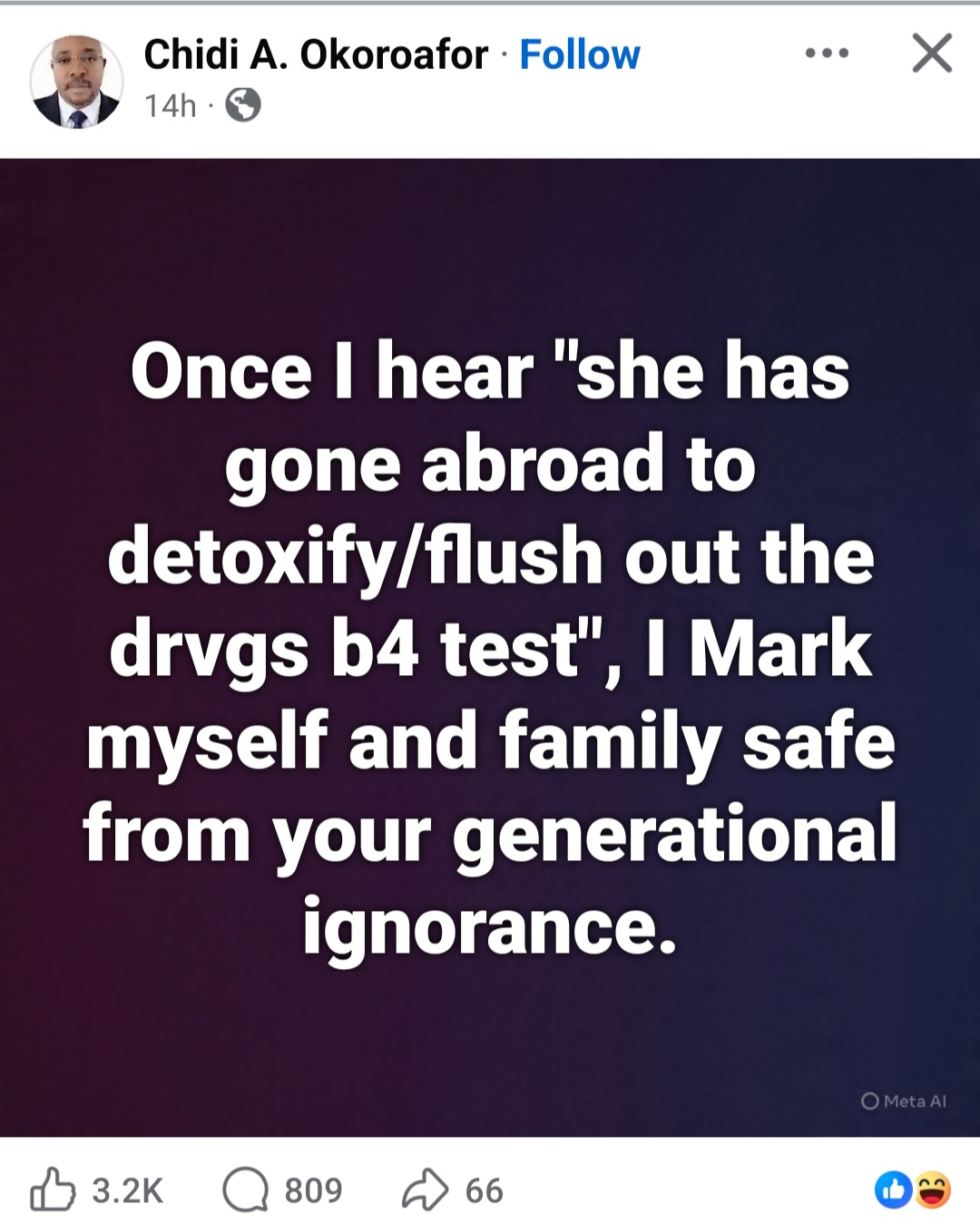
Dr. Chidi A. Okoroafor, a respected medical director, has publicly refuted assertions that actress Regina Daniels’ negative drug test was due to prior detoxification and temporary drug abstinence. Addressing these claims on Facebook, Dr. Okoroafor emphasized the fallacy behind the idea that one can simply “flush out” drugs before testing.
Debunking the Detox Myth
In his post, Dr. Okoroafor expressed frustration with the widespread misconception, stating, “Whenever I hear someone say she traveled abroad to detoxify or cleanse her system before the test, I distance myself and my family from such generational ignorance.” He further clarified that detoxification is not a quick fix, especially not something that can be achieved simply by pregnancy or short-term abstinence.
He questioned the logic behind the belief that detoxification is easy, pointing out that many individuals repeatedly enter and exit rehabilitation centers without achieving lasting sobriety. “If it were that simple, why do some relatives keep cycling through rehab without permanent recovery?” he asked, highlighting the complexity of substance dependence and the limitations of detox programs.
Ned Nwoko Responds: Temporary Abstinence Does Not Equal Sobriety
In a related development, Ned Nwoko, Regina Daniels’ estranged husband, issued a statement addressing the negative drug test results. Titled “Don’t Be Fooled: Temporary Abstinence Is Not Sobriety,” his message cautioned against interpreting a single negative test as evidence of no prior drug use.
Clarifying the Implications of Drug Testing
Nwoko emphasized that a negative result only indicates a period of abstinence and does not erase earlier medical findings or the reasons that prompted intervention. “Presenting a later negative result as proof that no prior use occurred is misleading and disingenuous,” he wrote. His statement underscores the importance of understanding drug testing within the broader context of addiction and recovery.

Understanding Drug Testing and Detoxification: What the Science Says
Drug detoxification is a medically supervised process aimed at eliminating toxins from the body, but it is not an instant or guaranteed method to pass drug screenings. According to recent studies, the detection window for many substances varies widely depending on the drug type, frequency of use, metabolism, and testing method. For example, cannabis metabolites can remain detectable in urine for up to 30 days or more in chronic users, while substances like cocaine may clear within a few days.
Temporary abstinence, even for weeks, does not equate to long-term sobriety or recovery. Effective treatment often requires comprehensive rehabilitation, counseling, and ongoing support. The misconception that detox alone can “cleanse” the system before a test undermines the complexity of addiction and recovery.
Current Statistics on Drug Rehabilitation
Recent data from the National Institute on Drug Abuse (NIDA) indicates that relapse rates for substance use disorders range between 40% and 60%, similar to other chronic illnesses such as diabetes and hypertension. This highlights the chronic nature of addiction and the need for sustained treatment rather than quick fixes.
Conclusion: The Importance of Accurate Interpretation of Drug Tests
The controversy surrounding Regina Daniels’ drug test results serves as a reminder that drug testing and detoxification are complex topics often misunderstood by the public. Medical professionals like Dr. Okoroafor and informed voices such as Ned Nwoko stress the importance of viewing test results within the full context of addiction science. Passing a drug test after detox or temporary abstinence does not necessarily indicate the absence of prior drug use or addiction issues.
