Table of Contents
Reexamining the Financial and Household Responsibilities of Wives in Islam: Perspectives from Nafisat Ibrahim
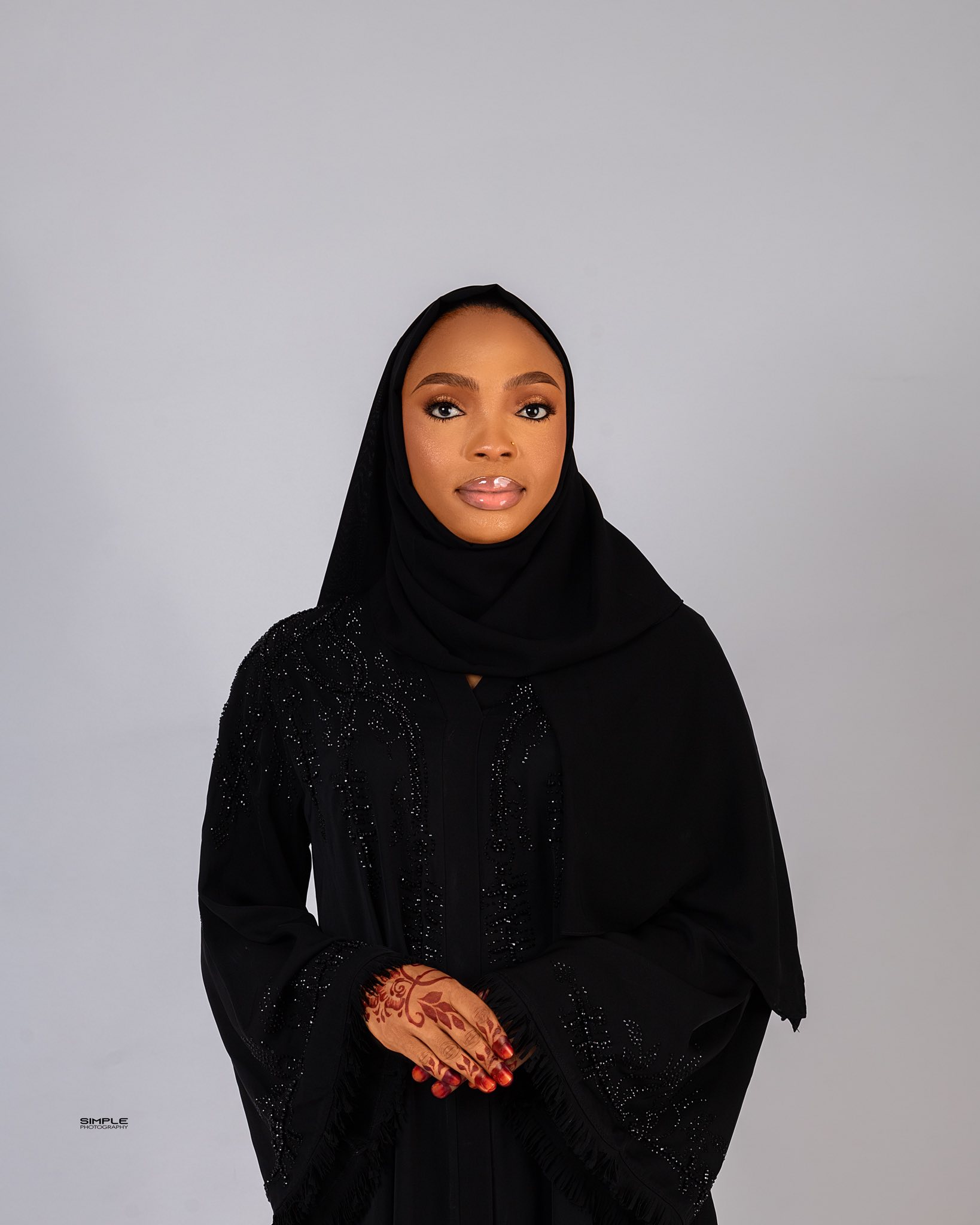
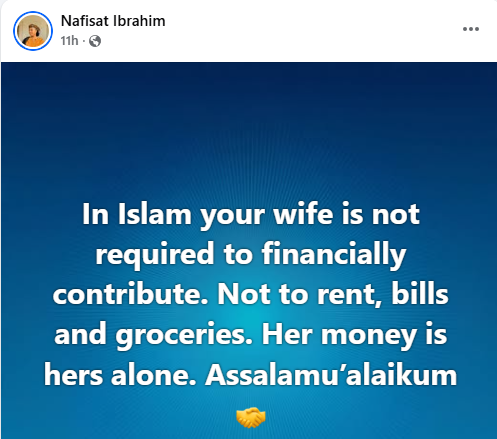
Nigerian legal expert Nafisat Ibrahim has recently ignited important conversations by dispelling widespread myths about the duties of wives within Islamic marriages. She stressed that Islamic doctrine does not mandate wives to handle cooking or contribute financially to the home’s expenses.
Women’s Financial Autonomy and Marital Obligations in Islam
Nafisat pointed out that any income earned by a woman remains her exclusive property, and any monetary assistance she offers to the family is voluntary, not compulsory. She remarked, “Islam does not require a wife to cover rent, utility bills, or groceries. Her earnings belong entirely to her.” This viewpoint challenges conventional norms that often expect women to bear financial responsibilities in marriage.
Household Contributions: Acts of Compassion Rather Than Requirements
Addressing the misconception that wives must prepare meals for their spouses, Nafisat clarified that Islam imposes no such obligation. She explained, “Cooking or other domestic tasks are not religious duties for women; any help they provide at home stems from kindness, not obligation.” This highlights the voluntary nature of household roles for wives in Islamic teachings.
Husbands’ Roles and Financial Authority: A Different Interpretation
Contrasting Nafisat’s views, some scholars like Kasim Yusuf argue that Islamic jurisprudence designates the husband as the family’s guardian and provider, which may restrict a wife’s financial independence. Yusuf emphasized that a married woman often requires her husband’s permission to engage in income-generating activities, implying that her control over personal finances can be conditional.
Islamic Marital Roles Amidst Contemporary Social Changes
These debates emerge as gender roles continue to evolve globally. A 2024 report by the International Labour Organization reveals that approximately 65% of Muslim women across diverse regions participate in the labor market, signaling a trend toward enhanced economic empowerment. Nafisat’s stance resonates with a broader movement advocating for women’s rights within Islamic contexts, promoting marriage as a partnership grounded in choice and mutual respect.
Moving Beyond Traditional Norms: Embracing Flexibility in Marital Roles
Similar to many societies where domestic duties and financial responsibilities are increasingly shared or negotiated, Islamic teachings-interpreted by voices like Nafisat Ibrahim-encourage compassion and voluntary support rather than strict mandates. This perspective invites couples to collaboratively define their roles, fostering harmony free from societal expectations.