
Table of Contents

Dispute Over N50 Billion Relief Fund: Fayose vs. Makinde
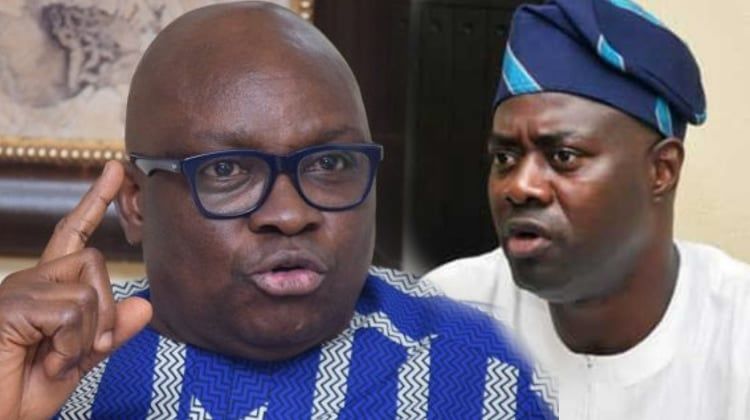
The political arena in Nigeria was recently stirred by a contentious claim involving former Ekiti State Governor Ayodele Fayose and Oyo State Governor Seyi Makinde. Fayose alleged that President Bola Tinubu allocated N50 billion to Governor Makinde as emergency relief following the January 2024 explosion in Bodija, Ibadan. According to Fayose, only N4.5 billion of this sum was disbursed to the victims, raising questions about the management of the funds.
Official Responses and Document Disputes
In response, Makinde’s Chief Press Secretary, Sulaimon Olarenwaju, categorically rejected these accusations, labeling them unfounded and politically charged. He challenged Fayose to substantiate his claims with verifiable evidence. While Fayose produced documents purportedly supporting the N50 billion allocation, critics argue these papers merely represent a funding request rather than confirmation of receipt.
Further clarification came from Olarenwaju, who stated that the actual amount received by the Oyo State government was N30 billion, not the N50 billion claimed. He emphasized that Governor Makinde’s administration has maintained transparency by regularly publishing detailed reports on the expenditure of relief funds. The press secretary urged the public to dismiss Fayose’s allegations as attempts to politicize a sensitive issue.
Calls for Transparency and Independent Auditing
The controversy has ignited widespread calls for an impartial audit to verify the disbursement and utilization of the relief funds. Citizens and stakeholders alike demand accountability to ensure that the N30 billion was effectively deployed to aid those affected by the Bodija incident. This situation underscores the critical need for openness in the management of emergency funds, especially in times of crisis.
Federal Support and Governance Accountability
Fayose’s disclosure about federal intervention in the Ibadan disaster has sparked a broader dialogue on governance transparency in Nigeria. By revealing Makinde’s request for federal assistance, the public gains insight into the scale of government support and the handling of public resources. This development encourages whistleblowers and concerned citizens to come forward and advocate for clearer financial accountability.
Governor Makinde, as a recipient of federal aid, bears the responsibility to acknowledge this support and provide a comprehensive account of how it has benefited the victims and infrastructure of Ibadan. Transparency in governance is reciprocal; thus, Makinde’s administration must engage openly with the public to maintain trust.
Enhancing Oversight of Emergency Funds in Nigeria
This episode highlights systemic challenges in the oversight of emergency funding. To improve transparency and accountability, Nigeria could implement stricter regulatory frameworks, including mandatory audits by independent firms, public disclosure of fund allocations and expenditures, and the establishment of oversight committees dedicated to monitoring emergency relief finances. Adopting such measures would set a precedent for responsible public financial management.
Potential Investigations and Political Implications
Should Fayose present irrefutable evidence supporting his claims, anti-corruption agencies such as the Economic and Financial Crimes Commission (EFCC) and the Independent Corrupt Practices Commission (ICPC) may initiate formal investigations. These inquiries would scrutinize the flow and usage of the alleged N50 billion or N30 billion funds, seeking to uncover any irregularities or misappropriations.
Beyond financial scrutiny, this dispute could strain the political relationship between Governor Makinde and President Tinubu. While Makinde’s firm denial and demand for proof suggest confidence in his administration’s integrity, any confirmed misuse of funds could erode trust and jeopardize their alliance.
Tunji Oladejo, JP, mnipr, writes from the University of Ibadan and is the Chairman of The Progressive Forum, Ibadan (TPFI), via oladejo65@gmail.com. 08077284442
