
Table of Contents
Reevaluating Wealth, Politics, and Integrity: The Debate Surrounding Oyo State Governor Seyi Makinde
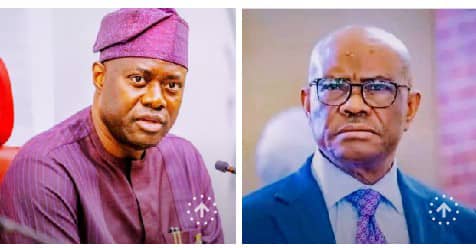
A recent post on X (formerly Twitter) intended to scrutinize the personal financial history of Oyo State Governor Seyi Makinde has unexpectedly sparked a broader discussion about the nature of wealth accumulation, political financing, and credibility within Nigeria’s public sphere.
Challenging Assumptions About Wealth and Lifestyle
The post originated from Lere Olayinka, media aide to the Federal Capital Territory Minister, Nyesom Wike. It questioned Makinde’s claim of earning his first million dollars from a contract in 1997, juxtaposing this with his continued residence in a modest two-room home in Ibadan as recently as 2014. While the post’s intent seemed straightforward-to cast doubt on Makinde’s financial narrative-the public reaction was far more nuanced and critical of the underlying assumptions.
Many Nigerians on X pushed back against the notion that modest living contradicts genuine wealth. Instead, they interpreted Makinde’s lifestyle as a sign of prudence and financial discipline. For instance, @IbadanVoice praised the governor’s choice to live simply as a demonstration of sound money management, while @CivicLensNG highlighted how Nigeria’s cultural fixation on ostentation often masks corruption, suggesting Makinde’s approach reflects a healthier value system.
From Personal Wealth to Political Funding: A Broader Conversation
The debate quickly expanded beyond housing to address the broader issue of how Nigerian politicians acquire and utilize wealth. A key point of contention was the contrast between Makinde’s private sector success and Wike’s extensive career in public service. Commentators like @MakindeSupportNG emphasized that Makinde amassed his fortune before entering politics, whereas Wike’s financial standing is tied to years of government employment. Similarly, @DemocracyWatchNG noted that Makinde’s wealth preceded his political career, implying a degree of independence from state patronage.
Makinde himself has recounted his early career milestones to reinforce this narrative. In a recent interview in Ibadan, he recalled securing a significant contract with Mobil at age 29, which yielded a personal income of one million dollars within a year. At that time, Wike was reportedly just beginning his journey in local government after law school. Makinde often references this period not to boast but to illustrate how his business ventures with multinational oil companies like Shell, ExxonMobil, and Chevron shaped his financial foundation, distinct from reliance on government contracts.
Political Independence and the Absence of Godfatherism
Supporters argue that Makinde’s financial independence explains his unique political trajectory. Unlike many Nigerian politicians who depend on influential “godfathers” or public funds, Makinde contested three election cycles without such backing. @PdpYouthVoice remarked that only someone with substantial private wealth could sustain such political persistence without a patron. @OyoProgressive echoed this sentiment, noting Makinde’s success despite lacking access to public resources or prebendal benefits.
Internal PDP Rift and the Future of Opposition Politics
As the discussion evolved, it became evident that the debate was intertwined with the growing fissures within the Peoples Democratic Party (PDP). The relationship between Makinde and Wike has deteriorated, with recent events bringing their differences into sharp relief. Makinde revealed that a pivotal moment occurred during a meeting with President Bola Tinubu, where Wike reportedly offered to “hold” the PDP for Tinubu ahead of the 2027 elections-an offer that surprised Makinde, as it was unsolicited by the President.
While Makinde respects Wike’s right to support Tinubu, he vehemently opposes any arrangement that compromises the opposition’s integrity. He has publicly declared his refusal to participate in deals that weaken the PDP or undermine Nigeria’s multiparty democracy. This stance has positioned him as a leader of a faction within the party advocating for autonomy and resilience, contrasting with a Wike-aligned group perceived as amenable to Tinubu’s re-election ambitions. This internal conflict has spilled over into social media debates and party meetings alike.
Voices like @GoodGovernanceNG argue that an opposition party must not be subjugated to the ruling party, while @ReformNaija warns that Nigeria’s democracy risks erosion if the PDP succumbs to the influence of the All Progressives Congress (APC).
Makinde’s National Aspirations and Commitment to Democratic Choice
Amidst the turmoil, speculation about Makinde’s presidential ambitions has resurfaced. He asserts that his experience as a two-term governor and a self-made engineer-businessman qualifies him to lead Nigeria. However, he urges caution, emphasizing that it is premature to focus on presidential aspirations. His immediate priority remains the survival and strengthening of the PDP, which he believes is threatened by ongoing defections to the ruling party. Makinde warns that such defections diminish democratic options and limit voter choice.
Among his supporters, Makinde’s record as an effective administrator and entrepreneur distinguishes him in a political environment often dominated by patronage and corruption. @OyoPolicyHub described him as a rare example of integrity and competence in Nigerian politics.
Conclusion: A Catalyst for Broader Reflection on Nigerian Politics
What began as an attempt to question Makinde’s personal wealth has evolved into a meaningful dialogue about the criteria by which wealth and political credibility are judged in Nigeria. It has exposed long-standing frustrations with political financing, the role of patronage, and the importance of genuine independence in public service.
Ultimately, the exchange between Makinde and Wike transcends personal rivalry, highlighting a critical crossroads for Nigerian politics as the nation approaches another election cycle. It offers insight into the ideological and strategic battles that will shape the country’s democratic future.
By Ladigbolu, Lagos-based Journalist
