
Table of Contents
Unpacking the U.S. Airstrike in Nigeria: A New Chapter in National Security
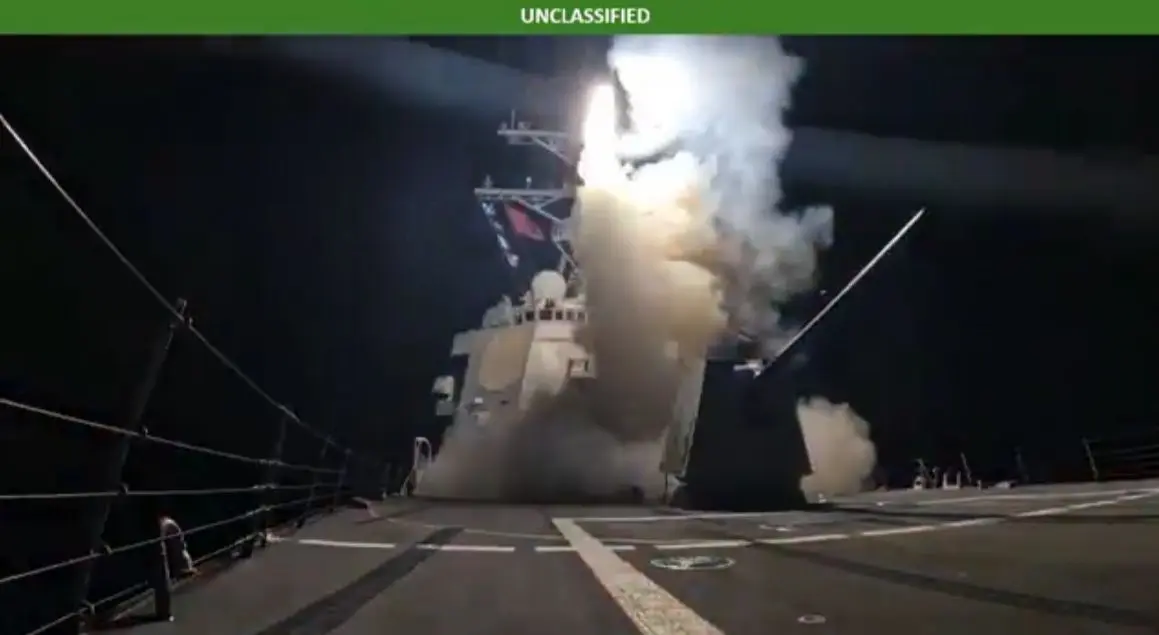
On the morning after Christmas, Nigerians were confronted with an unexpected headline more commonly associated with Middle Eastern conflicts: a U.S. military strike, accompanied by missile footage, and a surge of speculation about the incident’s implications on Nigerian territory.
Initially, former President Donald Trump announced the operation with his characteristic bravado, omitting the crucial detail that the strike was conducted in partnership with Nigerian authorities. Shortly thereafter, the Nigerian presidency confirmed the collaboration, highlighting that the action was the product of “structured security cooperation” and intelligence sharing, which enabled “precision strikes on terrorist strongholds” in the country’s Northwest region.
This revelation sparked a divided public debate. Some Nigerians fixated on the terminology of “precision,” the notion of a foreign superpower intervening in Nigerian airspace, and the political complexities surrounding the designation of “terrorist.” Others emphasized the government’s acknowledgment of coordination and intelligence exchange, underscoring that the strike had Nigerian consent.
“President Tinubu authorized the U.S. airstrike in Sokoto. I communicated with U.S. Secretary of State Marco Rubio twice: 19 minutes before the strike and again 5 minutes prior to execution.” – Yusuf Tuggar, Minister of Foreign Affairs.
(ISWAP, Bandits, Sultan) pic.twitter.com/cCW0ThE3V6
Why Sokoto, Not Borno? Rethinking Nigeria’s Security Landscape
One of the most pressing questions is why the strike targeted Sokoto in the Northwest rather than Borno in the Northeast, a region long synonymous with insurgency and terror. For many Nigerians, the mental map of terrorism is fixed on the Northeast-Sambisa Forest, Maiduguri, and the heartland of Boko Haram’s insurgency. The expectation was that any American military action would focus there.
While this perspective is understandable, it overlooks a critical evolution in Nigeria’s security challenges. The U.S. strike signals a shift in the country’s security dynamics, suggesting that threats are diversifying and spreading faster than public perception has caught up with.
Current Debates: Priorities and Perceptions in Nigeria’s Security Strategy
When citizens question, “Why not the Northeast?” they are often probing deeper issues: Who sets Nigeria’s security priorities, and on what basis? There is a palpable frustration that despite years of military campaigns and humanitarian crises in the Northeast, the conflict remains unresolved, while new violent hotspots emerge elsewhere.
The strike in the Northwest has been interpreted by some as a misallocation of focus. However, a more nuanced understanding reveals that Nigeria is grappling with two concurrent security crises:
- An entrenched insurgency in the Northeast, characterized by persistent violence and complex socio-political roots.
- A burgeoning conflict in the Northwest, initially framed as banditry and criminality, but increasingly exhibiting signs of organized, cross-border extremist activity.
If the Northeast represents a protracted war Nigeria has endured for years, the Northwest may be the emerging front that demands urgent attention to prevent it from escalating into a similarly entrenched conflict.
The Strategic Importance of Sokoto and the Northwest Corridor
Public discourse often treats the Northwest’s security issues as isolated incidents-kidnappings, cattle rustling, highway ambushes, and village raids-viewed primarily as criminal acts manageable through enhanced policing and local intelligence.
However, security analysts warn that this region is more than a crime hotspot; it is a critical border zone linking Nigeria to the broader Sahel security environment. Sokoto and Kebbi states lie along a corridor that connects to areas in Mali, Niger, and Burkina Faso, where militant groups have adapted by shifting locations, blending into communities, and exploiting weak state presence.
The term “stick” is pivotal here. When experts say “ISIS-affiliated cells stick,” they refer to the groups’ ability to establish lasting footholds-recruiting, taxing local populations, arbitrating disputes, and enforcing compliance-transforming from transient raiders into embedded shadow authorities.
“Here is footage of the bomb ordered by President Trump against ISIS and ISWAP militants in northwest Nigeria targeting Christian communities. Trump warned of further action if attacks continue.” pic.twitter.com/0L9CAFHmnY
From Raids to Rule: The Transformation of Armed Groups
There is a fundamental difference between groups that conduct hit-and-run raids and those that seek to establish control. The latter begin to influence everyday life-dictating movement, levying taxes, meting out punishments, and offering “protection.” This evolution converts fear into a structured system of governance, albeit an illegitimate and coercive one.
When extremist-linked factions merge with bandit networks, the conflict becomes more complex and resistant to traditional law enforcement approaches. Key consequences include:
- Cross-border mobility: Groups operating across national boundaries complicate containment efforts, turning the conflict into a fluid, transnational challenge.
- Ideological recruitment: Unlike bandits who rely on financial incentives and intimidation, extremist groups leverage identity, grievance, and belonging, fostering more resilient recruitment.
- Economic disruption: Armed actors imposing “taxes” on communities inflate food prices, disrupt markets, and deter agricultural activity, making insecurity feel like economic inflation to ordinary citizens.
These impacts resonate deeply with Nigerians, affecting daily life and livelihoods far beyond the battlefield.
Why Target the Northwest Now? Operational and Strategic Considerations
The decision to strike in the Northwest rather than the Northeast stems from several factors:
Operational feasibility: Precision strikes require actionable intelligence and clear targets. When such intelligence is available in one region and not another, that area becomes the focus of military action.
Strategic prevention: Addressing emerging threats early is more cost-effective than managing entrenched insurgencies. The Northeast exemplifies a protracted conflict; preventing a similar scenario in the Northwest is a strategic imperative.
Political optics: Despite operational logic, public perception matters. Nigerians question why decisive action occurs in one region while another continues to suffer. This underscores the need for transparent communication and a comprehensive national security strategy that balances regional priorities.
Both perspectives hold validity:
- Those advocating for focus on the Northeast draw from historical trauma and ongoing suffering.
- Those emphasizing the Northwest highlight the urgency of addressing nascent threats before they become intractable.
A mature national discourse should accommodate both views without devolving into regional rivalry.
Addressing the Root Causes: Beyond Military Solutions
A critical lesson Nigeria faces is that military force alone cannot compensate for governance deficits. The Northwest’s insecurity thrives where state presence is minimal-rural policing is inadequate, communities negotiate with armed groups for survival, roads become unsafe, and local economies deteriorate.
In such environments, armed groups offering any semblance of “order,” however brutal, can gain acceptance. This dynamic is a classic trap in fragile security contexts: the protector becomes the predator.
The “Sahel front” analogy is instructive. Militant ecosystems in the Sahel endure not merely due to weaponry but because they embed themselves through coercion, incentives, and exploiting service vacuums.
Without rebuilding state institutions-justice systems, intelligence networks, infrastructure, education, and economic opportunities-the cycle of violence will persist, merely shifting locations rather than ending.
Implications for Nigeria’s Security Partnerships
The U.S. strike also signals a deeper operational partnership between Nigeria and foreign allies. While intelligence sharing and coordinated actions can enhance effectiveness, they raise important questions:
- Will there be transparent accountability, especially regarding civilian safety?
- Will such cooperation build Nigeria’s own security capabilities or gradually supplant them?
- Could foreign involvement be politicized, either to criticize Nigeria’s sovereignty or to oversimplify complex conflicts?
These concerns call for clear communication and public engagement. Nigerians should not learn about critical security developments through foreign announcements before official national briefings.
Looking Ahead: Preparing for a Complex Security Future
The debate over the Sokoto strike will eventually subside, but the underlying challenge remains: Is Nigeria ready to confront a shifting security landscape?
If the Northwest is increasingly entwined with the Sahel’s extremist networks, Nigeria must move beyond reactive measures. Key priorities include:
- Developing agile border intelligence and enforcement systems that account for mobility rather than static checkpoints.
- Implementing rural security frameworks that prevent communities from defaulting to negotiations with armed groups.
- Formulating a comprehensive national plan that addresses the unresolved crisis in the Northeast while proactively preventing the Northwest from becoming another entrenched conflict zone.
The Northeast remains a critical front, but Nigeria’s future security depends on its ability to manage multiple, simultaneous threats with strategic foresight and inclusive governance.
