
Table of Contents
A nagging doubt creeps in: Could the motorcycle you rely on daily actually be under someone else’s control?
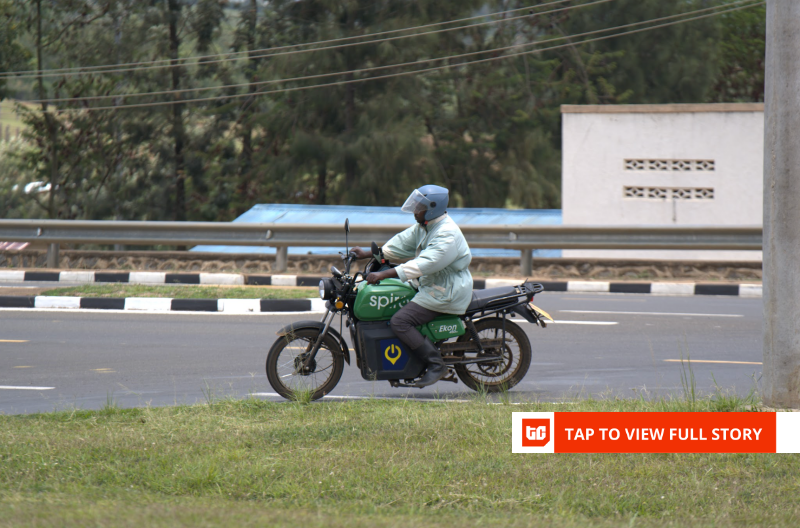
This unsettling question has fueled controversy around Spiro, the electric motorcycle manufacturer that has rapidly grown its presence across 27 counties in Kenya. For many riders, Spiro’s electric bikes offered a promising escape from soaring fuel prices and the heavy costs of daily commuting. Yet, critics argue that these bikes have come to represent a new form of dependency disguised as technological progress.
The debate intensified on social media two weeks ago when Rapcha, a prominent media figure, revealed that his Spiro bike had been remotely disabled after being idle for some time. Although the full details were unclear, the public reaction was swift and fierce. Many riders and observers concluded that if a company can remotely deactivate your bike, then your livelihood is only secure as long as the company permits it.
“If you fall ill or have an accident and can’t use your bike for a few days, the battery is flagged as ‘stolen’ and your data is immediately cut off at their swapping stations,” Francis Njeri (Rapcha) posted on X. “You then have to tow your bike to their Mlolongo station at your own expense to have the battery reactivated, or else you lose access permanently.”
Understanding the Persistent Outrage
To grasp why the backlash has been so intense, it’s essential to understand Spiro’s operational model.
Established in 2019, Spiro expanded into Togo and Benin in 2022, followed by Kenya, Rwanda, Uganda, and Nigeria in 2023. The company, a subsidiary of Dubai-based Equitane Group, manufactures electric two-wheelers, with one of its largest assembly plants located in Nairobi.
Customers typically purchase the bike through installment plans, but crucially, the battery-the core component-is leased rather than owned. Riders exchange depleted batteries at designated Spiro stations and pay a fee for each swap.
On paper, this system is logical: electric vehicle batteries are costly, and swapping is significantly faster than charging, often taking under five minutes. However, riders like Vincent Odero argue that this creates a reliance on Spiro’s infrastructure. Unlike petrol motorcycles, which can refuel anywhere, Spiro riders are tethered to the company’s network of swapping points.
“Spiro has made improvements, but we still can’t charge at home and must depend entirely on their stations,” Odero explains.
When news spread on Kenyan social media that bikes could be remotely disabled, anxiety escalated rapidly. Riders feared scenarios where illness, travel, or simply taking a break could result in a dead bike and lost income.
Raymond Kitunga, Spiro’s deputy head for Kenya, addressed these concerns in an interview with TechCabal, dismissing them as misconceptions.
“It’s simply untrue that we can switch off a moving bike,” Kitunga stated. “If that were possible, we would have caused countless accidents by now.”
He clarified that bikes are not deactivated arbitrarily or after brief periods of inactivity, and certainly never while in use.
“There are clear, contractually agreed parameters between all parties,” he said. “We don’t randomly decide to disable someone’s bike.”
Deactivation only occurs after approximately 45 days without a battery swap or any engagement from the rider. Even then, the company attempts to contact the rider first.
“We reach out, check in, and consider genuine circumstances like illness,” Kitunga added.
For many riders, the issue isn’t whether Spiro misuses this authority, but that such control exists in the first place.
Control Beyond Ownership
Kenya’s boda boda sector operates on razor-thin profit margins. Car and General, a local machinery manufacturer, estimates that riders earn an average of KES 1,000 ($7.75) daily. Most riders live paycheck to paycheck, and missing work for even a few days due to illness or family emergencies can plunge them into debt.
This economic vulnerability fuels criticism that Spiro capitalizes on riders’ desperation. While the electric bikes are cheaper to operate than petrol models-saving between KES 180 ($1.40) and KES 300 ($2.33) daily according to Spiro-riders like Rapcha argue that ownership is superficial. The battery, software, and access rules remain controlled by the company, with inactivity monitored and penalized.
Spiro disputes this narrative, emphasizing that it provides opportunity rather than exploitation. Many riders who previously couldn’t secure bank loans can now afford a bike through low daily payments starting at KES 180 ($1.40). The fuel savings are tangible, and for some, electric motorcycles have significantly reduced operational expenses.
“I save about KES 200 ($1.50) daily compared to when I used a petrol bike,” says Stephen Mutisya, a Nairobi rider. “That extra money helps me cover other personal needs.”
The Battery Lease Model: Convenience or Constraint?
Spiro’s battery swapping system is designed for practicality, but many riders perceive it as a limitation. Each swap costs roughly KES 290 ($2.25) and covers about 80 kilometers-claimed to be more economical than purchasing 2 liters of petrol at KES 360 ($2.79) for the same distance.
“We intentionally separated the battery from the bike’s purchase price,” Kitunga explained. “Since the battery is the most expensive component, bundling it would make the bike unaffordable for many.”
This approach reduces upfront costs and keeps bikes operational, but it also restricts riders to Spiro’s swapping network. Unlike petrol riders who can refuel anywhere, Spiro users are confined to designated stations.
Why Not Allow Home Charging?
Many social media critics have questioned why Spiro doesn’t allow home charging, arguing that ownership should mean the freedom to charge the bike like a smartphone.
Kitunga counters that safety and efficiency are the main reasons.
“While home charging might seem liberating, it takes several hours,” he said. “If your phone was your livelihood, would you want it offline for eight hours daily?”
He also highlighted the dangers of charging lithium batteries in informal home environments, where electrical wiring and storage conditions may be unsafe.
From Spiro’s perspective, battery swapping maximizes rider uptime and minimizes risks. Yet, for many riders, it still feels like relinquishing control over their daily work to an external entity.
