
Table of Contents
Welcome once again to Francophone Weekly by TechCabal, your trusted source for in-depth analysis of the tech landscape across French-speaking Africa. While past issues have been accessible online, our newsletter now arrives directly in your inbox every Tuesday at noon. The default language is French, but you can easily switch to English by clicking the button below.
Before diving into today’s edition, we’d love to hear from you. Do you prefer receiving Francophone Weekly emails in English or French? Take our quick survey here. Your feedback is invaluable in helping us enhance this newsletter. Thank you!
Note: Today, December 23rd, marks the final Francophone Weekly issue of the year. We will resume publishing on January 6, 2026.
In previous editions, we explored how Francophone African tech ecosystems are evolving by emphasizing debt financing, local capital markets, and funding options beyond early-stage equity. Last week, we zoomed in on Senegal, spotlighting the institutions driving this transformation on the ground. A pivotal figure in this movement is Elena Dia, who leads ecosystem engagement at the Délégation générale pour l’entrepreneuriat rapide des femmes et des jeunes (DER).
Thanks to her leadership, DER has shifted from generic entrepreneurship support toward tailored, sector-specific programs that address the real needs of founders. In this exclusive interview, Ms. Dia shares insights gained over recent years and outlines what a more structured startup development approach in Francophone Africa might look like.
The interview has been lightly edited for clarity.
“We no longer want one-size-fits-all programs; our goal is to deliberately cultivate champions.” – Elena Dia
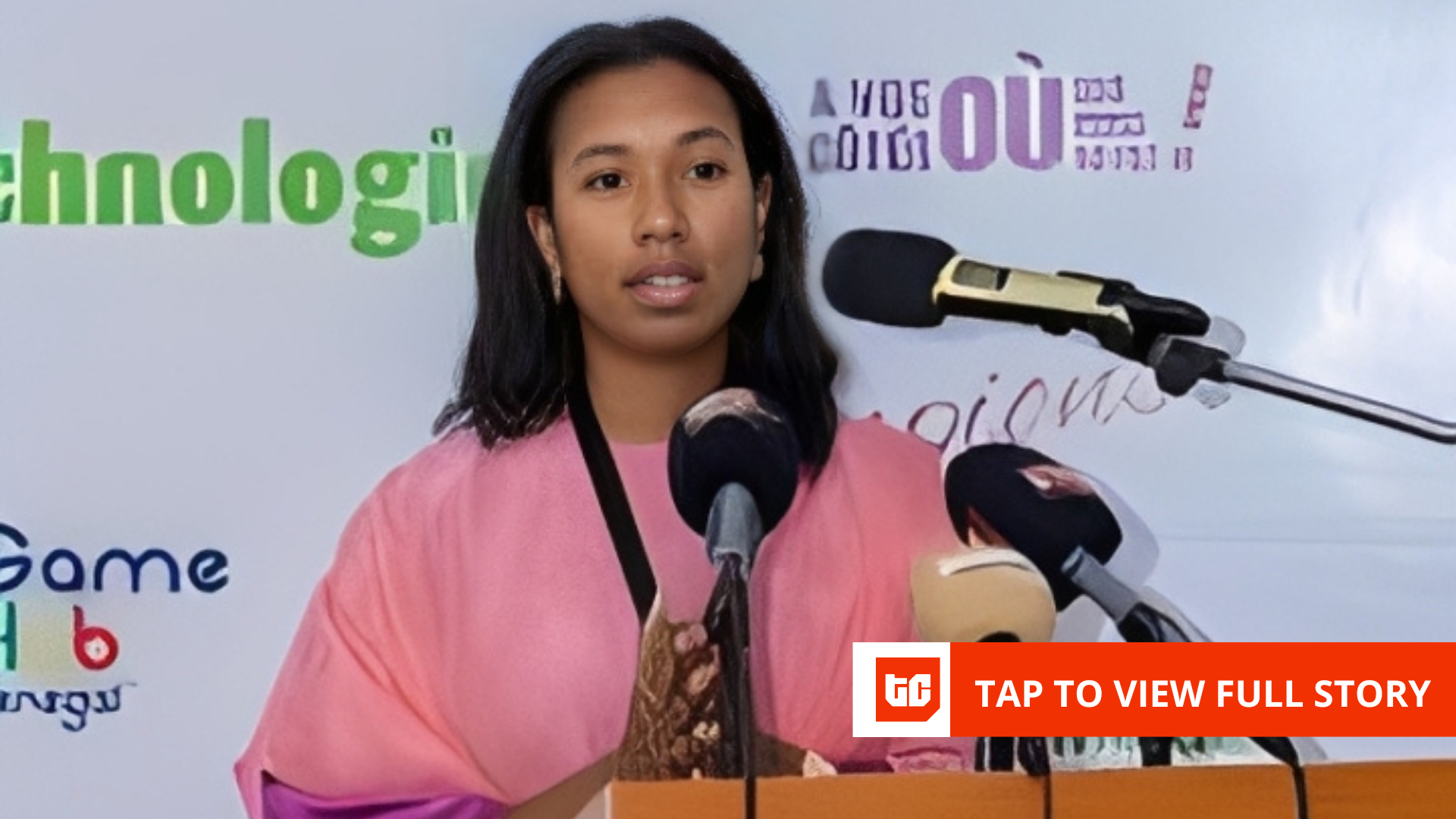
Elena Dia, Head of Ecosystem Engagement, DER Senegal / Image source: LinkedIn
From Banking to Entrepreneurship: A Purpose-Driven Shift
Lina Kacyem: What inspired your move from the banking sector to working within the entrepreneurial ecosystem?
Elena Dia: During my banking career, I rotated through various departments-treasury, FX sales and trading, asset-liability management, capital markets, and especially investment banking. I developed a strong passion for project finance, realizing I wanted a role where finance intersects with development and project management. That realization sparked my transition into the entrepreneurial ecosystem.
Challenges Encountered at DER
LK: What were some of the main obstacles you faced upon joining DER?
ED: Leading the ecosystem engagement unit, which oversees innovation and tech-related programs, I quickly noticed a shortage of qualified candidates for our initiatives. Many startups repeatedly participate in multiple programs because most support targets similar maturity levels, yet there aren’t enough suitable profiles to fill these slots. There’s a clear gap for intensive, long-term acceleration programs akin to Station F in France, which offers personalized two-year support. Such comprehensive programs are scarce in our ecosystem.
High-Impact Initiatives Driving Change
LK: Which programs have made the most significant difference?
ED: Two initiatives stand out. First, Line Stack Invest, developed in partnership with the French Embassy, which allocated €1 million (approximately $1.2 million) for ecosystem animation activities-accelerators, incubators, international roadshows, and investor matchmaking via BPI France’s Euroquity platform-plus another €1 million for direct startup financing. This collaborative, project-driven model with clear KPIs has been instrumental in making Senegal one of the most vibrant Francophone ecosystems, even compared to larger economies.
Second, the BE YES program, supported by the Mastercard Foundation, focuses on financial inclusion for SMEs and startups. It establishes innovation hubs across Senegal, offering aspiring entrepreneurs access to cutting-edge technology training in Fab Labs. These include digital embroidery, 3D printing, and foundational skills like digital marketing, logo design, and website creation. Importantly, BE YES extends beyond Dakar, addressing the scarcity of InnoTech talent in rural areas. These two programs exemplify DER’s mission and its role as a vital institutional player.
Note: InnoTech = Innovation and Technology
Designing Tailored, Sector-Focused Programs
LK: How do you approach the development of new programs?
ED: With eight years of experience, DER has accumulated valuable ecosystem and sector-specific insights. This foundation allows us to build on existing programs and lessons learned. Moving forward, I’m working on launching more customized support initiatives-technical assistance that is sector-specific rather than generic. For example, I’m developing a program targeting the music industry, aiming to cultivate six champions in that sector within two to three years. Similarly, we plan to nurture leaders in digital and green innovation. The goal is to build champions along distinct value chains rather than running broad, multisectoral programs and hoping for the best. This strategic, focused approach will guide our efforts in the coming year.
Innovative Financing Without a Banking License
LK: How does DER operate its financing model without holding a banking license?
ED: Our operational model is straightforward yet innovative. We offer two main financial products: the Empowerment Window and the SME Support Window.
The Empowerment Window targets financial inclusion, providing loans from 50,000 to 2 million FCFA (roughly $90 to $3,570). For amounts under 2 million FCFA, we bypass the central bank’s regulations, allowing us to avoid traditional commercial bank accounts. This grants us significant flexibility.
Our entire process is digital. We developed an internal tool that evaluates entrepreneurs’ profiles through an online scoring system based on their application and questionnaire responses. This tool determines eligibility percentages-100%, 80%, or 50%-for requested amounts. Since it’s an in-house system, we can update it swiftly without relying on external vendors.
Another key innovation is leveraging mobile money platforms like Orange Money and Wave for disbursing and collecting repayments. This digital approach enables us to reach entrepreneurs across all 552 communes of Senegal without requiring physical visits, which is especially crucial for women entrepreneurs in rural areas who face mobility constraints.
The SME Support Window handles larger loans starting at 2 million FCFA ($3,570) and uses traditional banking channels. Entrepreneurs open accounts with our partner financial institutions-such as the Banque Nationale pour le Développement Économique (BNDE), Pamecas, Crédit Mutuel du Sénégal (CMS), ASSEP, and La Banque Agricole (LBA)-and submit comprehensive business plans.
While we don’t control the entire process here, we’re developing an interconnected system to streamline communication and processing with our financial partners. This integration will enhance efficiency and transparency, although it’s still a work in progress.
Collaborations with Key Institutions Like FONSIS
LK: How does DER collaborate with organizations such as the Sovereign Investment Fund of Senegal (FONSIS)?
ED: There are numerous opportunities for synergy among state institutions. Besides FONSIS, we work closely with ADEPME (Agency for SME Development), FGIP (Guarantee Fund for Priority Investments), and the Bureau de Mise à Niveau, among others. While we already collaborate extensively, there’s room to deepen these partnerships.
Specifically with FONSIS, we’re establishing a new process where startups receive loan tickets around €50,000 to €60,000 ($58,700 to $70,400). The goal is to use this debt financing as leverage for startups to attract further funding-whether debt or equity-from venture capital firms or other investors in the ecosystem. FONSIS’s ability to provide both debt and equity makes it a natural next step for startups we support. We align our KPIs with theirs to ensure a steady pipeline of promising startups.
We’re also gaining detailed knowledge of FONSIS’s various managed funds, including WeFunds and Islamic finance instruments, enabling us to match startups with the most appropriate funding sources.
Opportunities and Risks Facing Senegal’s Ecosystem
LK: What are the main opportunities and challenges you foresee for Senegal’s entrepreneurial ecosystem?
ED: On the opportunity side, DER’s ecosystem-building efforts have laid a strong foundation. Our startups now have 5-7 years of maturity, with notable success stories and even exits. This is a key indicator of a thriving ecosystem. Personally, I hope Wave-the first Senegalese unicorn-becomes just one example among many. I envision startups like Logidoo and PAPS reaching similar heights within five years, which would be a tremendous boost for the ecosystem.
However, risks remain, particularly from the macroeconomic environment. A major concern is the reduction in funding from international donors such as USAID and bilateral cooperations. Many incubation and acceleration programs rely heavily on such funding, which is currently shrinking. For instance, USAID was recently dissolved despite having a strong entrepreneurship investment program in Senegal. This trend is not unique to Senegal but affects ecosystems across Africa.
This situation underscores the urgent need to diversify funding sources and reclaim ownership of our ecosystems. If we fail to do so, the ecosystem’s sustainability could be jeopardized.
Advice for Ecosystem Builders
LK: What guidance would you offer to institutions and individuals working to develop entrepreneurial ecosystems?
ED: My key recommendation is to adopt a project-oriented mindset. Ecosystems are inherently complex, involving multiple stakeholders with diverse agendas. What has proven effective is treating the ecosystem as a unified project with a clear lead but an inclusive approach.
For example, DER took the lead alongside partners like the French Embassy, forming a steering committee that included startups associations, universities, incubators, and support agencies. This inclusivity fosters collaboration and shared ownership.
It’s also critical to have a defined budget with specific line items and detailed activities, while remaining flexible to adapt as circumstances evolve. Equally important is establishing a robust impact measurement framework to track progress concretely-such as the number of startups funded, follow-on fundraising success, and quality of investor connections. Transparent data sharing helps demonstrate tangible ecosystem advancements
