
Table of Contents
Addressing Maternal Mortality in the Central African Republic: A Path Toward Safer Motherhood
Bangui- The Central African Republic (CAR) continues to grapple with one of the world’s most alarming maternal mortality rates, with 829 maternal deaths per 100,000 live births reported in 2023. This stark figure reflects the harsh realities faced by many women, including limited access to healthcare facilities, long travel distances, scarce medical resources, and cultural barriers that often prevent timely care.
Challenges in Maternal Health Access and Care
Less than half of expectant mothers in CAR complete the recommended four antenatal visits, and nearly 30% of births still occur at home without skilled assistance. These conditions significantly increase the risk of complications for both mothers and newborns, as highlighted by recent national health data.
Geographical isolation and infrastructural deficits exacerbate these challenges, especially in rural regions where health centers are few and far between. Additionally, traditional beliefs and misinformation sometimes discourage women from seeking professional medical support during pregnancy and childbirth.
Strategic Focus on Universal Health Coverage to Reduce Maternal Deaths
In response, the government of CAR has prioritized universal health coverage (UHC) to ensure that every woman receives quality maternal care without financial hardship. The national strategy emphasizes essential services such as antenatal care, skilled birth attendance, and effective management of pregnancy-related complications, all accessible regardless of economic status.
This approach not only aims to prevent avoidable maternal deaths but also fosters trust in the healthcare system, encouraging more women to utilize available services and improving overall community health outcomes.
Empowering Communities Through Midwifery
With support from the World Health Organization (WHO) and international donors, CAR has implemented a robust program to train and deploy community midwives. These midwives, selected by their own communities, serve as crucial intermediaries between families and health facilities. They provide education, guidance, and accompaniment throughout pregnancy, delivery, and postpartum care.
By promoting the importance of antenatal visits and skilled delivery, community midwives help shift cultural perceptions and reduce home births, which are often associated with higher risks. Their presence reassures families and strengthens the continuum of care.
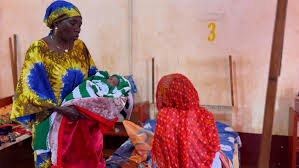
Erguine Souhat, a midwife based in Bria, shares, “There was a night when I had to escort a woman to the hospital on foot, prepared to assist her en route if needed. We support women from early pregnancy through the postpartum period to ensure both mother and child remain healthy.”
Government Commitment and Measurable Progress
Dr. Romaric Ghislain Zarambaud Bohy-Ngombet, Director of Family Health and Population at the Ministry of Health, emphasizes the urgency: “Maternal mortality is a national crisis. Our Minister of Health has outlined a clear plan: enhance healthcare providers’ skills, upgrade medical infrastructure, and extend services closer to communities. This is the foundation for achieving universal health coverage.”
Currently, over 1,200 active midwives operate across 32 of the country’s 35 health districts, predominantly in underserved rural areas. According to Dan Mauricette, National Coordinator of Community Midwives, “Where midwives are deployed, home births have decreased by approximately 30%, and antenatal care attendance has risen significantly.”
Recent Investments and Training Initiatives
In 2024, WHO facilitated the equipping of around 30 maternity wards with essential medical supplies and medications, enhancing the safety and dignity of childbirth services. Additionally, 300 community midwives received comprehensive training in prenatal, delivery, and postpartum care, including referral protocols. Sixty-four healthcare workers were also trained to identify gynecological risks, further improving the quality of maternal health services.
Dr. Caroline Clarinval, WHO Representative in CAR, states, “Every maternity ward equipped and every midwife trained represents a life saved. Our mission is clear: to ensure that every woman, regardless of location, can experience a safe childbirth. Achieving this requires tailored clinical guidelines, ongoing capacity building, and sustained community engagement.”
Transforming Lives: Stories of Hope and Survival
These efforts are making a tangible difference. Albertine Shoura, a mother of three, recounts her experience: “I once gave birth at home and nearly lost both my baby and myself. Thanks to Erguine’s support, I was able to deliver safely in a hospital with proper care. I am deeply grateful to her and to God for saving our lives.”
Albertine reflects on the broader impact: “When a mother and child survive, hope is restored for the entire family. I wish every woman in our country could have this opportunity, so that childbirth becomes a moment of joy rather than danger.”
