
Table of Contents
A Prayer for Safe Journeys: The Reality of Nigeria’s Dangerous Roads
In many Nigerian households, a common morning prayer echoes a heartfelt plea: “K’a ma rin nigbati ebi ba n pa ona,” meaning, “May we not walk when the road is hungry.” This expression, laden with caution and hope, resonates deeply, especially in a country where traveling can be fraught with peril.
On the day Derin and Fola exchanged vows, the road was not just hungry-it was ravenous. The priest’s blessing, “Now, you are ready to step into a new chapter filled with joy and hope,” seemed almost ironic against the backdrop of looming danger.
When Joy Meets Danger: The Story Behind “The Herd”
Had the couple known what awaited them, perhaps they would have sought more than blessings-maybe a prayer for protection on the treacherous journey ahead. Unfortunately, their vulnerability is shared by countless Nigerians who traverse roads where safety is a fragile illusion, despite the country’s deep religiosity and frequent prayers over vehicles.
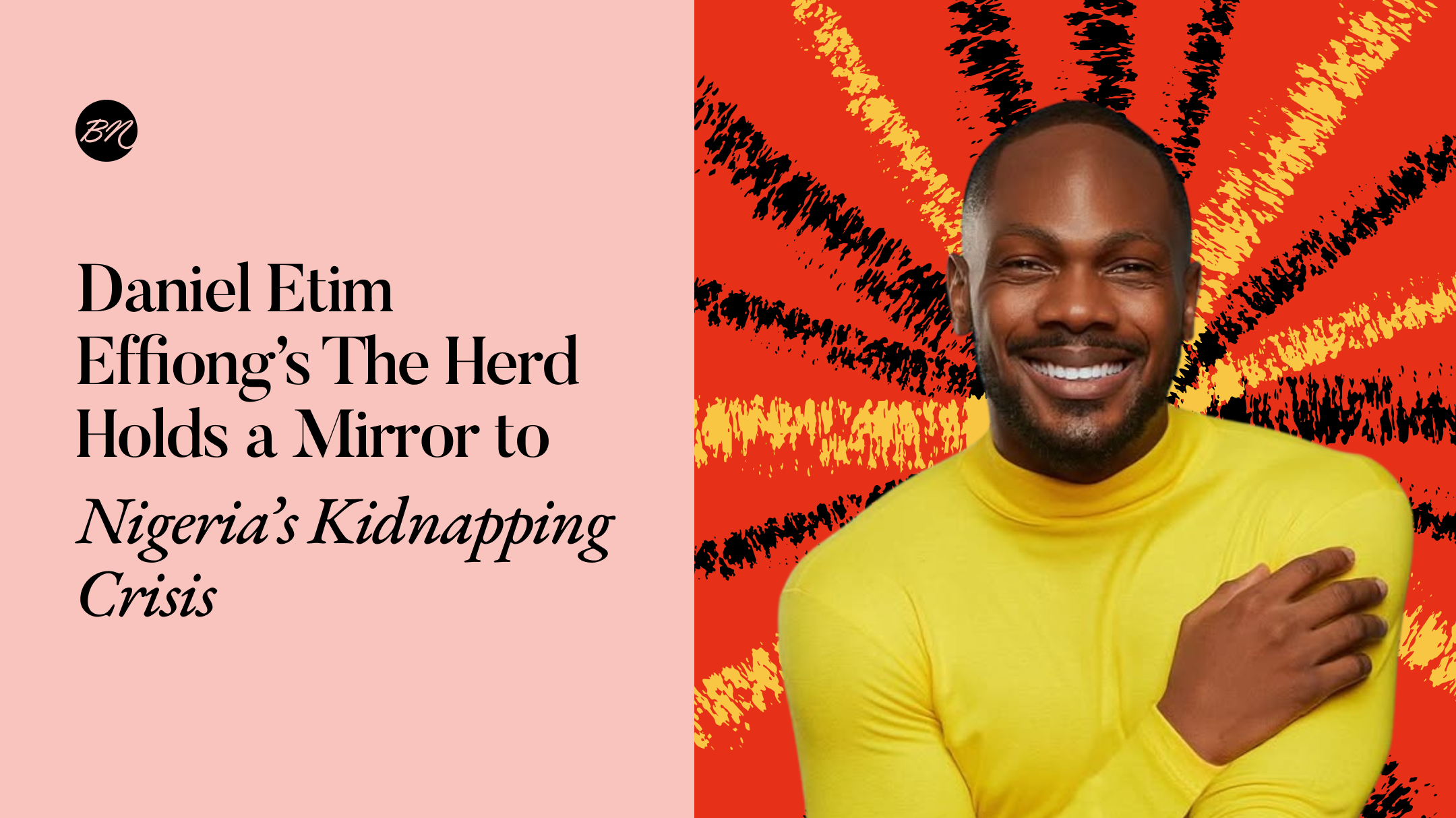
Kidnappings have become a grim reality, with victims often caught in fates ranging from ransom demands to tragic ends. This harsh truth inspired filmmaker Daniel Etim Effiong to craft a narrative that reflects these dangers, born from his own weariness with Nollywood and a desire to tell stories that matter. “You tell the stories you want to tell, the ones you feel you deserve,” Effiong explains. “That’s what I set out to do.”
Escalating Kidnappings: A National Crisis
Released amid a surge in kidnappings, especially in Nigeria’s north-central states, The Herd captures a nation gripped by fear. According to recent United Nations data, over 400 people, predominantly schoolchildren, were abducted in just two weeks across Niger, Kebbi, Kwara, and Borno states. This alarming trend has transformed everyday activities-travel, education, worship-into acts of courage.
The Plot: A Harrowing Journey of Love and Survival
The Herd centers on a man traveling to Ekiti for his best friend’s wedding who is kidnapped, and the extraordinary lengths his wife goes to rescue him. This storyline is not just fiction; it echoes Effiong’s personal history. His father was imprisoned during Nigeria’s military era, and his mother’s relentless efforts to secure his release ended tragically when she died traveling to the prison.
Effiong’s childhood memories of road trips with his father, once a source of joy and connection, now contrast sharply with the dangers those same roads pose to his own children.
Exploring Complex Themes: Violence, Identity, and Social Divides
More than a thriller, The Herd delves into the complexities of violence and moral ambiguity. The film portrays a bride widowed in an instant, friends forced to confront loyalty and sanity, and families caught in surreal yet painfully familiar circumstances. It also highlights Nigeria’s social contradictions-bandits who pause for prayer, pastors involved in organ trafficking, and moments of cultural prejudice, such as a character mocking another’s inability to speak Igbo.
These juxtapositions underscore the paradoxes of a society clinging to rituals and identities amid systemic failure.
Social Hierarchies and Prejudices Amid Crisis
Beyond the forest’s violence, the film exposes subtler forms of cruelty. Adamma (Linda Ejiofor Suleiman) struggles to raise a ₦50 million ransom, only to face discrimination from her in-laws due to her Osu caste status. Her desperate offer to end her marriage to gain their support reveals how entrenched social hierarchies continue to shape lives, even in moments of extreme distress.
Audience Reception and Critical Acclaim
The Herd has resonated powerfully with viewers, topping Netflix charts in Nigeria, Kenya, and South Africa. Audiences have lauded its unflinching portrayal of contemporary Nigerian realities:
“I just finished watching ‘The Herd’ on Netflix, that’s not just a movie-it is someone’s reality as we speak.” – Deelulu (@yappadoodledee)
“Just finished seeing THE HERD movie. It was a good and sad watch as it depicts the insecurities we’re facing in Nigeria – kidnapping by terrorists.” – Chioma Genia (@eugeeyy)
“As dreadful as the scenes are in the movie, The Herd, we all need to understand that this is our lived reality, every single one of us. Don’t be fooled by your gated estates and your tinted glasses. We are in deep trouble.” – MO’BELIEVE (@mobelieve_)
“The Herd is one of the most engaging films I’ve seen this year. Everyone acted their hats off, especially the guys and girl that played bandits.” – Ebuka Obi-Uchendu (@Ebuka)
Authenticity Rooted in Research and Personal Experience
The film’s gripping realism stems from meticulous research. Screenwriter Lani Aisida incorporated survivor testimonies, reports on kidnappings across Nigeria and the Sahel, analyses of armed groups’ movements, and even social media posts from bandits. Director Effiong supplemented this with insights from security officials and reflections on his own family’s history.
Controversy and Dialogue on Ethnic Representation
Despite its acclaim, The Herd faced backlash for allegedly stereotyping an ethnic group. Bashir Ahmad, former special assistant to President Muhammadu Buhari on Digital Communications, criticized the film for portraying Fulani herdsmen as kidnappers, warning of the dangers of ethnic profiling in a region already ravaged by insecurity. Effiong counters this, emphasizing the film’s nuanced depiction.
He clarifies that Fulani herdsmen are often victims themselves, with their cattle stolen by bandits who then use the herdsmen’s identity as a cover. The film aims not to indict any tribe or religion but to expose Nigeria’s deep divisions and the intolerance that permeates various communities.
Unity Amid Diversity: The Meaning Behind “The Herd”
Effiong’s own diverse background-born in the North, raised between Benin and Lagos, with parents from Cross River and Edo, educated in the East, and married to a Yoruba woman-shapes his inclusive worldview. He describes his mindset as “detribalised.”
The film’s title, The Herd, is symbolic, representing a collective ideal of unity. “We are one people and should have one voice,” Effiong asserts. “With one voice, we must address our differences instead of dividing ourselves into ‘them’ and ‘us.’ Yes, we are different, but we are one nation.”
Interestingly, after watching the full film, Bashir Ahmad revised his opinion, praising it as “truly an incredible one.”
Emotional Impact and Responsible Storytelling
The film’s intense emotional scenes-Derin’s anguish over Fola’s mutilated body, the brutal violence inflicted by kidnappers like Annas (Ibrahim Abubakar Fulani), Adamma’s frantic efforts to raise ransom money, and the weary security forces-resonate deeply with audiences. Each moment feels lived rather than imagined.
Effiong stresses that the violence is portrayed with care, avoiding gratuitousness. “We were hard-hitting with the facts but careful not to be too graphic,” he explains. “The film needed to be accessible without traumatizing viewers. Storytelling must be honest and responsible, balancing truth with sensitivity.”
A Journey of Persistence and Purpose
Though it took three years to complete, the film’s release coincides with a renewed wave of kidnappings, underscoring its urgency. For Effiong, this timing validates the risks he took as a first-time feature director confronting a national trauma.
His path to filmmaking was unconventional-initially studying engineering, then shifting to theatre arts, working in media, studying film in South Africa, and gradually building his career through acting and directing commercials. “I had to crawl before I could run and fly,” he reflects.
A Call to Action: Beyond Reflection to Engagement
Effiong hopes The Herd will do more than mark a personal milestone. He wants it to awaken Nigerians to the interconnectedness of their struggles and inspire collective action. “It’s not enough to say, ‘This is happening in the North, too bad,'” he insists. “We must get involved, wake up to reality, and fight for the soul of Nigeria.”
