
Table of Contents
Ibadan’s Rashidi Ladoja Circular Road: Navigating Challenges and Progress
A Tense Atmosphere Ahead of Crucial Dialogue
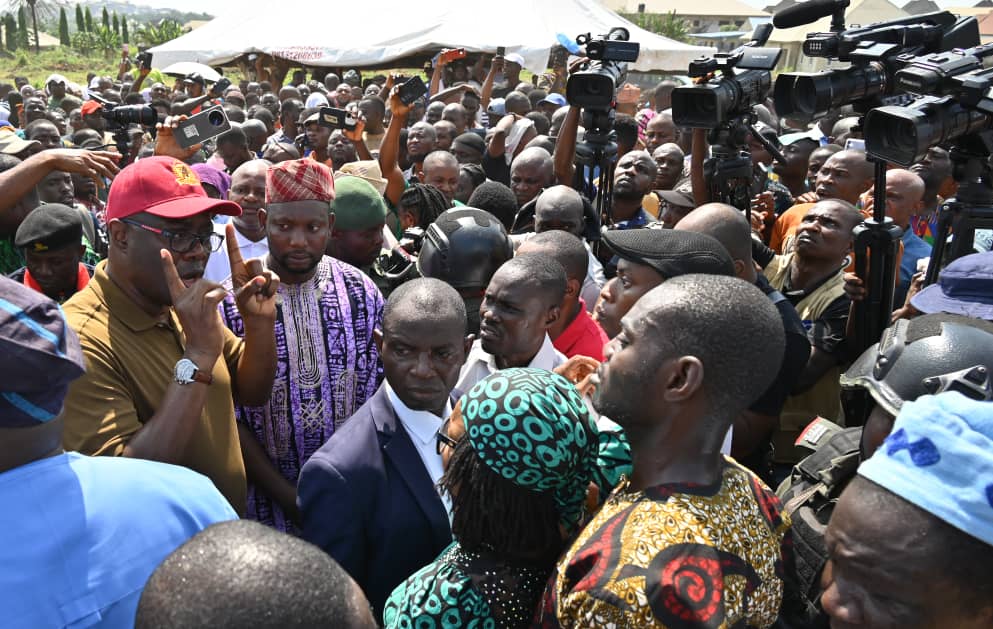
In the days leading up to the pivotal meeting between Governor Seyi Makinde and residents of Ido Local Government affected by the Rashidi Ladoja Circular Road project, a sense of unease permeated the environment. Anxiety was evident not only among the populace but also within government circles. Many had prearranged contingency plans, parking their vehicles at a distance and instructing drivers to be ready for swift departure at any sign of unrest, despite the visible presence of security personnel.
Community Resistance and Demands
The apprehension was justified. Prior to the meeting, protests erupted across Ibadan, with citizens voicing strong opposition to the road corridor. Allegations of land grabbing and government misconduct circulated widely, accompanied by harsh criticisms directed at the governor. At the meeting venue, community leaders explicitly instructed their members to refrain from applauding or greeting the governor, signaling deep-seated frustration. Their placards conveyed clear demands: a preference for a narrower road width of 60 metres rather than the proposed 150 or 500 metres, immediate compensation for displaced property owners instead of deferred promises, and a firm rejection of the expansive setback and corridor plans. The situation was charged with tension, reflecting a community at a crossroads.
Historical Context: The Evolution of the Circular Road Project
The concept of a circular road encircling Ibadan, West Africa’s largest city by land area, dates back to 1995. Initially proposed by a private firm to Colonel Ike Nwosu, then Military Administrator of Oyo State, the project aimed to alleviate traffic congestion by diverting interstate travelers away from the city center. However, the initiative stalled following Nwosu’s departure in 1996 and remained dormant through subsequent administrations, including those of Colonel Ahmed Usman and Commissioner of Police Amen Oyakhire.
Renewed interest emerged under Alhaji Lamidi Adesina, Oyo State’s first civilian governor in the current republic, who established a committee to assess the project’s feasibility. Despite this, progress was limited before his tenure ended in 2003.
Significant Milestones and Setbacks
Governor Rashidi Ladoja’s administration marked the first substantial advancement. In 2005, his government completed a Right-of-Way survey, designating a 75-metre width on either side of the road and compensating affected landowners. Yet, after Ladoja’s exit in 2007, the project languished for over a decade.
In 2017, the administration of Abiola Ajimobi expanded the land acquisition to 1 kilometre (500 metres on each side) to align with the updated Ibadan Master Plan and international urban development standards. This expansion aimed to incorporate a business corridor alongside the road, facilitating commercial growth, utilities, service lanes, drainage, and community access.
That same year, a contract worth N67 billion was awarded to ENL Consortium for the construction of the 32.2 km South East Wing Phase 1, spanning from Abiola Ajimobi Technical University to Egbeda. The project, initially slated for completion by June 2020, faced delays due to the COVID-19 pandemic and was extended to 2021. However, with only 5.5% completion, the contract was revoked by Governor Makinde’s administration in 2021.
Recent Developments and Government Intervention
In June 2021, the Makinde government engaged SEL-Vydra Consortium under a Build, Operate, and Transfer model at a cost of N138.2 billion. Yet, slow progress led to contract termination, prompting the state to assume direct responsibility. On September 18, 2022, Governor Makinde officially launched construction on the 32.2 km East-End Wing, renaming the project the Senator Rashidi Ladoja Circular Road. This segment is now approximately 80% complete, with commissioning anticipated in early 2026.
Complexities Arising from Prolonged Delays
Decades of stalled progress transformed the Circular Road into a contentious issue. The expansion from an initial 75-metre width to 500 metres on each side led to significant encroachment, as many compensated landowners sold their plots, resulting in new buildings within the designated setback and corridor zones. What was once undeveloped land in 2005 had become densely built-up by 2022, complicating government efforts to clear the path and necessitating demolitions and further compensation.
While many residents recognize the project’s potential to modernize Ibadan and stimulate economic growth, others resist losing their homes. This divide has fueled tensions between the community and government, particularly among those residing within the expanded setback and corridor areas.
The Governor’s Engagement: Bridging Perspectives
Governor Makinde’s decision to meet directly with affected residents at Ologuneru in Ido Local Government was a strategic move to address these conflicts. Both parties shared a desire for the road’s completion, but diverged on the extent of land acquisition and displacement. The governor advocated for a setback to ensure road safety and sustainable development, while residents sought to protect their existing homes.
Represented by six spokespersons, the residents articulated their concerns, emphasizing the hardship and insecurity that displacement would cause. They urged the government to limit the road width to 60 metres, excluding any additional setback or corridor. Their presentations were met with applause, reflecting strong community solidarity.
Governor Makinde’s Response: A Call for Cooperation
Departing from formal protocol, Governor Makinde engaged the crowd directly, affirming his accountability to the people and commitment to their welfare. He acknowledged the challenges but emphasized his determination to complete the project within his tenure, contrasting his approach with predecessors who deferred problems to successors.
Drawing on a biblical analogy, he reassured the community of his dedication: “There may come a Pharaoh who does not know your Joseph, but I am a Pharaoh who knows your Joseph.” This metaphor underscored his intent to act justly and compassionately.
Makinde clarified that while the road requires a setback for safety-citing federal highway standards that mandate at least 50 metres-the government would limit the setback to 150 metres in built-up areas, excluding the broader corridor concept. He promised no demolition without fair compensation and highlighted ongoing progress on other segments of the road.
Community Reactions and Moving Forward
Though the residents had hoped for a complete rollback of the setback and corridor plans, many appreciated the governor’s transparency and willingness to engage. The reduction from 500 to 150 metres in built-up zones was seen as a significant concession. Mr. Philus Adedokun, an affected resident, expressed cautious optimism, emphasizing the importance of adequate compensation and the governor’s personal involvement in addressing their concerns.
The meeting concluded amicably, with residents escorting the governor’s convoy and expressing support. This episode illustrates how empathetic leadership and open dialogue can transform potential conflict into collaborative progress, paving the way for sustainable urban development.
Dr. Olanrewaju serves as the Special Adviser on Media to the Governor of Oyo State.
