
Table of Contents
Renewed Political Debate Over Nigeria’s Security Crisis
The nation witnessed a heated political exchange on Sunday following a sharp rebuttal from Sunday Dare, the Special Adviser on Media and Public Communication to President Bola Tinubu, directed at former President Olusegun Obasanjo’s recent critique of Nigeria’s escalating insecurity challenges.
Obasanjo’s Criticism of Government’s Security Efforts
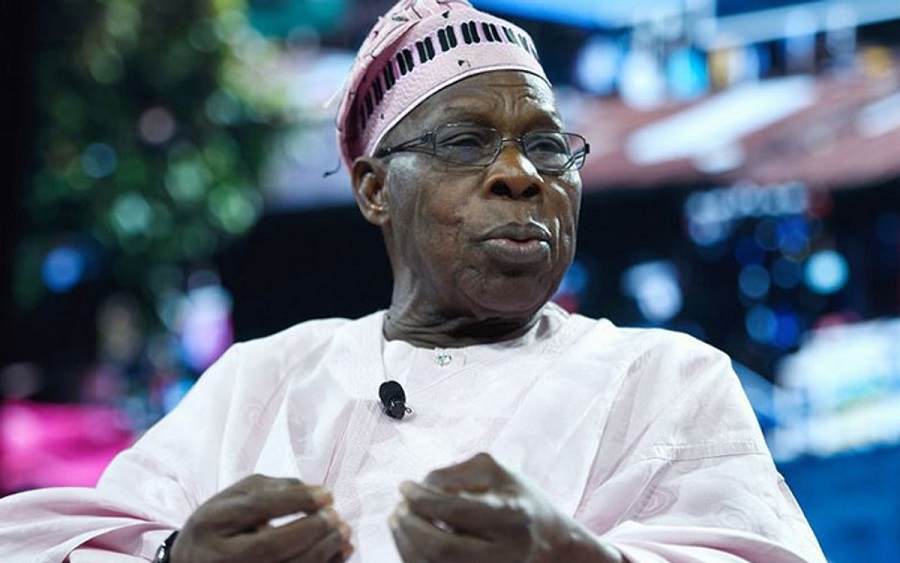
At a public forum in Jos last Friday, Obasanjo condemned the current administration for what he described as a failure to fulfill its fundamental duty of safeguarding Nigerian citizens. He emphasized that the persistent violence and attacks across various regions have left communities exposed and vulnerable. Obasanjo further asserted that if the government continues to falter, Nigerians might be justified in appealing for international assistance to restore peace and security.
Presidential Aide’s Firm Rebuttal and Historical Context
In response, Sunday Dare released a statement titled “Between Tinubu’s Capability and the Ignobility of Pseudo Statesmanship”, posted on his X (formerly Twitter) account. He accused Obasanjo and other perennial presidential hopefuls of making statements that could potentially weaken ongoing counter-terrorism efforts. Dare argued that such public criticisms equate to surrendering to the complex security threats Nigeria faces today.
Dare highlighted a significant historical perspective, pointing out that the extremist group Boko Haram, which has since morphed into a deadly insurgency, had its ideological roots and initial organizational structures established during Obasanjo’s civilian administration. He noted that during that period, Boko Haram openly recruited members, established training camps, and challenged state authority, yet decisive government action was notably absent.
Missed Opportunities and the Evolution of Boko Haram
The presidential aide contended that early intervention could have contained the extremist faction before it escalated into a full-scale insurgency with international terror affiliations. He described it as both ironic and irresponsible for Obasanjo to now publicly lecture on security matters when his administration arguably allowed the early stages of terrorism to take hold.
Defending the Current Administration’s Security Strategy
Dare defended President Tinubu’s approach to combating terrorism, emphasizing a multifaceted strategy that includes continuous military operations, intelligence-led missions, community involvement, and programs aimed at deradicalization. He cautioned that undermining the government’s efforts through public disparagement could inadvertently boost the morale of violent groups responsible for kidnappings and killings.
“When former leaders cast doubt on our nation’s resilience, they inadvertently grant psychological advantages to terrorists,” Dare stated. He urged Obasanjo to acknowledge past shortcomings and to support the current administration’s initiatives rather than detract from them.
Call for National Unity and Forward Momentum
Highlighting the importance of solidarity, Dare appealed to Nigerians to rally behind the government’s comprehensive security framework. He assured that President Tinubu is dedicated to securing every part of the country through coordinated efforts across all government sectors.
Concluding his statement, Dare affirmed, “This administration will not be sidetracked by selective historical amnesia disguised as elder statesmanship, nor will it permit those responsible for early security lapses to distort the narrative.”
Current Security Landscape and Ongoing Efforts
As of 2024, Nigeria continues to face significant security challenges, with Boko Haram and its splinter groups responsible for numerous attacks, particularly in the Northeast. Recent military campaigns have reclaimed territories and disrupted insurgent networks, but experts emphasize that sustained community engagement and socio-economic development are critical to long-term peace. The government’s renewed focus on intelligence sharing and regional cooperation aims to curb the spread of terrorism and restore stability.
